
Boeing Air Force One Contract Faces Surprising New Hurdles
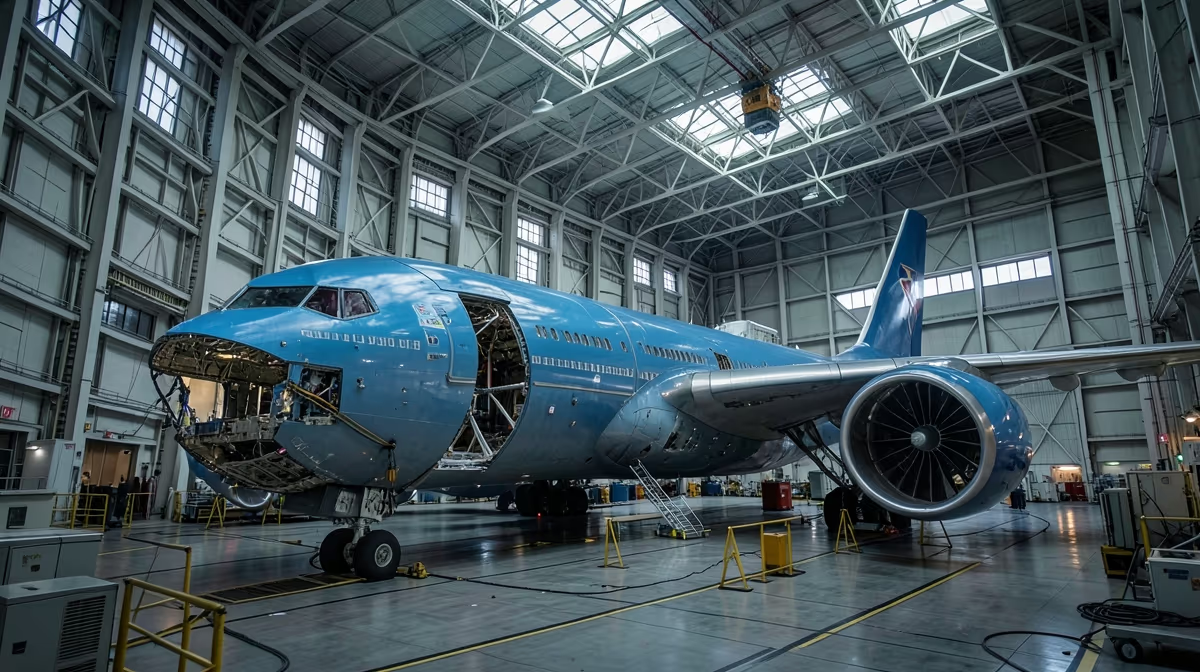
Securing the skies for the President of the United States has turned into an unprecedented corporate and engineering trial, highlighted by the ongoing challenges surrounding the **boeing air force one contract**. Boeing and the United States Air Force are locked in complex negotiations over the multi-billion-dollar VC-25B Presidential Aircraft program, commonly known as Air Force One, following years of severe delays and billions of dollars in cost overruns. The latest updates regarding the **boeing air force one contract** reveal ongoing challenges that continue to test the boundaries of fixed-price defense manufacturing, corporate risk tolerance, and federal procurement transparency.
Understanding The Program Origins And Structure
Commissioned during the Trump administration, the program was designed to replace the aging Boeing 747-200 planes currently used as Air Force One with modern, highly secure Boeing 747-8 jets. The VC-25B program involves modifying two Boeing 747-8 aircraft to serve as the next Air Force One, outfitted with advanced secure communications, electronic countermeasures, and self-defense systems. Boeing has been working on this massive project to build these two new airplanes, but it has turned into a major headache because it is costing billions of dollars more than expected. The core issue stems from the original fixed-price contract of $3.9 billion awarded to Boeing in 2018. Under this agreement, the company agreed to build the high-tech, heavily fortified planes for a set amount of money, meaning any unexpected costs or delays out on the assembly line come straight out of Boeing's own pockets rather than the government's budget.
Air Force One Cost Overruns Explained
The fixed-price contract structure has exposed the aerospace giant to severe financial vulnerability. Boeing has recorded over $2 billion in cumulative pre-tax losses on the Air Force One program, further straining its commercial aerospace liquidity and threatening its defense division's operating margins. This situation highlights the inherent risks of fixed-price defense contracts and serves as a sharp reminder of how major aerospace manufacturing delays can cripple a company's finances. For taxpayers, the fixed-price deal protects the government from paying for the overruns, but it also creates uncertainty about when the vital presidential fleet will finally be ready for service. The root cause of these fiscal strains lies in Boeing's reliance on fixed-price legacy defense contracts without accounting for severe supply chain volatility, skilled labor shortages, and engineering inflation, alongside the loss of institutional knowledge from specialized retired workforce personnel during previous corporate downsizing waves.
What Caused The Latest VC-25B Delivery Delay?
Production schedules have slipped significantly since the program's inception. While the original contract aimed to deliver two heavily modified 747-8 jets to serve as the flying Oval Office by December 2024, supply chain disruptions, engineering challenges with the aircraft's internal communications systems, and a shortage of specialized labor have pushed the projected delivery dates out to 2027 and 2028. This mirrors historical parallels such as the troubled development of the KC-46 Pegasus tanker, which also suffered from massive fixed-price overruns and stringent regulatory compliance hurdles. Boeing executives have acknowledged the heavy financial toll of the program, with former CEO Dave Calhoun stating in previous earnings calls that the company took a unique set of risks that Boeing probably shouldn't have taken. Leadership at Boeing has repeatedly stated that taking on fixed-price development contracts for highly complex military derivatives was a strategic misstep they do not intend to repeat.
Financial And Strategic Impact On Boeing Defense
The ongoing friction around the presidential aircraft program carries distinct political and geopolitical dimensions. Intense public scrutiny and bipartisan pressure are weaponized by both parties to project accountability, contrasting defense contractor influence with taxpayer protectionism. Globally, the projection of United States executive power is perceived by some as compromised by domestic manufacturing vulnerabilities, impacting foreign perceptions of American defense-industrial readiness. Defense officials and lawmakers have expressed frustration over the timeline slippage and fiscal transparency of the project. The Air Force and Boeing continue to negotiate mitigation strategies to stabilize the production schedule while ensuring the aircraft meet stringent national security and operational requirements. Meanwhile, Boeing defense officials are likely to issue brief statements regarding ongoing schedule reviews and cost-capping measures for the VC-25B program, while Defense Department auditors may release updated cost overruns or delivery timeline estimates, prompting scrutiny from congressional oversight committees. Analysts expect continued financial losses on the fixed-price contract to pressure Boeing's defense division, though program cancellation remains unlikely due to the high strategic importance of Air Force One. In the best-case scenario, Boeing successfully absorbs remaining modifications without further major delays, setting a firm flight-test window for late 2024 or early 2025. Conversely, the worst-case scenario involves further supply chain bottlenecks and engineering roadblocks causing additional multi-hundred-million-dollar charges, deepening tensions between the Pentagon and Boeing leadership.
Frequently Asked Questions
Why is the Boeing Air Force One contract taking so long?
The delay is primarily due to strict military and presidential security requirements, complex engineering modifications, and supply chain disruptions. Additionally, Boeing agreed to a fixed-price contract, meaning the company must absorb billions of dollars in cost overruns rather than the U.S. government.
How much is the Boeing Air Force One contract worth?
The original fixed-price contract awarded to Boeing in 2018 was valued at approximately $3.9 billion to design, modify, and deliver two new 747-8 aircraft. However, due to extensive delays and technical modifications, Boeing has reported cumulative losses exceeding $2 billion on the program.
When will the new Boeing Air Force One planes be delivered?
The delivery timeline for the new Air Force One aircraft, designated as VC-25B, has been pushed back multiple times. Current estimates suggest the planes will not be delivered to the U.S. Air Force until 2027 or 2028, several years behind the original schedule.
Who is paying for the Boeing Air Force One cost overruns?
Under the terms of the fixed-price contract negotiated in 2018, Boeing is financially responsible for any cost overruns exceeding the agreed-upon price. This has resulted in massive financial losses for the aerospace company, which former CEO David Calhoun publicly acknowledged was a mistake to accept.
What model of airplane is being used for the new Air Force One?
The new Air Force One presidential aircraft are heavily modified Boeing 747-8 commercial jets. These wide-body planes are being outfitted with advanced secure communications, electronic countermeasures, and self-defense systems to replace the aging VC-25A fleet.
Will the current President fly on the new Boeing Air Force One?
Current scheduling projections indicate that the new Boeing VC-25B aircraft will likely not enter service until the late 2020s. Consequently, the sitting president may not have the opportunity to fly on the newly delivered planes until testing and certification are fully completed.
Conclusion
The multi-billion-dollar VC-25B Presidential Aircraft program remains significantly behind schedule and over budget, with Boeing absorbing continuous financial losses under the terms of its 2018 fixed-price contract. As supply chain bottlenecks, specialized labor shortages, and complex interior engineering modifications continue to push delivery estimates toward 2027 and 2028, the U.S. Air Force and Boeing remain engaged in critical schedule negotiations. Defense auditors, congressional committees, and corporate leadership will continue monitoring the production timeline as the aerospace giant navigates the remaining hurdles of this vital national security fleet upgrade.


.webp)

.webp)