
FIFA World Cup 2026 Plans Reveal a Shift That Will Change US Sports
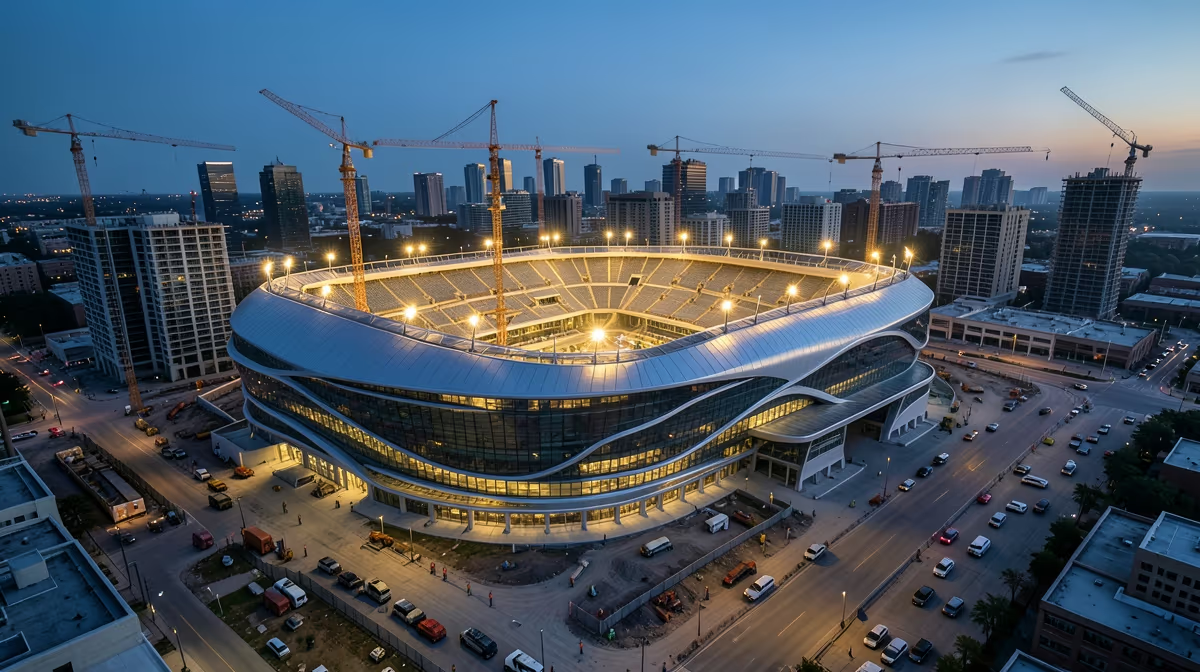
Beyond the roar of the crowd and the spectacle of the pitch, the upcoming tournament represents a massive, multi-billion dollar pivot in global sports diplomacy and urban development. The FIFA World Cup 2026 is poised to be the most significant sporting event in North American history, drawing global attention as the tournament returns to the United States. While fans anticipate the high-stakes matches, behind the scenes, a complex machinery of international policy, infrastructure investment, and geopolitical posturing is working to define the legacy of this host cycle.
The Mechanics of a Global Expansion
The scale of the 2026 tournament is unprecedented. For the first time in history, the FIFA World Cup will feature an expanded field of 48 teams, moving away from the 32-team format that defined the competition for decades. This shift is not merely about increasing the number of matches; it is a calculated effort to broaden the tournament's global commercial reach and ticket availability. The event will be jointly hosted by the United States, Canada, and Mexico, marking the first time three nations have simultaneously held the responsibilities of a host.
Eleven cities across the United States have been selected to host matches, creating a national footprint that spans from the MetLife Stadium in New Jersey—the designated site for the final—to SoFi Stadium in Los Angeles. These host cities are currently in the midst of intensive coordination with federal agencies to manage the surge in international tourism and security. Infrastructure upgrades are being fast-tracked to ensure that logistical standards meet FIFA requirements, a process that is already reshaping the landscape of urban planning in each host location.
Economic Infrastructure and the Legacy Narrative
The pursuit of the tournament is rooted in a desire for global sports hegemony and the creation of a lasting infrastructure legacy. For the United States, the 2026 event acts as a primary catalyst for long-term tourism revenue and elite real estate development. While historical trends of major sporting events often show localized financial losses for some host municipalities, the current strategy emphasizes a private-public sector investment model. This model aims to turn stadiums and surrounding zones into long-term commercial hubs rather than temporary event spaces.
However, this rapid development carries a hidden impact. The gentrification of host cities remains a concern, as the pressure to curate a sanitized, world-class image for international visitors often results in the displacement of marginalized communities. The economic angle of the tournament involves a delicate balance: maximizing foreign direct investment and broadcast viewership while managing the realities of urban development and social displacement. This is a high-stakes test of the nation's logistical endurance and soft-power projection.
Geopolitical Influence and Soft Power
The competitive nature of hosting extends beyond the matches themselves. The United States is effectively engaging in a form of sports-diplomacy, competing with global players like Saudi Arabia and Qatar for influence within the international sporting federation. By positioning itself as a dominant, reliable host, the U.S. is leveraging the tournament to solidify its presence in the international soccer ecosystem. This shift marks a transition from a passive spectator nation to a central hub of global soccer governance and strategy.
Domestically, the event serves as a platform to foster bipartisan appeal and boost urban development profiles. By utilizing collective nationalism centered around the national team, political leaders view the tournament as a tool to distract from internal polarization, at least temporarily. The historical parallel to the 1994 World Cup is significant; that tournament served as the primary catalyst for the institutionalization of Major League Soccer and the commercialization of the sport within the American market. The 2026 edition is designed to complete this transition, firmly rooting soccer as a permanent fixture in the American cultural and economic landscape.
Expert Predictions and Future Outlook
The next 24 hours will likely see an increased focus on FIFA’s announcements regarding host city operations and infrastructure readiness updates. As the countdown accelerates, observers expect a heightened surge in grassroots interest and commercial sponsorship activity. Within the next 72 hours, industry analysts anticipate speculation surrounding the United States Men's National Team (USMNT) strategy and coaching adjustments as the team prepares to prove its competitiveness on home soil.
The best-case scenario involves a significant, long-term increase in soccer participation metrics and a seamless logistical execution across all 11 host cities. Conversely, the worst-case scenario involves budgetary overruns on infrastructure projects and organizational friction between local municipalities and international football organizers, which could lead to significant public relations challenges. Regardless of the tactical uncertainty surrounding the national team, the tournament is already acting as a powerful cultural bridge, temporarily uniting diverse populations through a shared love for the game.
Understanding the Financial Stakes
The total world cup prize money remains a key area of interest for business strategists and fans alike. As the event expands, the financial incentives for participating federations grow, further cementing the tournament as the most-watched sporting event in the world—a title it holds comfortably, often far exceeding the global reach of the Super Bowl. For the host nation, the investment is viewed through the lens of return on investment in the tourism and hospitality sectors, with stakeholders prioritizing the tournament as a unique platform for national prestige.
Frequently Asked Questions
When is the next FIFA World Cup?
The next FIFA World Cup is scheduled to take place in 2026. It will be jointly hosted by the United States, Canada, and Mexico.
Where will the 2026 World Cup be held?
The 2026 World Cup will be hosted across North America in three different countries: the United States, Canada, and Mexico. This will be the first time the tournament is hosted by three different nations simultaneously.
How many teams will play in the 2026 World Cup?
The 2026 World Cup will feature an expanded format with 48 participating teams. This is a significant increase from the 32 teams that competed in previous tournaments.
Who won the last FIFA World Cup?
Argentina won the last FIFA World Cup, which took place in 2022 in Qatar. They defeated France in a penalty shootout after a dramatic 3-3 draw in the final match.
How often does the World Cup happen?
The FIFA World Cup is held every four years. This cycle allows time for qualification tournaments across the globe and ensures the event remains a prestigious international spectacle.
Can I buy tickets for the 2026 World Cup yet?
Ticket sales for the 2026 World Cup are managed directly through FIFA's official website. Fans should monitor official announcements as the tournament approaches to apply for the ticket lottery and hospitality lotteries.
Conclusion
The 2026 FIFA World Cup represents a defining moment for the United States, blending the prestige of elite athletics with the heavy demands of infrastructure development and global diplomacy. With the tournament structure confirmed and host cities finalizing their operational plans, the focus now shifts toward the technical implementation of this massive, expanded event. While the economic promise of the World Cup is significant, the true impact will be measured by the long-term integration of the sport into the American fabric and the ability of host cities to manage the complexities of such a global undertaking. As the qualification pathways continue to clarify, the world prepares for a tournament that will fundamentally alter the sports landscape for years to come.


.webp)


.webp)
