
Halifax Lloyds Banking Group Faces Massive Restructuring Shake-Up
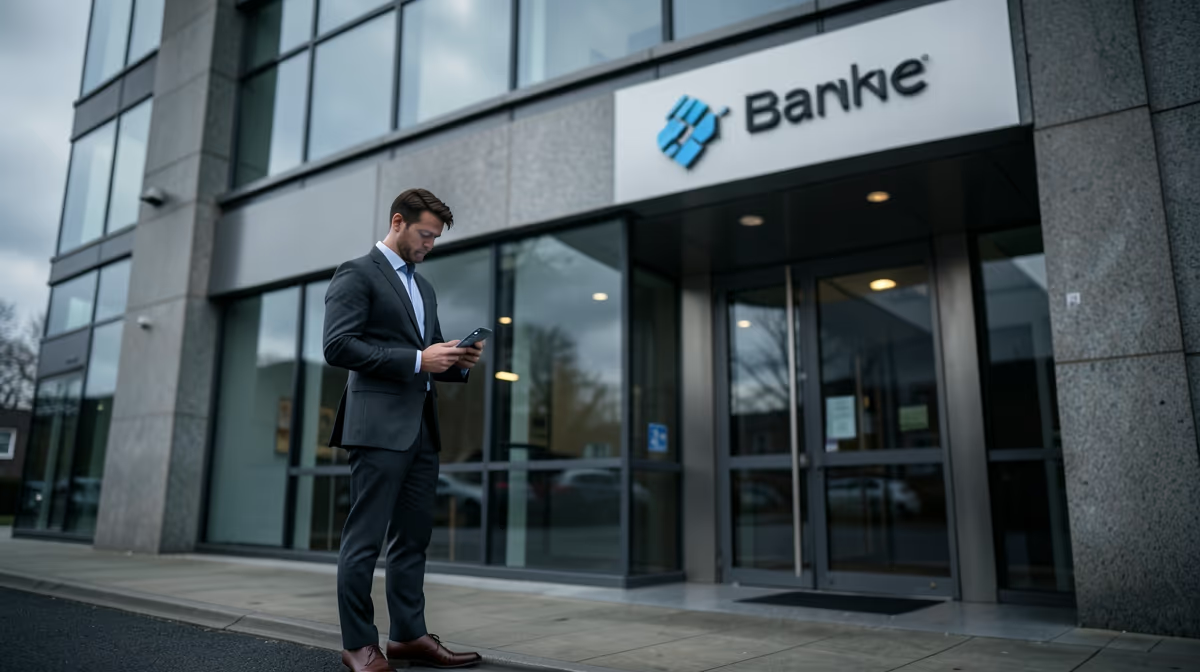
The physical footprint of British financial institutions is undergoing a quiet but profound metamorphosis that reaches into the very heart of the country’s industrial history. As digital migration reshapes the consumer experience, the Halifax Lloyds Banking Group landscape is currently shifting as the institution navigates broader banking sector restructuring and evolving UK financial regulations.
A Legacy in Transition
The roots of the Halifax brand trace back to 1853, when it was established as a building society. Its journey through the decades has been marked by significant milestones, including the 1997 demutualization and the 2001 merger with the Bank of Scotland to form HBOS. The subsequent acquisition by Lloyds Banking Group during the 2009 global financial crisis cemented its position as a core pillar of the UK retail banking sector. Today, however, the group is prioritizing a digital-first strategy. This transformation reflects a wider trend across the financial services sector, where the push toward centralized, tech-heavy platforms is diminishing the relevance of traditional, brick-and-mortar office spaces.
The Trinity Road Development
Lloyds Banking Group has confirmed it is closing its regional hub at Halifax’s Trinity Road headquarters, impacting hundreds of staff members as part of a nationwide shift toward hybrid working models. The banking giant, which maintains a significant historical and operational footprint in West Yorkshire, stated that the decision to vacate the Trinity Road office follows an internal review of its property portfolio. The move reflects broader trends in the financial services sector where traditional office space requirements have diminished due to the permanent adoption of remote and flexible working arrangements for corporate employees. Staff based at the site are currently being consulted regarding potential redeployment or relocation to other regional hubs, such as the major site at Lovell Park in Leeds.
While the physical office footprint is shrinking, the group has emphasized that it remains committed to the Halifax brand and its presence within the town. The bank has clarified that the closure does not signal a withdrawal from the local retail banking market, and Halifax-branded branches serving the public are expected to operate as normal. This distinction aims to reassure both customers and local officials that the town remains integral to the organization's corporate identity. A Lloyds Banking Group spokesperson stated that the group is modernizing its workspace to reflect how colleagues work today and is working closely with teams to support their transition into new, flexible working environments.
The Tension of Economic Efficiency
The closure of the Trinity Road office highlights the friction between the government's regional Levelling Up agenda and the private sector's mandate for branch optimization. For local stakeholders, this shift represents a divergence between political promises of regional revitalization and the reality of austerity-driven corporate efficiency. Economically, the move toward leaner, tech-heavy models reduces overhead costs for the group, but experts warn it may exacerbate financial exclusion for vulnerable demographics and local SMEs.
There is also a deeper, more qualitative concern regarding the erosion of local institutional memory. Historically, face-to-face, trust-based lending provided a stabilizer for the local industrial landscape. As banking services become increasingly digitized, that personal connection is replaced by algorithmic processes, a change that some analysts compare to the post-industrial decline seen during the financial deregulation of the 1980s.
Future Outlook and Market Sentiment
In the next 24 hours, market observers anticipate ongoing scrutiny regarding the group's operational efficiency in its remaining physical branches, likely accompanied by minor share price volatility in line with general market trends. Over the next 72 hours, attention will likely turn to internal restructuring reports and further updates concerning branch footprint optimization strategies throughout the UK’s northern region.
Financial analysts maintain a neutral-to-cautious outlook, emphasizing the difficult balancing act the group faces. The best-case scenario involves a successful cost-reduction implementation that leads to higher dividend payouts and enhanced digital platform adoption, ultimately strengthening investor confidence. Conversely, the worst-case scenario entails heightened regulatory intervention from the Financial Conduct Authority regarding customer service standards, combined with an economic downturn that could lead to increased loan impairment charges.
The Human Impact
These changes matter because they represent a significant shift in the UK's financial infrastructure. As banks close local branches or consolidate corporate offices, the impact is felt most acutely by elderly, vulnerable, or rural residents who may struggle to access basic financial services. This has sparked an ongoing debate about the duty of care banks owe to their customers and the preservation of physical access to cash. Local political representatives and trade union officials have expressed concerns regarding the potential economic impact on the town center of Halifax, particularly regarding footfall for nearby businesses. Unions are currently engaging with management to ensure that redundancy or relocation support packages are handled in accordance with strict employment law requirements.
Frequently Asked Questions
Is Halifax part of Lloyds Banking Group?
Yes, Halifax is a subsidiary brand of Lloyds Banking Group. It operates as a trading division within the wider group, which also includes the Lloyds Bank and Bank of Scotland brands.
Did Lloyds Bank take over Halifax?
Halifax became part of the group following the merger between the Halifax Building Society and the Bank of Scotland in 2001, which formed HBOS. Lloyds Banking Group later acquired HBOS in 2009, bringing Halifax under the ownership of the group.
Are Halifax and Lloyds the same bank?
While both brands are owned by Lloyds Banking Group, they operate as separate banking entities with their own distinct products, customer service teams, and branding. Customers of one bank cannot generally manage accounts belonging to the other brand at their branches.
Who owns Halifax bank in the UK?
Halifax is owned by Lloyds Banking Group, one of the largest financial services organizations in the United Kingdom.
Can I use my Halifax card at a Lloyds cash machine?
Yes, because both brands are part of the same banking group, customers can typically use their Halifax debit cards at Lloyds Bank cash machines without incurring extra withdrawal fees. However, you cannot perform over-the-counter banking transactions for a Halifax account at a Lloyds Bank branch.
How many branches does the Lloyds Banking Group have?
The group operates a large network of branches under the Lloyds Bank, Halifax, and Bank of Scotland brands. The total number of branches is subject to periodic adjustments as the group continues to adapt to changing consumer habits and the rise of digital services.
Conclusion
The restructuring of the Halifax Lloyds Banking Group represents a pivotal moment in the evolution of British retail banking. While the firm maintains that its digital-first strategy is necessary for long-term viability and efficiency, the consolidation of corporate hubs and the broader trend of branch optimization pose clear challenges for regional stability and customer access. As Lloyds Banking Group navigates these transitions, the focus remains on balancing shareholder interests, regulatory compliance, and the essential needs of the public. The coming months will be critical in determining whether the group can successfully marry its digital ambitions with its deep-seated responsibilities to the communities it serves.


.webp)

.webp)
