
Hydrogen Powered Trains in India Signal a Massive Network Shift
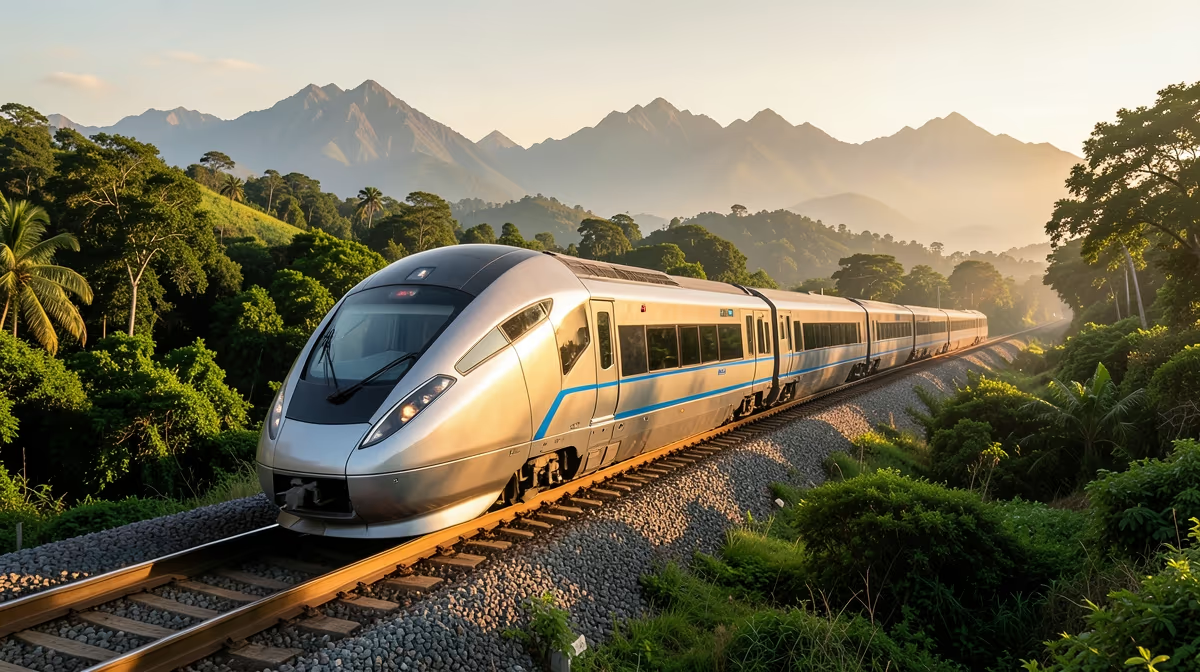
As India strives to meet its net-zero goals, hydrogen powered trains in Indian Railways have emerged as a cornerstone of the national decarbonization strategy. This transition marks a monumental shift from the coal-reliant industrial past toward a decentralized, green energy future, fundamentally altering how the nation’s massive railway network approaches environmental sustainability.
The Mechanics of Green Rail
The transition to cleaner energy involves moving away from the conventional diesel-powered locomotives that have historically dominated non-electrified routes. At the heart of this innovation is the deployment of hydrogen fuel cells. These systems generate electricity through a chemical reaction between stored hydrogen and oxygen drawn from the atmosphere. Unlike internal combustion engines, this process produces no carbon emissions or pollutants; the only byproduct of the entire energy cycle is pure water vapor. By integrating this technology, Indian Railways aims to replace legacy diesel engines, effectively decarbonizing segments of the network where traditional overhead electrification remains logistically difficult or economically prohibitive.
Evolution of the Hydrogen for Heritage Initiative
The momentum for this transition traces back to the 2023-24 Union Budget, where the government unveiled the Hydrogen for Heritage initiative. This project is specifically designed to modernize iconic, historic rail sections—such as the Kalka-Shimla, Matheran, and Nilgiri Mountain railways—while preserving their cultural significance. The Ministry of Railways, alongside technical partners like the Integral Coach Factory and Bharat Heavy Electricals Limited, is currently focused on the Jind-Sonipat section in Haryana as the primary pilot route. The initiative serves as a practical testing ground for evaluating the safety, durability, and operational efficiency of hydrogen fuel cell sets under real-world Indian conditions.
Strategic Economic and Political Dimensions
From an analytical standpoint, the push for hydrogen rail is not merely an environmental decision but a strategic move toward energy sovereignty. By fostering an indigenous green hydrogen economy, India seeks to reduce its massive oil import bill and mitigate the risks associated with global fossil fuel price volatility. Politically, the project is framed under the Atmanirbhar Bharat initiative, positioning India as a global contender in high-end green transportation manufacturing. By establishing local green hydrogen production clusters near pilot stations, the government aims to circumvent supply chain bottlenecks, though the current reliance on grey hydrogen for initial trials represents a recognized hurdle in the broader transition to fully green, renewable energy sources.
Navigating Technical and Operational Challenges
The implementation process is currently governed by rigorous safety audits and technical evaluations. Within the next 24 hours, railway authorities are continuing extensive testing of the Jind-Sonipat pilot infrastructure. Looking toward the 72-hour horizon, policymakers are expected to engage in high-level discussions regarding the commercial scalability of these trains. The primary challenge remains the high capital expenditure required for both the rolling stock and the essential refueling infrastructure. While the long-term outlook promises reduced maintenance costs compared to complex overhead electric grid setups in mountainous terrains, experts warn that technical bottlenecks or funding constraints could potentially delay a wider national rollout.
Global Leadership and Future-Proofing
India’s strategic pivot towards hydrogen aligns with global trends observed in nations like Germany, where hydrogen technology has already seen successful deployment. By fostering partnerships and focusing on localized innovation, India is positioning itself as a leader in the green hydrogen value chain. The ultimate objective is to achieve a net-zero carbon status by 2030 for the rail sector. This requires moving beyond pilot projects to create a robust, scalable framework that can eventually replace diesel-powered shunting engines and regional passenger lines across the country, transforming the network into a model for sustainable global rail infrastructure.
Frequently Asked Questions
Are hydrogen powered trains operating in India?
As of now, hydrogen-powered trains are currently in the developmental and testing phase in India. Indian Railways has announced plans to introduce hydrogen trains on heritage routes under the Hydrogen for Heritage initiative, with pilot projects expected to commence soon.
What is the benefit of hydrogen trains for Indian Railways?
Hydrogen trains are considered eco-friendly as they emit only water vapor instead of harmful greenhouse gases. By switching to hydrogen fuel cells, Indian Railways aims to reduce its carbon footprint and achieve its goal of becoming a net-zero carbon emitter by 2030.
Which routes will have hydrogen trains in India?
Indian Railways plans to launch hydrogen-powered trains on various heritage routes across the country. These include iconic sections like the Kalka-Shimla railway, Matheran light railway, and the Nilgiri Mountain Railway, among others.
How does a hydrogen train work?
A hydrogen train uses fuel cells that combine hydrogen stored in tanks with oxygen from the air to generate electricity. This electricity powers the train's electric motors, producing water as the only byproduct and eliminating the need for diesel fuel.
What is the cost of a hydrogen train in India?
While the initial capital expenditure for manufacturing hydrogen-powered trains is significantly higher than traditional diesel engines, the long-term operational costs are expected to decrease. The Indian government is investing heavily in research and development to make this technology commercially viable.
When will hydrogen trains be fully operational in India?
Indian Railways is conducting trials to finalize the technical requirements for these trains. While pilot runs are anticipated in the near future, a country-wide rollout will depend on the successful results of these tests and the establishment of a robust hydrogen refueling infrastructure.
Conclusion
The transition of Indian Railways toward hydrogen propulsion represents a critical step in the nation's efforts to achieve net-zero carbon emissions. Through the Hydrogen for Heritage initiative and ongoing trials on the Jind-Sonipat route, the government is systematically testing the viability of fuel cell technology as a sustainable alternative to diesel. While challenges such as high initial costs and infrastructure development persist, the project serves as a cornerstone for future energy independence and technological leadership. Success in the upcoming pilot phases will remain the primary determinant for the widespread integration of green hydrogen across India’s extensive rail network.


.webp)


.webp)
