
Iran war escalation sparks immediate global oil supply crisis fears
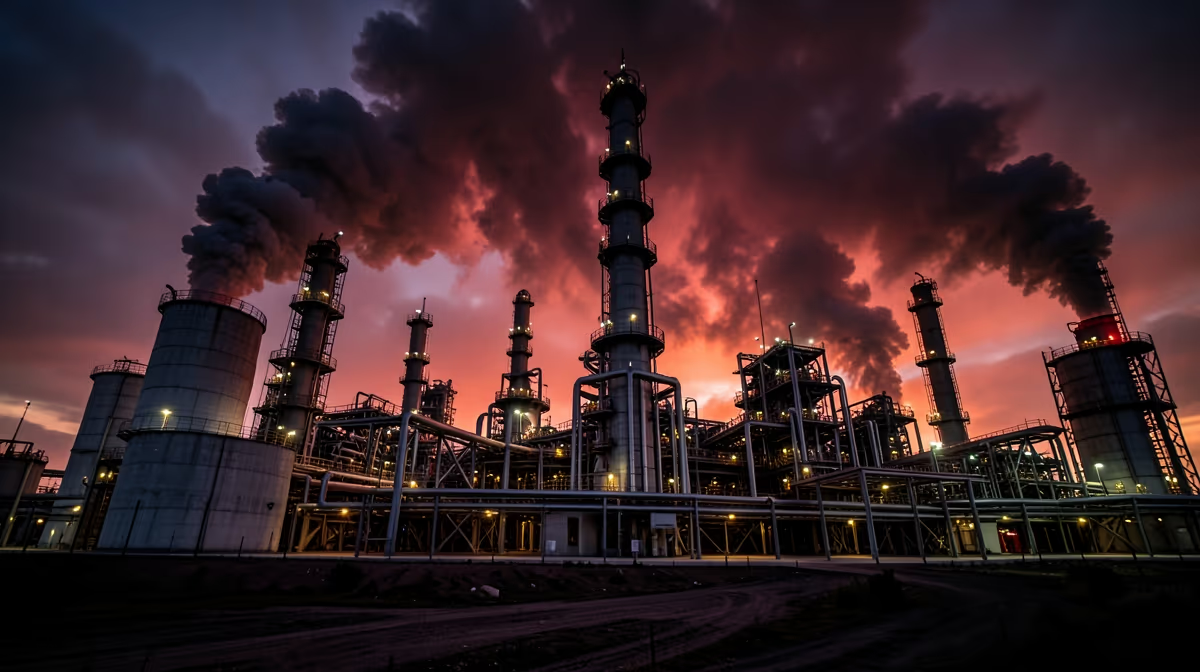
International diplomatic channels intensified emergency negotiations today following a series of coordinated military exchanges involving Iran and regional adversaries, raising global concerns over potential escalation and disruptions to critical energy corridors. As tensions in the region escalate, the looming threat of an iran war has sent shockwaves through international markets, raising urgent concerns about the middle east conflict and its subsequent global oil supply impact.
Current Military Developments in the Iran War
The latest wave of hostilities began early Tuesday with reported missile activity near strategic border regions, prompting immediate defensive maneuvers and heightened readiness levels among international coalition forces stationed in the Middle East. Regional air defense systems intercepted several incoming projectiles, though military officials have yet to release a comprehensive assessment of structural damage or potential casualties resulting from the strikes. Military actions and missile exchanges have increased significantly between Iran and its adversaries, drawing international concern as military actions accelerate across the Middle East. What began as regional proxy conflicts and disputes over Iran's nuclear program have now spilled over into direct confrontations involving major global powers and neighboring states. Global superpowers are actively involved in diplomatic and defense efforts while key shipping lanes and trade routes in the region face severe security threats. International markets are reacting with fluctuating oil prices and economic uncertainty, and peace talks as well as diplomatic interventions are currently struggling to achieve a lasting ceasefire.
Analyzing the Global Oil Supply Impact Amid Rising Tensions
Global energy markets reacted swiftly to the unfolding security crisis, with benchmark crude oil prices experiencing notable volatility amid fears that maritime transit through the Strait of Hormuz could be severely restricted. Shipping firms and commercial airlines have begun rerouting vessels and flights to avoid the contested airspace and waterways as a precautionary measure. A major conflict involving Iran can instantly disrupt global energy supplies, causing fuel prices to skyrocket worldwide. Furthermore, the risk of a wider regional war threatens international security and could trigger massive humanitarian crises and refugee flows. Residents living in the Middle East face immediate physical danger, while everyday consumers globally are impacted by rising fuel prices, inflation, and economic instability. The current crisis stems from decades of geopolitical hostility between Iran, Israel, and Western nations, particularly the United States, centered around Iran's nuclear ambitions, regional influence, and past proxy wars.
International Diplomatic Responses to the Middle East Conflict
World leaders have issued urgent appeals for immediate de-escalation, calling on all involved parties to exercise maximum restraint and return to diplomatic dialogue. Meanwhile, the United Nations Security Council announced an emergency closed-door session to evaluate the security implications and formulate a coordinated international response to the deteriorating situation. A senior defense official who spoke on the condition of anonymity stated that authorities are closely monitoring the situation with regional partners and taking all necessary measures to protect allied personnel and secure vital international shipping lanes. Heightened diplomatic maneuvers and intelligence sharing regarding potential retaliatory strikes, alongside localized military posturing in the Persian Gulf, are expected within the next twenty-four hours.
Strategic Assessment and Future Outlook
Looking ahead over the next seventy-two hours, intelligence observers anticipate potential cyber operations, proxy group signaling, and emergency United Nations Security Council consultations designed to de-escalate tensions. Key players in this dynamic include Iran, the United States, Israel, and regional proxies, whose actions directly impact global energy markets, middle east regional stability, cybersecurity infrastructure, and international shipping lanes. While direct all-out war remains unlikely due to mutual deterrence, the risk of miscalculation leading to a limited kinetic exchange is at its highest point this year. Under a best case scenario, backchannel diplomacy succeeds in lowering rhetoric, leading to a temporary standstill and renewed negotiations over security concerns. Conversely, the worst case scenario involves a miscalculation by regional proxies triggering a disproportionate military response, cascading into a wider regional conflict and severe disruption of energy supplies.
Frequently Asked Questions
Is there currently a war with Iran?
While Iran is not currently engaged in a direct, full-scale conventional war with a major superpower, it is deeply involved in several regional conflicts. Through its network of allied militias across the Middle East, Iran participates in ongoing proxy wars that continuously threaten global stability. Tensions remain exceptionally high due to Iran's advancing nuclear program and sporadic direct exchanges with adversaries like Israel.
What would happen if a war broke out with Iran?
A direct military conflict with Iran would likely have devastating global consequences, primarily due to Iran's strategic geographic position. Iran could attempt to close the Strait of Hormuz, a critical chokepoint for a significant portion of the world's petroleum supply, causing immediate and severe energy crises. Furthermore, such a war would likely spiral into a broader regional conflagration involving multiple global powers and non-state actors.
Why are tensions so high between the US and Iran?
Relations between the United States and Iran have been severely strained since the 1979 Islamic Revolution and the subsequent hostage crisis. Decades of hostility have been fueled by Iran's disputed nuclear ambitions, its support for militant groups hostile to US interests and allies, and American economic sanctions. These factors create a cycle of distrust and confrontation that frequently brings the two nations to the brink of direct military engagement.
Does Iran have nuclear weapons?
As of now, intelligence agencies and the International Atomic Energy Agency assess that Iran does not possess a completed nuclear weapon. However, Iran has steadily increased its enrichment of uranium far beyond the limits set by the 2015 nuclear deal, bringing it technically closer to breakout capability than ever before. This rapid advancement is a primary source of alarm for Israel, the United States, and international security experts.
Who are Iran's main allies in a conflict?
In the event of a major conflict, Iran relies heavily on its Axis of Resistance, a network of regional proxy and partner militias. This includes groups like Hezbollah in Lebanon, the Houthis in Yemen, and various Shia militias operating in Iraq and Syria. While major global powers like Russia and China maintain diplomatic and economic ties with Tehran, their level of direct military intervention in defense of Iran remains uncertain.
How would an Iran war affect the global economy?
A war involving Iran would instantly shock the global economy, primarily through disruptions to the global energy market. Because the Strait of Hormuz is vital for oil and liquefied natural gas transport, any closure or severe threat to shipping would cause oil prices to skyrocket. This would subsequently trigger high inflation, strain global supply chains, and potentially push major economies into recession.
Conclusion
Verified developments confirm that military engagements involving missile activity have occurred in the Middle East, prompting international markets to respond with immediate price fluctuations for crude oil, commercial rerouting of transport vessels, and emergency diplomatic interventions. As the situation remains fluid, the full extent of potential damages and long-term impacts on regional shipping continues to be evaluated by international bodies. Realistic next steps involve ongoing diplomatic consultations, heightened intelligence monitoring, and coordinated security measures by global powers to secure vital energy corridors and prevent further military escalation.


