
John Healey Moves to Reshape UK Defense Strategy Alongside the US
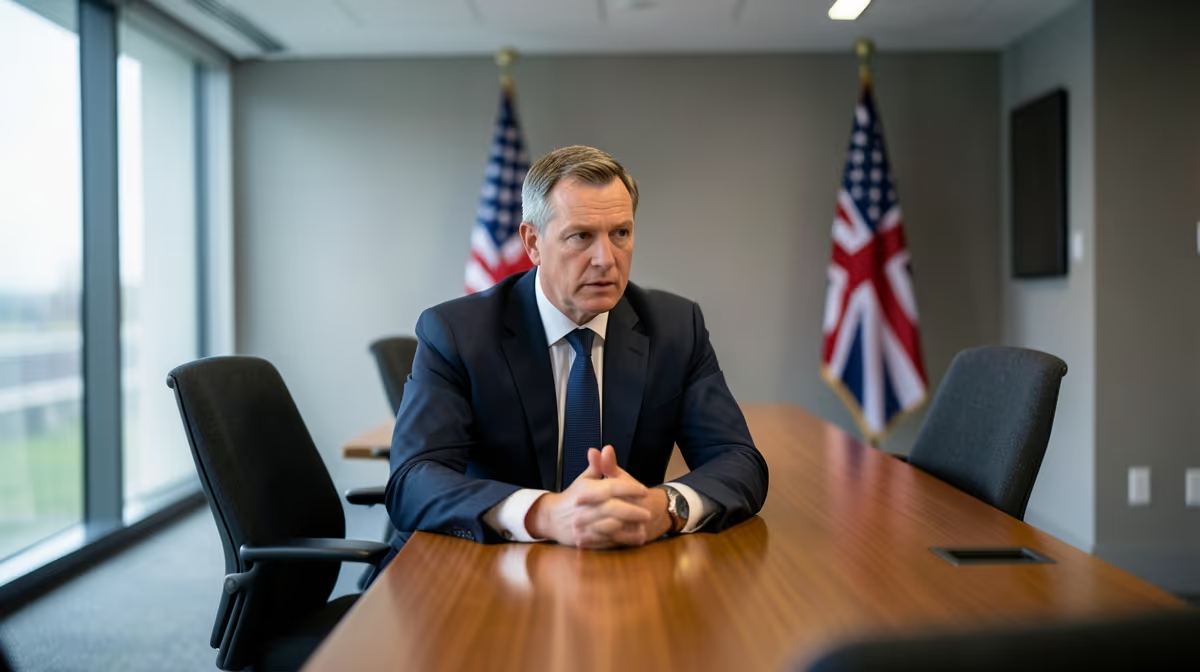
British Defence Secretary John Healey has reaffirmed the United Kingdom's commitment to supporting Ukraine and strengthening the transatlantic alliance during recent high-level diplomatic discussions in the United States. Following the latest cabinet reshuffle, John Healey has emerged as a central figure in the new UK cabinet alongside colleagues like Rachel Reeves and David Lammy, marking a period of strategic transition for the British government.
Background and Political Trajectory
John Healey is a long-serving member of the UK Labour Party and a seasoned political operator whose career spans several decades. First elected to the UK Parliament in 1997, he has navigated the complexities of Westminster through multiple Labour administrations, serving under both Tony Blair and Gordon Brown. His portfolio prior to the current cabinet appointment was extensive, covering housing and local government. This deep experience in domestic policy provided the foundation for his shift toward foreign policy and national security.
His current position as Secretary of State for Defence, which he assumed in July 2024, represents a culmination of his focus on statecraft and regional stability. Representing the constituency of Rawmarsh and Conisbrough, Healey has transitioned from his past roles in urban planning to become a central point of contact for the U.S. Department of Defense. This trajectory is viewed by many as a deliberate effort by the Starmer administration to ensure that the defence portfolio is held by an experienced politician capable of managing the intense demands of the transatlantic security apparatus.
A Strategic Pivot in Foreign Policy
The structural realignment of the UK-US security apparatus is currently responding to a deteriorating North Atlantic security environment. Healey occupies a pivotal role in this shift, serving as a bridge between the Starmer administration's approach of progressive realism and the legacy institutional stability required by the Pentagon. By aligning UK defense priorities with broader American geopolitical interests, Healey acts as a stabilizer for the special relationship, particularly amidst domestic pressures that often confront UK administrations.
This alignment extends beyond mere rhetoric; it involves the deepening of defense-industrial bases. The focus is increasingly on AUKUS pact cooperation, the modernization of nuclear deterrents, and the strategic prioritization of long-term arms export contracts. By consolidating the UK as the primary European kinetic node for United States power projection, the government is ensuring that Britain remains an indispensable partner in the containment of regional threats and the ongoing support of Ukraine.
Economic and Industrial Integration
The economic angle of this shift is as critical as the military one. The current administration is moving toward a model where defense-industrial integration is prioritized over previous civilian budget allocations. This is reflected in the active management of the UK’s military support for Ukraine, where Healey works closely with American officials to ensure a unified Western response. By looking toward U.S. models of technological integration and procurement efficiency, the government hopes to modernize the British military through its upcoming Strategic Defence Review.
This process is expected to inform the UK's future posture on the global stage, ensuring that defense spending is optimized for both interoperability with NATO partners and the high-tech requirements of modern warfare. As part of this, the UK cabinet, including influential voices like Chancellor Rachel Reeves and Foreign Secretary David Lammy, is weighing how to sustain these efforts in a challenging global economic climate.
The Future of the Special Relationship
In the next 24 hours, John Healey will continue high-level engagements with US counterparts to coordinate defense policy and address ongoing Ukraine security assistance. Over the next 72 hours, the focus will intensify on transatlantic security alignment during NATO-related discussions, specifically regarding defense industrial base cooperation and Indo-Pacific security synergy.
Expert projections suggest that Healey will reinforce the traditional security ties by aligning UK interests in the lead up to major global security summits. While the best-case scenario involves strengthened cooperation agreements and faster procurement timelines for joint projects, the worst-case scenario involves potential policy friction arising from budget constraints or diverging views on de-escalation strategies in Eastern Europe. Such outcomes could create temporary diplomatic cooling, but the overarching goal remains the maintenance of a seamless military-to-military alignment.
Analytic Perspectives on Defense Policy
The current diplomatic strategy is heavily influenced by the need to maintain credibility with the Washington establishment. By working closely with figures such as Lloyd Austin and Joe Biden, the UK government is attempting to signal continuity despite the recent change in domestic leadership. This is particularly relevant as the UK moves through its current expansion of the Integrated Review and AUKUS pillar cooperation.
The political angle here is clear: the administration seeks to blend institutional stability with a proactive stance on global security. This involves a transition from traditional intelligence-sharing to a more integrated operational command structure. While the specifics of the upcoming Strategic Defence Review remain in the drafting phase, the intent to use US models as a framework for the UK’s modernization is a significant indicator of the current administration's strategic direction.
Frequently Asked Questions
Who is John Healey and what is his current role?
John Healey is a prominent British politician who currently serves as the Secretary of State for Defence in the United Kingdom. He has been a long-standing member of the Labour Party and has held various shadow ministerial positions throughout his career in Parliament.
What is John Healey's background in politics?
John Healey has served as the Member of Parliament for Wentworth and Dearne, now Wentworth and Dearleigh, since 1997. Over his decades-long career, he has held key roles including Minister for Housing and Shadow Secretary of State for Housing and Defence.
Is John Healey still serving as an MP?
Yes, John Healey continues to serve as an active Member of Parliament. He represents the constituency of Wentworth and Dearleigh and remains a senior figure within the current Labour government.
What are John Healey's primary policy interests?
Throughout his career, John Healey has focused heavily on housing policy, regional development, and national security. In his current role as Defence Secretary, he is primarily focused on military strategy and the United Kingdom's role in global defense alliances.
Did John Healey serve in the government before 2024?
Yes, John Healey served in the Labour governments led by Tony Blair and Gordon Brown in various roles. His previous government experience includes working in the Treasury and the Department for Communities and Local Government.
How can I contact John Healey's office?
Constituents and interested parties can generally contact John Healey through his official parliamentary office in Westminster or his constituency office. Contact details are typically available on the official UK Parliament website under his member profile.
Conclusion
John Healey’s appointment as Defence Secretary marks a definitive phase in the UK’s strategic alignment with the United States. Through a combination of ongoing support for Ukraine, active participation in NATO modernization, and a forthcoming Strategic Defence Review, the British government is prioritizing its role within the transatlantic alliance. As the administration continues to refine its approach to defense-industrial base integration and international security, the focus remains on maintaining a robust and interoperable relationship with Washington. While the specific outcomes of the ongoing defense reviews are yet to be finalized, the current trajectory points toward continued, if not deepened, collaboration on global security challenges.


