
SpaceX Starship Launch Signals A Major Shift In Global Aerospace Power
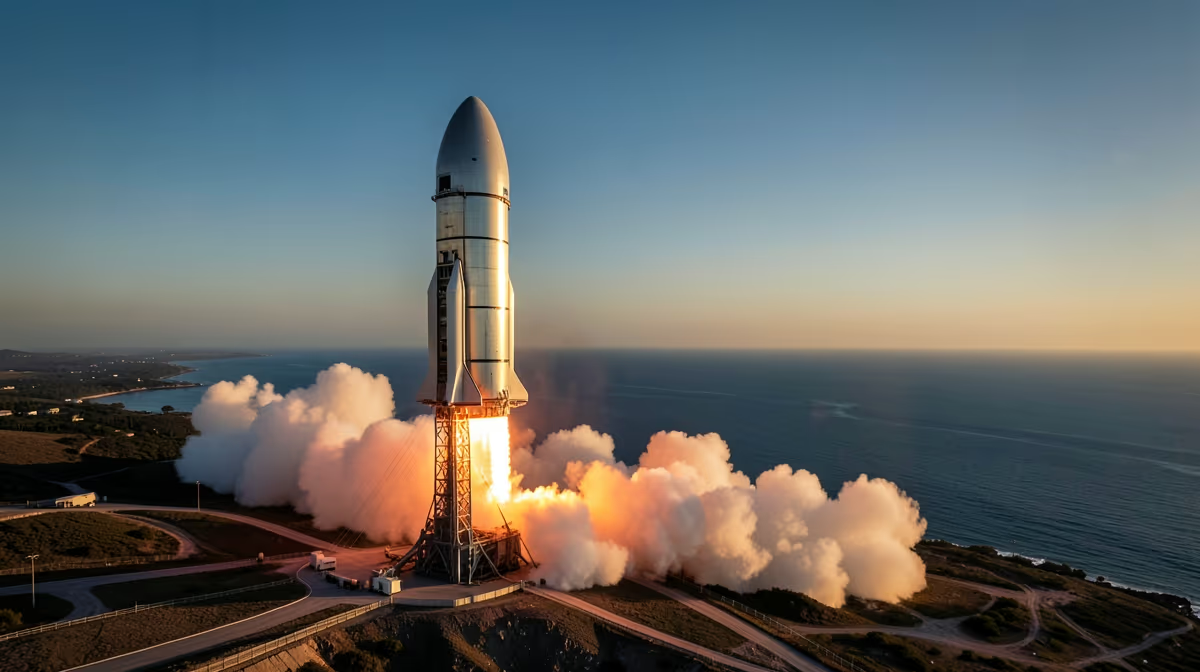
The horizon of human spaceflight shifted significantly as the latest SpaceX Starship launch ascended from the Texas coastline, pushing the boundaries of what is mechanically possible for a heavy-lift vehicle. This pivotal moment for global space exploration and the future of the aerospace industry under Elon Musk's ambitious vision represents a critical transition from iterative prototyping to functional orbital capability.
The Mechanics of Innovation
The massive stainless-steel vehicle lifted off the launchpad at the Starbase facility in Texas, aiming to demonstrate the capability of the Super Heavy booster and the upper-stage spacecraft. Standing approximately 121 meters tall, Starship is the tallest and most powerful rocket system ever developed in aerospace history. It is powered by 33 Raptor engines on the base booster stage, which utilize a combination of liquid methane and liquid oxygen. During this mission, the rocket successfully cleared the pad, with the primary objectives focusing on the critical separation maneuver between the booster and the upper stage, as well as testing the resilience of the thermal protection systems against the intense heat and pressure of flight. By refining these maneuvers, SpaceX intends to validate the vehicle's capacity to transport heavy cargo and large crews to destinations including the Moon and Mars.
The Shift Toward Rapid Reusability
At the heart of the Starship program is a fundamental departure from the legacy model of disposable rocketry. By designing a system that is fully and rapidly reusable, SpaceX aims to slash the prohibitive costs currently associated with accessing space. Historically, rocket stages were discarded after a single use, but this vehicle is engineered to land back on Earth, undergo refurbishment, and relaunch. This architectural shift is essential for enabling the development of a sustainable space economy. It promises to transform how we approach satellite internet constellations, climate monitoring, and the establishment of a permanent human presence on the Moon. NASA has already recognized this potential, contracting the vehicle as the primary lander for the Artemis program, which intends to return astronauts to the lunar surface.
Geopolitical and Strategic Implications
The development of this launch system carries deep implications for the global space-defense race. The shift from state-led exploration to a commercialized, rapid-iteration model necessitates massive launch capacity to achieve orbital dominance. For international partners, particularly the United Kingdom, the success of Starship aligns with the strategic objectives outlined in the Integrated Review Refresh and the Artemis Accords. As nations vie to maintain the high ground in cislunar space, the ability to launch at will and integrate defense satellites rapidly becomes a critical component of national security. Furthermore, this capability directly challenges established launch providers and forces the European Space Agency to reevaluate its sovereign launch capabilities in a market where the cost-per-kilogram is plummeting.
Data Driven Iteration
The internal culture at SpaceX treats every test as a learning opportunity rather than a binary outcome. While the flight provided significant telemetry data, post-flight analysis of the vehicle’s thermal shield performance and the recovery status of the mission hardware remain under internal review. SpaceX leadership has maintained that every flight, regardless of outcome, provides invaluable data that accelerates the development cycle. This iterative approach has moved the project from early prototypes to the highly advanced flight-ready hardware seen today, effectively treating each test flight as a bridge toward operational maturity.
Looking Ahead
The immediate future for the program involves intense technical and regulatory scrutiny. Over the next 24 hours, the focus remains on post-flight data analysis, engine inspection, and regulatory debriefing with the FAA to ensure flight path adherence and site safety compliance. Within 72 hours, SpaceX is expected to issue a formal mission summary report and initiate the recovery of hardware used during the flight. Looking further ahead, the company is targeting an accelerated cadence of test flights. The best-case scenario involves rapid vehicle refurbishment and successful splashdown maneuvers, while the worst-case involves technical anomalies that could lead to infrastructure damage or regulatory delays. The goal remains consistent: achieving orbital refueling and full reusability within the next 18 months.
Frequently Asked Questions
When is the next SpaceX Starship launch?
SpaceX schedules Starship launches based on regulatory approvals and vehicle readiness. You can check the latest mission updates on the official SpaceX website or their social media channels for the most accurate timing.
What is the purpose of the SpaceX Starship program?
The Starship program aims to create a fully reusable transportation system designed to carry both crew and cargo to Earth orbit, the Moon, Mars, and beyond. Its primary goal is to reduce the cost of space access and enable the long-term colonization of other planets.
How tall is the SpaceX Starship rocket?
The complete Starship stack, consisting of the Super Heavy booster and the Starship upper stage, stands approximately 121 meters tall. This makes it the tallest and most powerful rocket ever developed in aerospace history.
Can SpaceX Starship reach orbit?
Yes, Starship is designed to be a fully orbital vehicle capable of reaching Earth orbit and beyond. SpaceX continues to conduct test flights to refine the launch, stage separation, and orbital insertion capabilities of the craft.
Is SpaceX Starship reusable?
Yes, Starship is designed for full and rapid reusability, meaning both the Super Heavy booster and the ship are intended to land and be flown again shortly after. This revolutionary approach is intended to significantly lower the price of space travel.
Where are SpaceX Starship launches held?
SpaceX launches Starship from its private facility known as Starbase, located in Boca Chica, Texas. This site serves as the primary development, manufacturing, and launch hub for the entire Starship program.
Conclusion
The most recent Starship test flight has successfully provided the telemetry and operational data required to push the system closer to its goal of full reusability. By separating the booster and recording the performance of the upper stage during flight, SpaceX continues to refine a vehicle that stands to redefine the economics of space exploration. As the company transitions into the next phase of data analysis and regulatory review, the aerospace industry remains focused on the upcoming cadence of flights. The trajectory of the program remains clear, with SpaceX prioritizing rapid, iterative engineering to secure the future of heavy-lift launch capabilities.


