
K2 Airways Operational Halt Triggers Major Regional Travel Crisis
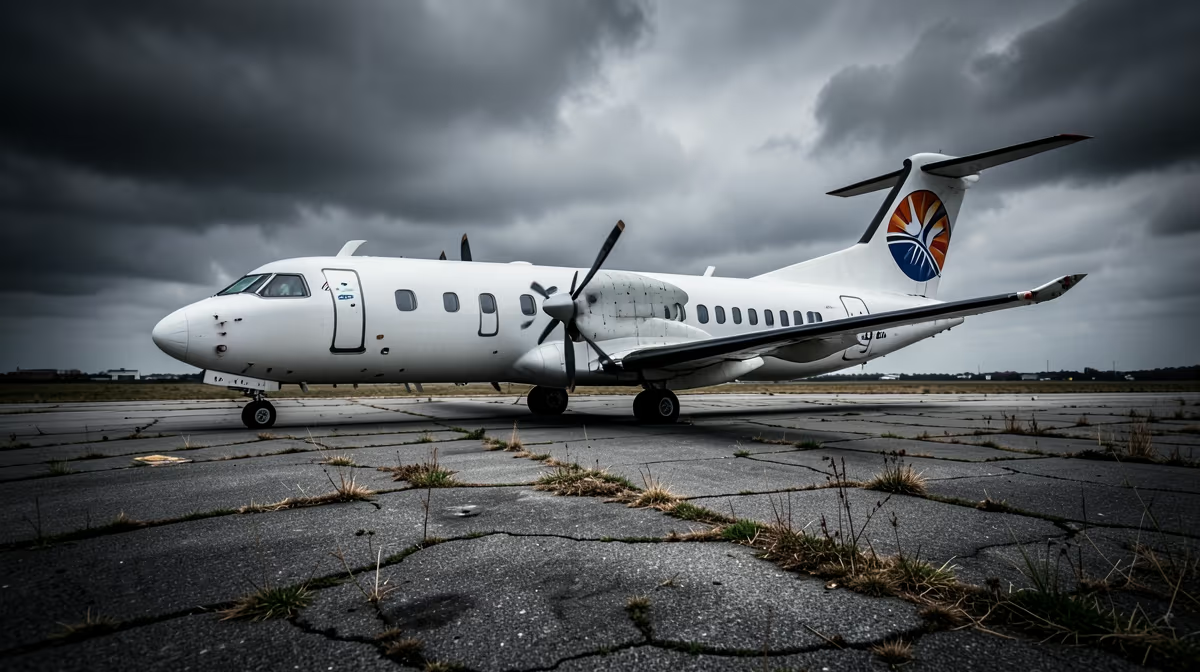
A sudden silence has fallen over the flight lines of a rising regional carrier, leaving thousands of passengers stranded and industry analysts questioning the sustainability of aggressive market expansion. K2 Airways has recently emerged as a focal point for analysts monitoring new trends in travel technology, yet this scrutiny has shifted rapidly from innovation to survival as the airline faces an acute operational crisis.
The Current Operational Crisis
The stability of the regional aviation sector has been thrown into doubt following reports that K2 Airways has abruptly suspended most of its flight operations. This move has triggered widespread disruption, with passengers across the United States left without clear guidance on rebooking or refunding their travel arrangements. While the airline has publicly characterized these measures as part of an ongoing restructuring plan, the scale of the grounding—impacting the company's entire fleet of regional aircraft—suggests a more profound systemic issue.
Transportation authorities are currently engaged in a wide-reaching investigation, scrutinizing the carrier’s financial health and its adherence to safety compliance records. For travelers, the immediate aftermath has been chaotic, with little information available regarding a timeline for a return to service. Federal regulators are advising affected individuals to bypass the airline's customer service channels and seek financial recourse directly through their credit card issuers, a clear signal that the airline's own recovery mechanisms are currently paralyzed.
Fleet Maintenance and Regulatory Scrutiny
The problems facing K2 Airways extend beyond mere liquidity concerns, reaching into the critical areas of fleet maintenance and safety compliance. Throughout 2024, the carrier has struggled to maintain its scheduled service in the Midwestern and Mountain regions of the United States. These difficulties have been compounded by a combination of pilot staffing shortages and the aging nature of its regional fleet, which has demanded more frequent maintenance than the company's limited resources could support.
Current federal oversight has intensified as investigators look into whether the airline’s rapid fleet acquisition and aggressive route expansion compromised its ability to maintain standard safety protocols. The Federal Aviation Administration and the Department of Transportation are now placing the airline under a microscope, with the next 72 hours expected to include mandatory safety briefings and the potential for temporary grounding of specific fleet units to verify maintenance records. For a carrier of this size, the margin for error has proven to be razor-thin, and the company is now effectively in a race against time to prove it can operate sustainably under heightened federal oversight.
The Economic and Structural Roots
The collapse of K2 Airways is not an isolated event but rather a symptom of broader pressures within the regional aviation industry. The airline’s initial business model, which focused on providing essential air connectivity to underserved mid-sized cities, has been undermined by rising fuel costs and fierce competition from both legacy carriers and established low-cost airlines. Analysts point to a root cause involving aggressive market consolidation, where the pursuit of dominance in secondary airport hubs has stretched the operational capabilities of smaller entities to the breaking point.
Beyond the balance sheet, there are questions regarding the allocation of resources. Investigations are exploring whether the utilization of subsidized essential air service funds was prioritized correctly, or if those resources were diverted in a manner that inhibited the maintenance of the very routes they were meant to support. This historical parallel to the deregulation era of the late 1970s, which saw the collapse of carriers like Braniff International, serves as a cautionary tale about the dangers of unsustainable over-expansion in a highly capital-intensive industry.
Impact on the Competitive Landscape
The failure of K2 Airways creates a significant ripple effect across the domestic travel sector. Travelers who relied on the carrier for affordable connections between smaller regional hubs now find themselves with limited alternatives, forcing other airlines to scramble to accommodate displaced passengers during a busy travel season. This disruption highlights the volatility of the budget airline model and raises questions about the long-term viability of carriers that rely on predatory pricing to force smaller competitors out of the market.
From a geopolitical and logistics standpoint, the loss of this regional capacity serves as a blow to domestic supply chain resilience. The company had initially positioned itself as a key player in connecting remote communities to larger hubs, and its withdrawal leaves a vacuum that the existing aviation infrastructure may be unable to fill in the short term. The current situation demands a reassessment of how regional aviation is supported and regulated to ensure that local communities are not left permanently disconnected.
Looking Toward the Future
Predictions for the immediate future of the airline remain guarded. Within the next 24 hours, increased regulatory scrutiny from federal agencies is expected as they complete initial audits. The most optimistic scenario involves a successful fleet certification process and the implementation of new, rigorous safety protocols that would allow for a gradual resumption of services with minimal long-term flight cancellations. Conversely, the worst-case scenario involves the identification of systemic safety failures that could lead to prolonged fleet grounding and the permanent loss of the airline's operating authority.
The leadership team has indicated that they are actively seeking partnerships with larger legacy carriers to streamline their booking systems and bolster their operational oversight. However, the success of these negotiations, coupled with the ongoing pilot recruitment push, remains highly uncertain. Until these variables are resolved, the airline remains in a state of suspended animation, waiting for the results of federal investigations to determine if it can once again clear the runway.
Frequently Asked Questions
Is K2 Airways a legitimate airline?
K2 Airways is a regional aviation service provider primarily known for operating in specific territories like Pakistan. It is a legitimate airline that focuses on connecting remote areas with major hubs to improve regional connectivity.
Where does K2 Airways fly?
K2 Airways primarily operates domestic routes within Pakistan, focusing on mountainous and hard-to-reach regions. Travelers should check their official website or booking platforms for the most current schedule of active flight paths.
How can I book a flight with K2 Airways?
You can generally book flights through the official K2 Airways website or authorized travel agents. It is recommended to verify flight availability and pricing directly through their digital portal to ensure you have the latest travel updates.
What is the baggage policy for K2 Airways?
The baggage policy for K2 Airways varies depending on the fare class and the specific route flown. Passengers are advised to review their booking confirmation or the airline's official website to understand weight limits and carry-on restrictions before traveling.
Does K2 Airways offer international flights?
K2 Airways primarily focuses on domestic regional connectivity rather than international routes. Currently, their services are tailored to serve local demand within their operational base rather than global long-haul travel.
How do I check my K2 Airways flight status?
You can check the status of your K2 Airways flight by visiting their official website's flight status page. Alternatively, contacting their customer service support line can provide real-time updates regarding any potential delays or schedule changes.
Conclusion
K2 Airways remains in the midst of a critical transition as it balances federal safety investigations with the need for immediate corporate restructuring. While the airline continues to seek pathways toward operational recovery and legacy partnerships, the immediate reality remains one of grounded fleets and significant passenger disruption. The developments in the coming days will be defined by the outcome of federal audits and the success of the carrier’s attempts to secure its financial and safety future. Passengers and industry observers alike must monitor official announcements from transportation authorities as the situation evolves.


.webp)

.webp)
