
Mark Carney NATO Defense Stance Signals Major Shift for Canada
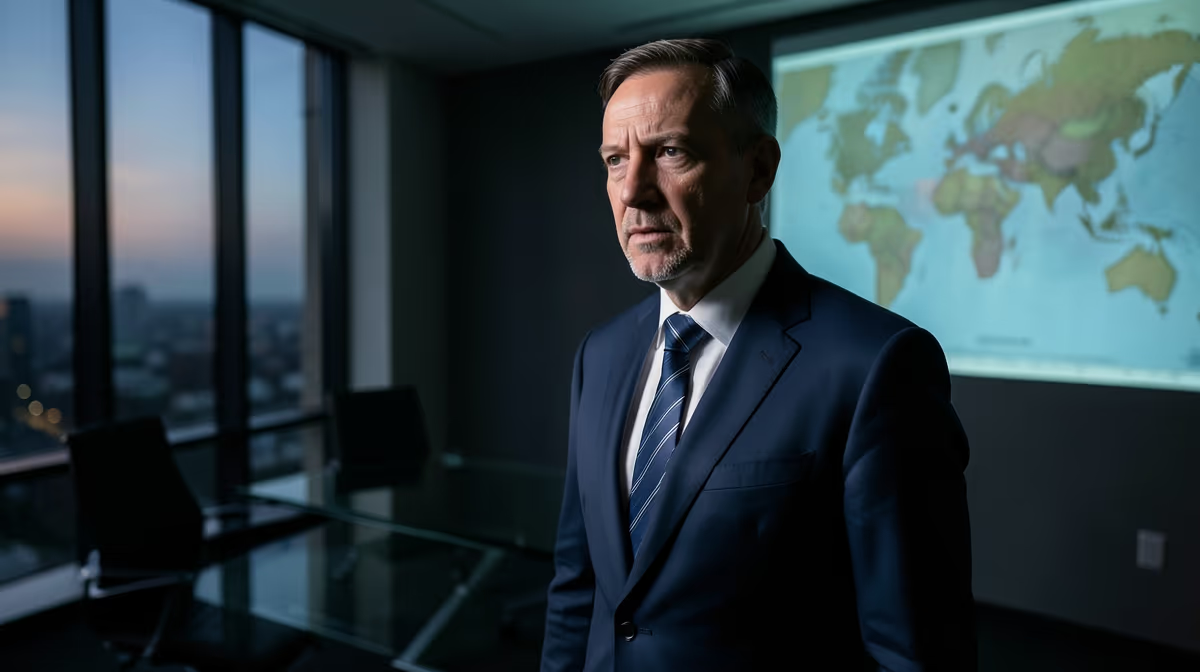
The shifting tectonic plates of international security have thrust Canada into a uncomfortable spotlight, forcing a re-evaluation of its long-standing approach to military funding. As Canada faces increasing pressure to meet international targets, Mark Carney NATO defense spending discussions have become central to the conversation regarding the nation's role in global security and its future economic trajectory.
The Economic Argument for Increased NATO Defense Spending
Former Bank of Canada and Bank of England Governor Mark Carney has intensified calls for Canada to substantially increase its defense spending to meet NATO’s 2 percent of GDP target. This move is not merely a diplomatic necessity but is framed by Carney as a fundamental pillar of national resilience. In recent forums and public commentary, he has emphasized that the international order is facing its most significant stress test since the Cold War, necessitating a firmer commitment from G7 members.
Carney argues that national security is a prerequisite for economic prosperity. By his estimation, a well-funded military acts as a deterrent that protects Canadian trade interests and ensures stability in the global order. This transition toward NATO compliance would likely mandate a massive infusion of capital into the domestic defense-industrial base, representing a strategic investment in the infrastructure of global trade and regional security rather than a drain on national resources.
Analyzing Mark Carney's Impact on Canadian Foreign Policy
Carney is currently positioning himself within the broader policy discourse, serving as a senior advisor to the Liberal government and chairing a task force focused on economic growth. His advocacy for a re-industrialization strategy that integrates defense spending as a core pillar of fiscal recovery suggests a deliberate attempt to align Canada with the Biden administration’s security priorities. Analysts suggest this is a calculated hedge against potential future shifts in American isolationist trends, often referred to as the Trump 2.0 scenario.
By championing these security obligations, Carney attempts to bridge the gap between his background in global finance and the practical needs of national defense. This shift is significant as political observers look for signs of a future leadership bid. By tackling the defense deficit, he moves to distance himself from the elitist financial labels of his past, instead signaling a pragmatic, centrist fiscal approach that seeks to satisfy Washington’s expectations without alienating domestic supporters.
Global Economic Security and Canada's Alliance Commitments
The tension surrounding Canada's military posture dates back to the 2014 Wales Summit, where the country committed to the 2 percent target. Following years of underinvestment, Canadian credibility within the Five Eyes and NATO alliance is at a perceived low point. Failure to meet these commitments risks secondary trade friction with the United States and diminishes Ottawa's influence in critical Arctic security dialogues where Russian and Chinese activities are increasingly prevalent.
Historical parallels are frequently drawn to the 1960s, a period marked by deep ruptures in the bilateral security framework between the Canadian government and U.S. administrations. Today, the pressure from American congressional hawks and the White House is mounting, creating a delicate balance for Ottawa. The requirement for a clear fiscal roadmap is now a primary focus for both NATO leadership and Canadian opposition leaders, who view the government’s timeline as a litmus test for its leadership credibility.
A Shifting Geopolitical Landscape
The debate underscores a fundamental shift in how Canada views its international obligations. While the country historically relied on unconditional U.S. security guarantees, the current volatile international environment is forcing a change in perspective. Carney’s commentary highlights a growing consensus among political circles that Canada must modernize its military to remain a credible partner.
The practical implications of this shift are profound for Canadian taxpayers. Increased defense spending necessitates difficult decisions in the federal budget, complicating choices regarding the allocation of funds between military upgrades and social services such as healthcare and housing. As the government navigates these requirements, the pressure to clarify policy positions will only intensify, with stakeholders ranging from the Canadian Armed Forces to international treaty partners watching for a formal commitment to a phased increase in spending.
Projecting the Near Future
In the next 24 hours, media speculation is expected to increase regarding Carney's political future, particularly as he faces renewed pressure to clarify his stance on defense commitments. Moving into the next 72 hours, analysts anticipate that opposition leaders will frame any ambiguity in his policy as a lack of resolve, likely forcing a more formal policy statement.
Expert predictions suggest that Carney will maintain a centrist, fiscally prudent approach. The best-case scenario for his political future involves him articulating a credible, phased roadmap toward the 2 percent target, thereby distancing himself from the current administration’s perceived shortcomings. Conversely, the worst-case scenario involves being perceived as overly aligned with U.S. demands, which could trigger a backlash from the party's left wing and provide political ammunition for his critics.
Frequently Asked Questions
What is Mark Carney's stance on Canada's NATO defense spending?
Mark Carney has advocated for Canada to take a more proactive role in international security and fulfill its NATO defense spending commitments. He emphasizes that strengthening national defense is a critical component of Canada's broader economic and geopolitical strategy in an increasingly unstable global environment.
Has Mark Carney criticized Canada's current NATO contributions?
Carney has highlighted the need for Canada to align its defense investment more closely with its G7 partners. While he focuses on long-term economic stability, he frequently points out that meeting defense obligations is essential for Canada to maintain its influence and credibility on the world stage.
What role does Mark Carney see for Canada within NATO?
Carney views Canada as a key middle power that must modernize its military capabilities to address evolving security threats. He believes that by increasing defense spending, Canada can play a more significant role in collective security initiatives and strengthen its transatlantic partnerships.
Is Mark Carney currently involved in Canadian defense policy?
Mark Carney serves as a senior advisor to the Liberal government and chairs a task force focused on economic growth. While his primary mandate is economic, his influence extends to national security policy, as he argues that fiscal health and defense readiness are inextricably linked.
Does Mark Carney support increasing Canada's military budget to 2% of GDP?
Carney has signaled support for Canada moving toward the NATO target of 2% of GDP spent on defense. He views this as a necessary investment to ensure Canada can effectively respond to modern security challenges while fostering growth in the domestic defense industry.
How does Mark Carney connect Canadian economic policy to NATO defense?
Carney argues that Canada's security is the foundation for its economic prosperity and long-term investment climate. He suggests that a well-funded military acts as a deterrent that protects Canadian trade interests and ensures stability in the global order, which directly benefits the national economy.
Conclusion
Mark Carney’s intervention in the debate over defense spending marks a pivotal moment for Canadian policy. As pressure from NATO allies and the United States continues to build, the call for a clear, 2 percent GDP-compliant roadmap is moving from the periphery of economic discourse to the center of national strategy. The coming days will likely determine how this debate shapes the political landscape, with Carney’s ability to reconcile fiscal prudence with security necessity being the primary metric of his influence. For now, the focus remains on whether the current government can transition its stated intentions into a concrete, long-term budgetary commitment that secures Canada's standing within its most critical security alliances.


.webp)
