
Nigel Farage Clacton Move Sparks Major Shift in Global Populist Ties
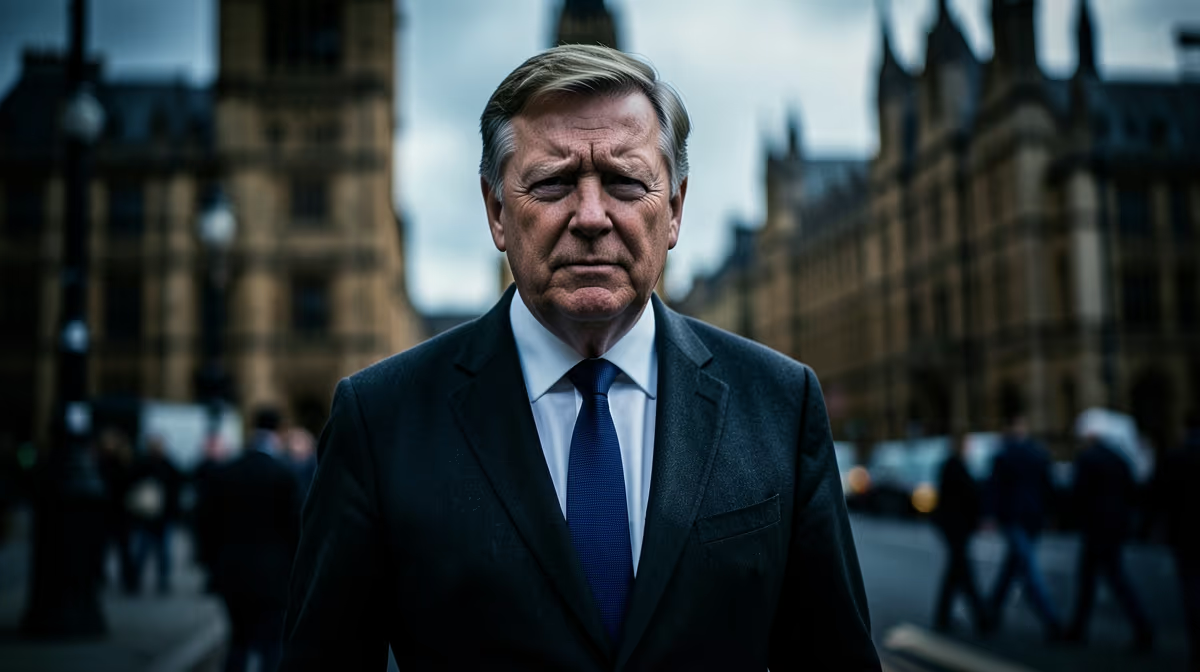
Nigel Farage has once again captured the attention of UK politics following his major Clacton announcement, a move widely covered by Sky News and international outlets. This strategic pivot into the British Parliament signals a broader realignment of Western populist power structures, carrying significant implications for global trade and defense policy that extend far beyond the shores of the United Kingdom.
A Catalyst for Transatlantic Populism
The root cause of this political shift lies in the crystallization of populist-nationalist sentiment against institutional globalization, leveraging deep-seated cultural anxieties common to both post-Brexit Britain and the post-industrial American Rust Belt. Farage, who rose to fame as the head of the UK Independence Party and a central architect of the 2016 Brexit referendum, has successfully rebranded his platform through Reform UK. By winning a seat in the Clacton constituency in July 2024, he has transitioned from an influential outsider to a formal parliamentary participant, capable of utilizing the legislative process to challenge traditional party structures. His emergence is not merely a domestic political development but a manifestation of a global pushback against elites, which he frames as a movement for those who feel the current economic and social systems have forgotten the working class.
The MAGA-Reform Alignment
Farage currently functions as a transatlantic conduit for the American MAGA movement, aiming to normalize nationalist-populist rhetoric within the British parliamentary system to exert pressure on the Republican establishment and NATO stability. His strategy involves a sophisticated integration of digital infotainment and algorithmic political influence that monetizes grievance, effectively bypassing traditional party channels to maintain a permanent state of grassroots insurgent mobilization. By consistently aligning his messaging with Donald Trump's policy platform, Farage has maintained relevance in the U.S. media landscape, often framing British domestic issues through a lens familiar to American conservative viewers. This alignment suggests a growing global coordination among right-wing leaders who share similar views on immigration, national sovereignty, and trade.
Economic and Geopolitical Implications
The promotion of an isolationist, deregulation-heavy economic model that favors bilateral sovereignty over multilateral trade agreements threatens to destabilize traditional transatlantic financial alliances. From a geopolitical perspective, this alignment with America First isolationism risks the integrity of the special relationship between the UK and the US, potentially weakening the Western bloc's cohesive posture against multipolar shifts involving Russia and China. Political science observers note that Farage's impact in the United States is less about immediate policy change and more about reinforcing the echo chambers of American populism. His presence in the U.S. media landscape acts as a bridge, ensuring that nationalist priorities remain at the forefront of the trans-Atlantic political discourse.
Future Trajectory and Strategic Outlook
Within the next 24 hours, expect to see an increased frequency of media appearances on right-leaning US cable networks as Farage capitalizes on post-election discourse regarding populism and immigration. Looking toward the 72-hour window, his strategy will likely involve aligning with American conservative influencers to frame recent UK political shifts as a precursor to global anti-establishment movements. Experts predict that Farage will leverage his platform in the United States to solidify his brand as the definitive bridge between Brexit-style nationalism and the American MAGA movement. While his supporters view this as a successful consolidation of a transatlantic alliance that strengthens his relevance, critics warn that this strategy risks alienating him from mainstream UK political discourse, creating a perception that he is more focused on international media fame than his domestic parliamentary duties in Clacton.
Historical Context and Political Weight
Farage’s rise shares historical parallels with the 1930s America First Committee, which sought to influence U.S. foreign policy toward non-interventionism through a powerful, media-savvy populist discourse. His political trajectory, from the 2016 Brexit victory validating the nationalist-populist electoral template to his current role as a strategic proxy for American nationalist interests, demonstrates a consistent effort to disrupt traditional governance. His ability to win a seat in Parliament marks a significant comeback, validating his status as a key interlocutor between UK reformist movements and the U.S. nationalist base. As a member of the European Parliament for many years in the past, he is well-versed in the mechanisms of the institutions he critiques, a background that continues to inform his current legislative approach.
Expert Analysis of the Shifting Landscape
Political analysts observe that Farage’s role is primarily to act as a catalyst for discourse rather than just a policy maker. The effectiveness of his branding depends on his ability to maintain high-profile appearances that keep his brand relevant. The extent to which he may influence future transatlantic policy cooperation or serve as an informal advisor in any potential future Trump administration remains a subject of ongoing speculation. His success shows that anti-establishment sentiment remains a powerful force in democratic societies. The ongoing developments surrounding his work in Clacton and his media presence serve as a critical case study for those monitoring the evolution of Western political coalitions and the integration of nationalist agendas into established parliamentary systems.
Frequently Asked Questions
Who is Nigel Farage?
Nigel Farage is a prominent British politician and broadcaster known for his central role in the campaign for the United Kingdom to leave the European Union. He served as the leader of the UK Independence Party (UKIP) and later became the leader of Reform UK.
What is Nigel Farage's current political role?
As of 2024, Nigel Farage serves as a Member of Parliament (MP) for the Clacton constituency in the UK. He also acts as the leader of the Reform UK political party, which he re-entered to contest the general election.
Why is Nigel Farage famous in the US?
Nigel Farage gained significant fame in the United States due to his vocal support for Brexit and his political alignment with populist movements. He has frequently appeared on American conservative media outlets and maintains a high profile as a commentator on global politics.
What party does Nigel Farage lead?
Nigel Farage is the leader of Reform UK, a right-wing populist political party. He took over the leadership role in 2024, refocusing the party's platform on issues such as immigration control and economic reform.
Did Nigel Farage support Donald Trump?
Yes, Nigel Farage has been a vocal supporter of Donald Trump for several years, often describing himself as a close ally. He has made numerous public appearances at Trump rallies and has frequently praised the former president's political strategies.
What were Nigel Farage's main arguments for Brexit?
Nigel Farage argued that the United Kingdom needed to leave the European Union to regain national sovereignty and control its own borders. He contended that EU membership hindered the UK's ability to govern itself, manage trade independently, and determine its own immigration policies.
Conclusion
Nigel Farage has secured a renewed platform as a Member of Parliament for Clacton, successfully transitioning from a protest figure to a formal legislative voice. His ongoing efforts to build a trans-Atlantic populist alliance through consistent U.S. media engagement and ideological alignment with American nationalist interests continue to reshape the political landscape. While his influence on domestic British policy remains a subject of intense debate, his ability to bridge international populist movements suggests that he will remain a central figure in future discussions regarding sovereignty, trade, and global political realignment. The coming months will likely test the durability of this populist consolidation as he balances his responsibilities in the UK Parliament with his active role in the U.S. political sphere.


.webp)
