
Oil tanker u-turn in Strait of Hormuz sparks sudden market alarm
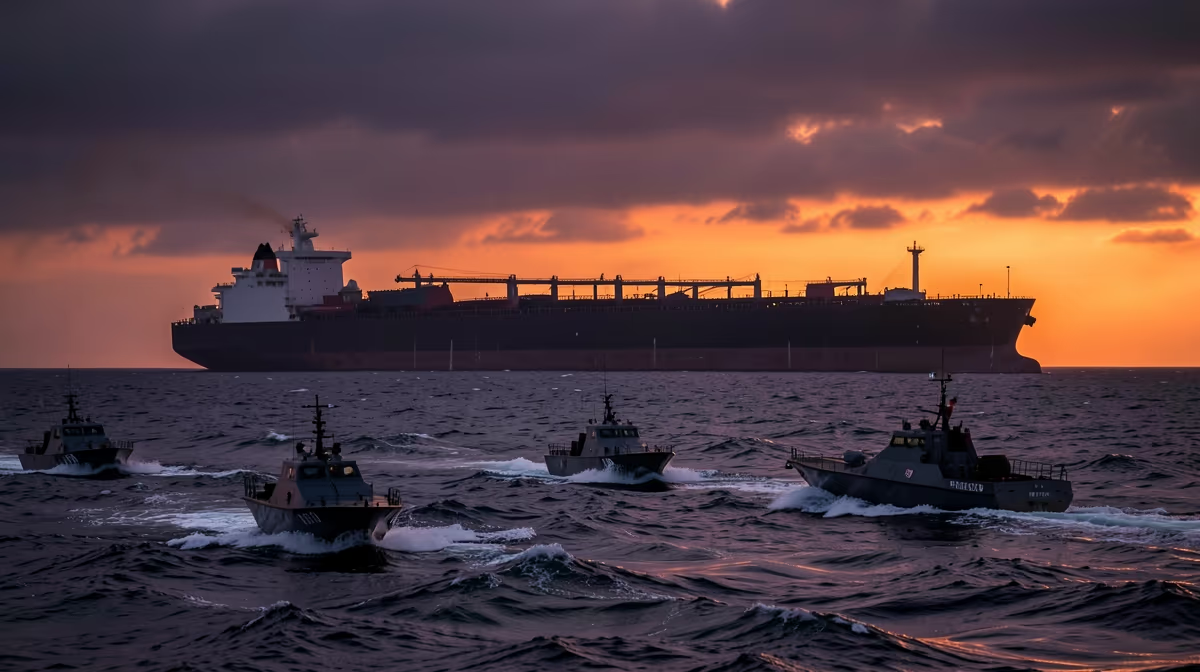
A commercial oil tanker diverted its course in the Strait of Hormuz on Tuesday following an encounter with Iranian naval forces, marking the latest instance of heightened maritime tensions in the strategic waterway. This unexpected oil tanker u-turn in the Strait of Hormuz has intensified maritime security fears, triggering sharp fluctuations in global oil market volatility as energy traders and policymakers weigh the implications for global supply chains.
The Anatomy of an Interruption
The incident unfolded in the early morning hours, prompting a rapid response from regional security monitors who observed the vessel performing a mid-transit U-turn. After being approached by Iranian Revolutionary Guard Corps (IRGC) fast-attack craft, the vessel abandoned its transit and headed back toward international waters. While the specific identity of the tanker and its precise cargo status remain under investigation, satellite tracking data confirms that the ship was operating according to international maritime regulations until the interaction forced a sudden change in navigation.
The US Navy Fifth Fleet, headquartered in Bahrain, has acknowledged the event and remains in a state of heightened surveillance. Although officials have not confirmed whether a direct intervention by coalition forces was necessary, they have emphasized that they are coordinating with regional partners to ensure the safety and free flow of commerce. Iranian state media has yet to issue a formal comment, though IRGC-affiliated outlets frequently characterize such naval presence as routine exercises intended to protect Iranian territorial waters.
A Vital Global Chokepoint
The Strait of Hormuz serves as one of the world's most critical energy arteries, connecting the Persian Gulf to the Gulf of Oman. As the primary gateway for approximately 20 percent of the world's total petroleum consumption, any disruption to this passage carries immediate weight in global boardrooms and commodity exchanges. The region has been a geopolitical flashpoint for decades, serving as a stage for power struggles that frequently involve tanker seizures, naval patrols, and intense military posturing.
For the global economy, the stakes are tangible. Even a temporary blockage or a credible threat to shipping lanes can cause crude oil prices to spike, creating a direct ripple effect that influences everything from gasoline costs to heating prices for households. Because the United States and other global economies depend on stable energy prices, the movement of tankers through this narrow corridor is monitored with extreme precision by international security observers.
The Strategic Calculus
The root cause of this latest incident appears to be the tactical repositioning of commercial tankers in response to Iranian maritime shadow tactics. This maneuver reflects a strategic acknowledgment of rising war-risk insurance premiums and regional security volatility. Analysts view the U-turn not merely as a navigation choice, but as a kinetic signal of a shifting maritime environment where non-state actors can influence energy flows.
This development highlights the limitations of existing frameworks like Operation Prosperity Guardian, raising questions about the projection of power in a region where threats remain fluid. The presence of non-Western financial intermediaries and opaque shadow fleet insurance providers has further complicated the landscape, as these entities often facilitate detours that circumvent US sanctions while simultaneously maintaining Iranian oil revenue streams. This de-facto shift in maritime sovereignty forces US naval assets to remain tethered to the Persian Gulf, a reality that complicates the broader strategic goal of pivoting military resources toward the Indo-Pacific.
Risks to Global Supply Chains
For shipping companies, the incident serves as a stark reminder of the fragile nature of just-in-time supply chains. Diverted tanker traffic creates immediate logistical delays and necessitates a re-evaluation of security protocols. When vessels are forced to avoid flashpoints, the resulting costs—including fuel consumption and insurance surcharges—directly contribute to inflationary pressures on global energy commodities.
Maritime security experts warn that unpredictable interactions in such a confined space increase the probability of miscalculation between naval powers. While no injuries or hostile fire were reported during this specific encounter, the incident has prompted shipping companies operating in the Gulf to review their contingency plans. The psychological impact on the market, coupled with the economic reality of higher premiums, suggests that the incident will have a lingering effect on transit patterns in the region.
Projecting the Next Steps
In the next 24 hours, market observers expect to see increased naval patrols by the US Fifth Fleet and regional allies, focused on monitoring tanker behavior and deterring potential interference. Over the subsequent 72 hours, the focus is likely to shift toward the clarification of vessel intent and the use of diplomatic backchannels to de-escalate tensions and ensure the continued safe passage of commercial traffic.
Most experts characterize the current situation as a tactical repositioning rather than a move toward kinetic confrontation, noting that neither Washington nor Tehran currently stands to benefit from a complete disruption of oil flow. The best-case scenario involves the vessel eventually resuming its intended course under international naval escort without further incident. Conversely, the worst-case scenario involves the U-turn indicating a broader sanctions evasion attempt, which could lead to an Iranian boarding operation, triggering a sharp spike in crude oil prices and immediate diplomatic retaliation from the United States.
Frequently Asked Questions
Can oil tankers make a U-turn in the Strait of Hormuz?
While technically capable of maneuvering, large oil tankers rarely make full U-turns within the narrow and busy shipping lanes of the Strait of Hormuz. International maritime regulations and safety protocols generally require these massive vessels to follow strict traffic separation schemes to prevent collisions.
Why would an oil tanker turn around in the Strait of Hormuz?
An oil tanker might turn around in the Strait of Hormuz due to heightened regional geopolitical tensions, security threats, or direct instructions from their home nation or charterer. Occasionally, ships may change course to avoid potential interception or if the vessel is denied entry into destination ports.
Is the Strait of Hormuz wide enough for ships to turn around?
The Strait of Hormuz has a narrow deep-water shipping channel, typically only two miles wide for inbound and outbound traffic. Because of these constraints, tankers usually avoid U-turns and instead continue through the strait to reach safer, open waters before attempting any major course corrections.
What happens if a tanker attempts a U-turn in the Strait of Hormuz?
Attempting a U-turn in the Strait of Hormuz would likely trigger alerts from regional maritime security agencies and coast guards. Because the strait is a critical global chokepoint, such maneuvers could cause significant traffic disruption and be interpreted as suspicious activity by monitoring naval forces.
How do tankers navigate the Strait of Hormuz safely?
Tankers navigate the Strait of Hormuz by strictly adhering to Traffic Separation Schemes (TSS) monitored by Oman and Iranian authorities. They maintain steady courses and speeds while communicating with local vessel traffic services to ensure safe passage through the high-density maritime corridor.
Are there security risks that force tankers to change course in the Persian Gulf?
Yes, tankers may deviate from their planned routes due to reported pirate activity, military exercises, or regional conflicts. When security conditions deteriorate, shipping companies often prioritize crew safety and cargo protection, leading them to delay transit or reroute vessels entirely.
Conclusion
The unexpected U-turn of a commercial oil tanker in the Strait of Hormuz has confirmed a period of heightened sensitivity in one of the world's most critical energy transit zones. While the vessel’s specific identity remains under verification, the event has prompted increased surveillance by the US Fifth Fleet and raised concerns regarding the stability of regional maritime routes. Market participants should expect sustained volatility in the short term as analysts monitor for further interactions and potential diplomatic developments. The focus remains on maintaining the free flow of commerce through the Strait, as global energy markets continue to react to the persistent tension between regional security maneuvers and international navigation requirements.


.webp)
