
RBI Polymer Currency Notes Pilot Signals Major Financial Shift
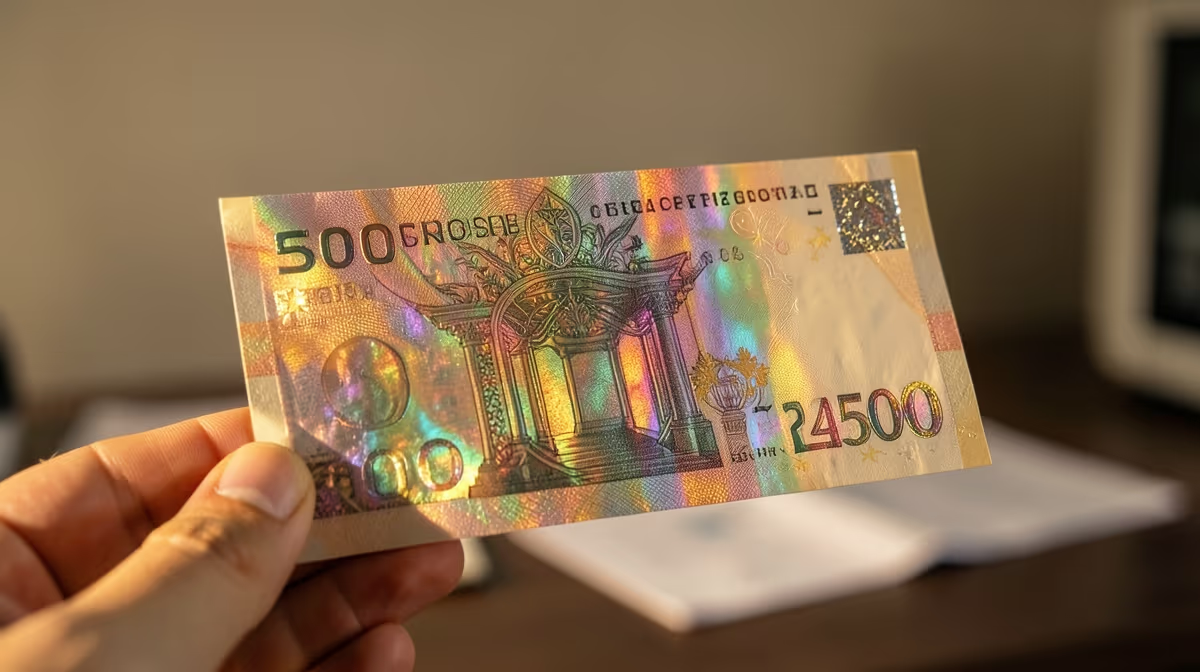
The Reserve Bank of India is evaluating the potential shift from traditional paper to plastic as the rbi polymer currency notes pilot gains momentum in discussions regarding monetary policy. This transition, aimed at modernizing the nation's physical tender, represents a significant departure from the cotton-substrate banknotes that have defined India’s financial landscape for decades.
A Legacy of Paper and the Shift Toward Innovation
For years, the Reserve Bank of India has managed the complex lifecycle of currency, primarily relying on cotton-based paper. However, the inherent challenges of this medium—susceptibility to moisture, rapid wear and tear, and the constant threat of sophisticated counterfeiting—have prompted a re-examination of material science in monetary policy. The proposed shift to polymer currency is not merely a change in texture; it is an attempt to address the practical difficulties of circulating cash in a country with diverse, often harsh, climatic conditions. By utilizing a thin, flexible plastic film, the RBI hopes to create notes that are not only cleaner but also significantly more resilient to the humidity and heat that characterize many Indian regions.
The Mechanics of the Pilot Project
The journey toward polymer currency is far from new. As early as 2010, the central bank announced plans to field-test one billion plastic notes, specifically in the 10-rupee denomination. By 2014, these trials expanded to five cities including Kochi, Mysore, Jaipur, Shimla, and Bhubaneswar. These initial steps were intended to provide real-world data on how the substrate performs during high-frequency transactions. Despite these efforts, the 2016 demonetization event forced a pivot in priorities, shifting the institution's focus toward replacing high-value paper currency and managing the immediate liquidity landscape. Today, the project remains in an evaluative phase, as the government works to finalize procurement and distribution strategies that align with current national infrastructure.
Economic and Security Rationales
The primary motivation behind the rbi polymer currency notes pilot is fiscal efficiency and security. While the initial production cost of polymer substrate is higher than that of traditional cotton-based paper, the long-term benefits are substantial. Polymer notes have a lifespan that is estimated to be three to four times longer than paper currency. This durability translates into fewer replacements, which could significantly lower the printing costs for the exchequer over time. Furthermore, polymer notes integrate advanced security features that are notoriously difficult to replicate, providing a robust defense against counterfeiters. This technological hurdle serves as a modern guardian for the integrity of the Indian economy, ensuring that cash remains a secure and trusted medium of exchange.
Global Trends and the Digital Transition
India’s exploration of polymer banknotes places it in the company of several other major economies, including Australia, Canada, and the UK, which have successfully transitioned to these materials. Geopolitically, this shift signals a move toward standardized international security features and reflects a broader effort to reduce reliance on imported specialized cotton fiber. Beyond the physical properties, there is a hidden, strategic layer to this move: by making physical cash more difficult to process in informal, unauthorized channels, the transition subtly encourages the population to rely more on the formal, KYC-compliant digital banking systems. This is a critical component of the wider push toward a digital India, where the physical and virtual systems of currency increasingly complement one another.
Technical Challenges and Public Reception
Transitioning to a new material is not without operational risks. One of the most significant technical challenges lies in the existing infrastructure, specifically the thousands of ATMs and note-sorting machines that are currently calibrated for paper. These machines must be adjusted to detect and handle the unique physical characteristics of polymer, such as its flexibility and texture. Analysts have noted that the success of any large-scale rollout depends heavily on the performance data gathered from regional pilots. Should the technical implementation falter, or if the public finds the new notes difficult to handle, the project could face delays or even suspension. Conversely, a successful pilot could set the stage for a more durable, secure, and cost-effective currency system for the world’s fastest-growing economy.
Expert Predictions and What Lies Ahead
As the RBI continues its assessment, analysts expect the pilot phase to remain focused on lower denominations. By testing resilience in tropical climates with lower-value notes, the central bank minimizes the risk of widespread public confusion. In the coming 24 hours, media speculation regarding the specific timeline for distribution is expected to persist as observers wait for official confirmation. Looking toward the 72-hour window, public inquiry regarding the safety and handling of the potential new notes is likely to rise. While the best-case scenario involves a clear demonstration of long-term fiscal savings, the worst-case remains a potential hurdle in automated dispensing systems. For now, the process remains a carefully measured study in balancing tradition with technological necessity.
Frequently Asked Questions
Has the RBI officially launched polymer currency notes in India?
The Reserve Bank of India (RBI) initiated a field trial for polymer-based Rs 10 notes back in 2014 across five cities, but there has been no official rollout for mass circulation following those projects.
Why did the RBI consider introducing polymer notes?
The RBI explored polymer notes because they are more durable, have a longer shelf life, are resistant to dirt and moisture, and offer superior protection against counterfeiting compared to paper notes.
Are plastic currency notes currently in use in India?
No, plastic or polymer notes are not currently in circulation; all banknotes issued by the RBI remain made of cotton-based paper.
What happened to the RBI pilot project for polymer notes?
The project was used to assess performance in various climates. While the RBI analyzed feedback, it has not yet moved toward a full-scale national implementation.
What are the main differences between paper and polymer notes?
Polymer notes are made from flexible plastic film, making them cleaner and more durable than paper. While paper is traditional, polymer offers a longer lifespan and harder-to-forge security features.
Will India switch to plastic currency notes in the near future?
There is no official announcement regarding a permanent switch. Any major change in currency substrate would be communicated through official RBI or government channels.
Conclusion
The exploration of polymer currency by the Reserve Bank of India represents a strategic effort to enhance the longevity and security of the nation's legal tender. While the pilot projects have provided valuable data on durability and environmental resilience, the transition remains in the analytical phase, with the RBI weighing the higher production costs against the long-term fiscal benefits. For now, cotton-based paper remains the standard for India, with any future changes dependent on the continued evaluation of existing pilot data and the successful integration of logistical requirements like ATM compatibility. Citizens should expect continued monitoring of these trials as the central bank balances the needs of a modern economy with the practical realities of currency management.


.webp)


.webp)
