
Russian Warships in Caribbean Signals a Shift Global Powers Cannot Ignore
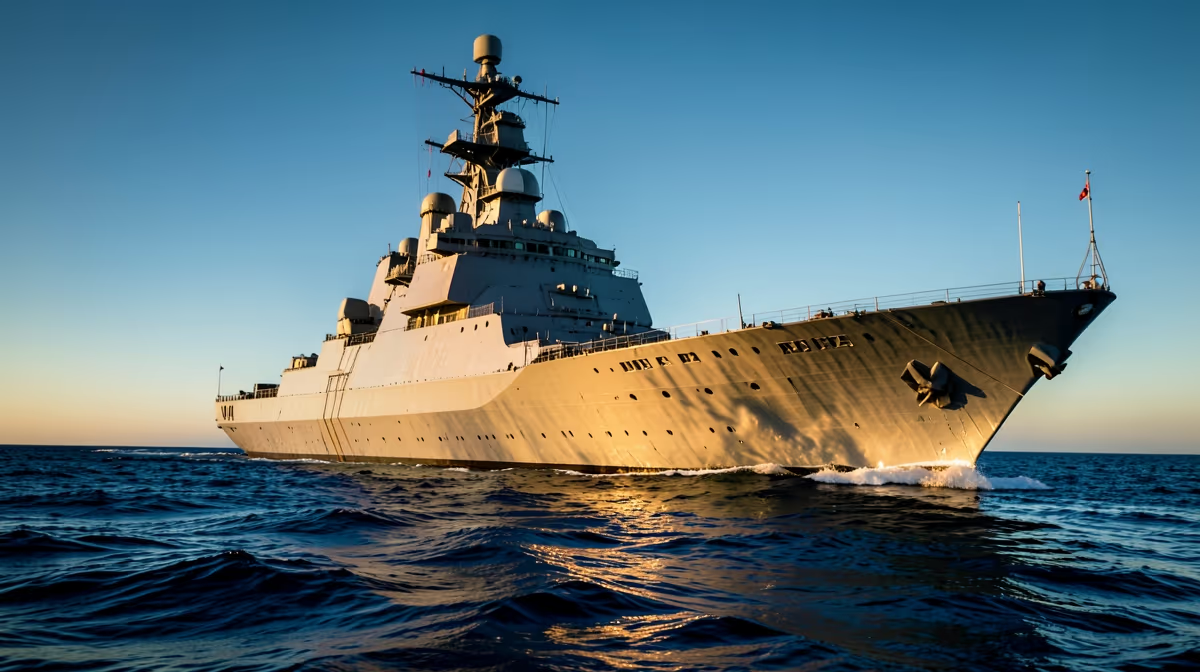
A detachment of Russian warships, led by the frigate Admiral Gorshkov, concluded a high-profile visit to the port of Havana, Cuba, this week, marking a notable demonstration of Russian naval projection in the Western Hemisphere amid escalating tensions with Western nations. The Russian Navy has mobilized several vessels, including a prominent Neustrashimy class frigate, to engage in a high-stakes live fire exercise, marking a significant development for current russian warships activity in the region.
Operational Details and Strategic Posture
The naval arrival in the Caribbean included the nuclear-powered submarine Kazan and a fuel tanker, arriving following what the Russian Ministry of Defense described as high-precision missile training exercises in the Atlantic Ocean. While these ships are operating in international waters—where countries are legally allowed to sail—their presence is being closely tracked by NATO and other regional defense forces to ensure safety and monitor for potential provocations. The recent maneuvers involve vessels moving away from their home ports to conduct naval exercises, project military presence, and demonstrate capabilities in regions far from Russia's traditional borders. These movements are largely seen as a display of power during a time of intense geopolitical tension, necessitating constant communication between world military powers to prevent accidental escalations.
The Geopolitical Significance of Naval Reach
The root cause of these deployments lies in the perceived necessity for Russia to project power and maintain sovereignty in warm-water ports to counteract post-Cold War NATO expansion and perceived encirclement. By transitioning from a coastal defense force to a blue-water navy, the Russian Federation aims to disrupt Western maritime hegemony and challenge freedom of navigation in contested zones like the Black Sea and the Mediterranean. This shift is not merely military; it serves as an instrument of domestic legitimacy and a diplomatic bargaining chip to assert its status as a global superpower. Despite the heavy fiscal burden of maintaining an aging fleet during sanctions, the strategic priority of protecting maritime energy export routes and Arctic resource claims drives the continuous modernization of these assets.
Operational Monitoring and Regional Impact
U.S. officials have maintained that the naval presence does not pose a direct threat to the American mainland, but the Pentagon has actively monitored the fleet's movements using surveillance aircraft and maritime patrol assets. Pentagon spokesperson Sabrina Singh stated that the Russian deployment is not a surprise and emphasized that the U.S. continues to monitor the fleet, asserting that such port calls are routine for a global navy. The impact of these movements is felt by coastal nations near transit routes, international shipping industries, and the global diplomatic community focused on security. As the fleet transitions, NATO and allied surveillance assets are expected to maintain reciprocal tracking, particularly as Russian warships maintain a deterrent posture that balances provocative maneuvering with the preservation of hardware from long-range precision strikes.
Historical Context and Fleet Modernization
The current state of the Russian Navy reflects a long-term transition from the post-Soviet collapse era, which saw a significant decline in naval reach. Since 2008, the state has invested heavily in the reconstruction of naval infrastructure, culminating in the 2015 intervention in Syria which established permanent naval basing. This mirrors late Tsarist-era naval modernization programs that sought to recover prestige following the Russo-Japanese War, which similarly struggled with industrial limitations and strategic overextension. Today, the focus has shifted toward strategic attrition in the Black Sea and an increased reliance on Arctic militarization. Russia’s capacity to operate globally, despite international sanctions, serves as a high-stakes signal intended to demonstrate that the nation remains a significant force.
Future Outlook and Risk Assessment
Looking toward the next 24 to 72 hours, observers expect increased monitoring and patrol activity near the Black Sea and Baltic Sea regions, with heightened readiness levels for littoral combat groups. The risk landscape ranges from a best-case scenario, where continued adherence to existing maritime protocols prevents accidental kinetic engagement, to a worst-case scenario where a miscalculation or tactical provocation leads to a direct encounter resulting in the loss of a vessel and rapid regional escalation. Russia is expected to continue using its naval assets to maintain a deterrent posture. Whether this deployment will involve additional port calls in the region or military cooperation drills with regional partners remains an ongoing point of surveillance for international defense analysts.
Frequently Asked Questions
How many warships does the Russian Navy have?
The Russian Navy operates a diverse fleet consisting of over 300 vessels, ranging from aircraft carriers and cruisers to smaller corvettes and patrol ships, though the number of active-duty warships fluctuates due to maintenance cycles and operations.
What is the flagship of the Russian Navy?
The current flagship of the Russian Navy is the Admiral Kuznetsov, which is the only aircraft carrier in the fleet.
What happened to the Russian cruiser Moskva?
The Moskva was the flagship of Russia's Black Sea Fleet and was sunk in April 2022 during the invasion of Ukraine; Russia officially reported it sank due to a fire and ammunition detonation while being towed.
Does Russia have any active aircraft carriers?
Russia currently possesses one operational aircraft carrier, the Admiral Kuznetsov, which has spent significant time in dry dock for repairs.
What are the most powerful warships in the Russian Navy?
The Kirov-class battlecruisers, such as the Pyotr Velikiy, are widely considered the most powerful surface combatants due to their heavy armament of long-range anti-ship and air defense missile systems.
Where is the Russian Black Sea Fleet based?
The primary base for the Black Sea Fleet is in Sevastopol, Crimea, though the fleet also utilizes other ports in the Black Sea and the Sea of Azov for support.
Conclusion
The recent mobilization of Russian warships, including the Neustrashimy class frigate and the deployment to Cuba, underscores a calculated effort by Moscow to demonstrate its reach as a global naval power. While the presence of these vessels in international waters is legally permitted, the intensity of surveillance by NATO and the United States reflects the heightened state of geopolitical friction. As the fleet continues its movements and training exercises, the global community remains focused on preventing miscalculations that could lead to regional instability. The future trajectory of these naval assets remains a critical focal point for defense analysts monitoring the balance of power in the Atlantic and across Russia's traditional areas of operation.


