
Ryanair Window Failure Triggers Emergency Diversion and Safety Probes
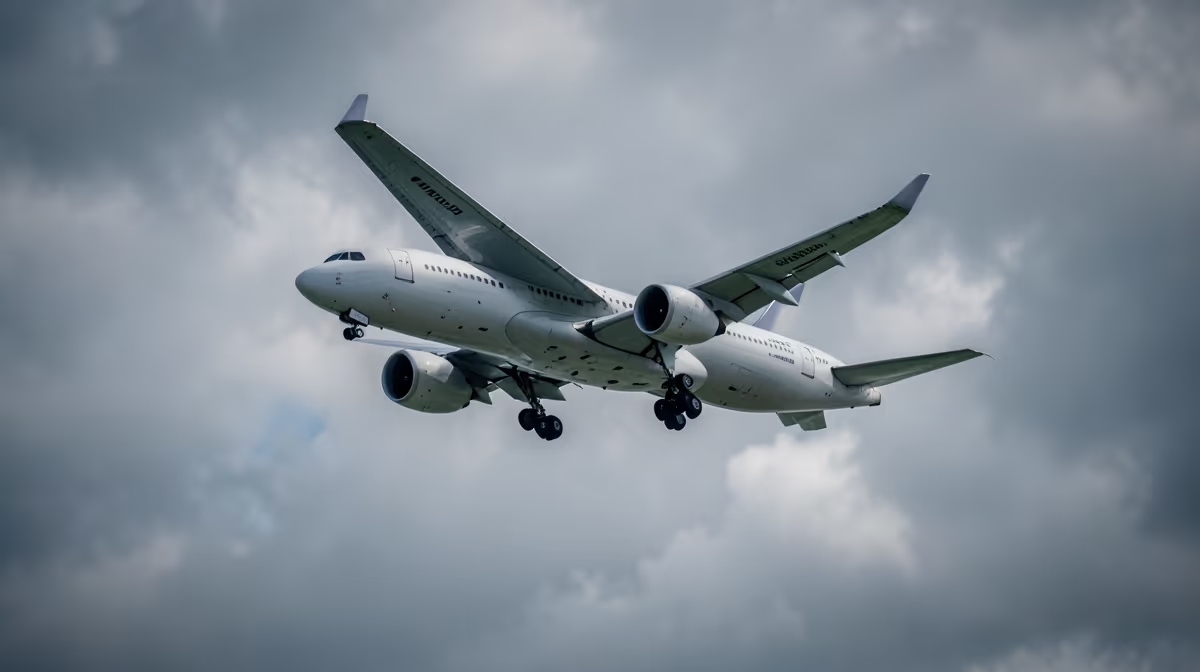
A Ryanair flight from Milan to London was forced to make an emergency diversion on Tuesday after a cabin window pane detached mid-air, causing a rapid depressurisation incident that shocked passengers onboard. The sudden structural component failure highlights the delicate balance between modern high-density commercial aviation schedules and the rigorous oversight required to maintain passenger safety at 35,000 feet.
The Boeing 737 was cruising at high altitude over European airspace when the incident occurred, prompting immediate safety protocols from the flight crew. Oxygen masks were deployed as the aircraft experienced a sudden loss of cabin pressure, leading the pilot to declare an emergency and reroute the flight to the nearest suitable airport. Emergency services were placed on standby upon the plane's descent, meeting the aircraft on the tarmac to ensure passenger safety. While no serious injuries were reported, multiple passengers required medical evaluation at the scene for shock and minor ear discomfort caused by the rapid pressure change. Aviation authorities have since grounded the aircraft for a comprehensive safety inspection, focusing heavily on how structural components of the window frame failed during normal flight operations. Ryanair representatives stated that engineers are working alongside safety regulators to determine the exact cause of the detachment, while emphasizing that the crew followed all standard operating procedures to manage the emergency effectively. A Ryanair spokesperson stated that the safety and security of passengers and crew remain an absolute top priority, noting that the aircraft landed normally and engineers are conducting a detailed investigation into the technical issue.
The Mechanics of Cabin Depressurization
Passengers on the flight experienced a frightening moment mid-air when a windowpane came loose from its frame during the journey. The cabin quickly filled with a loud rushing sound and rushing air, causing understandable panic among the people on board. Fortunately, the outer structural layers of the window and the aircraft's pressurized cabin remained intact, allowing the pilots to safely divert the plane and land without any injuries reported. Aviation experts have explained that while losing a window component is extremely rare and terrifying for passengers, modern commercial airplanes have multiple layers of glass and acrylic. This redundancy ensures that even if one part fails or separates, the cabin does not depressurize catastrophically, which ultimately prevented a major disaster in the skies over Britain. Commercial aircraft windows are engineered with three distinct layers consisting of an outer pane, an inner pane, and a scratch pane designed to withstand immense cabin pressure differences at high altitudes, making structural failures extremely rare.
Verified Incident Facts
A Ryanair windowpane reportedly separated from its frame during a mid-air flight operating a route from Milan to London. Passengers reported a loud noise and rushing air inside the cabin, followed by the deployment of oxygen masks due to cabin depressurisation. The flight was forced to divert and landed safely at a diversion airport with no reported critical injuries, though medical personnel evaluated passengers on the tarmac. Aircraft windows are built with multiple layers, preventing total cabin depressurization. Both Ryanair and aviation authorities have launched formal investigations into the incident, grounding the aircraft for technical assessment.
Systemic Pressures and Maintenance Realities
Incidents involving the physical structure of an airplane naturally terrify the flying public, raising urgent questions about routine aircraft maintenance and quality control. For travelers, it serves as a stark reminder of the inherent risks of flight, while putting pressure on airlines and regulators to ensure that minor mechanical components are thoroughly checked before every takeoff. This event points toward underlying industry dynamics, including systemic deregulation and cost-pressure within European low-cost carrier maintenance outsourcing models. Such environments can lead to compromised quality control on non-structural cabin components, compounded by the chronic under-reporting of minor cabin depressurization and material fatigue incidents by flight crews under pressure to maintain aggressive turnaround times. The situation echoes historical parallels such as the 2018 Southwest Airlines Flight 1380 engine failure, highlighting the hidden costs of outsourced maintenance and aging narrow-body fuselage stress. Politically, the event intersects with intense lobbying by budget airlines against tighter UK Civil Aviation Authority oversight, balancing post-Brexit regulatory divergence with passenger safety mandates. Economically, immediate reputational damage and share price volatility are often offset by long-term ancillary revenue dominance, forcing a risk-management calculation where regulatory fines are viewed as cheaper than comprehensive fleet overhauls. Geopolitically, such events test public trust in pan-European aviation standardization frameworks managed by the European Union Aviation Safety Agency and the UK Civil Aviation Authority, exposing the vulnerability of cross-border supply chains for aircraft parts and certified labor.
Immediate Regulatory Response and Fleet Outlook
Over the next twenty-four hours, the UK Air Accidents Investigation Branch and the European Union Aviation Safety Agency will likely issue preliminary statements regarding the incident, while Ryanair is expected to release a formal operational update confirming aircraft grounding and safety checks. Within seventy-two hours, media scrutiny on Boeing and Ryanair safety protocols is expected to intensify, alongside potential inspections ordered for similar Boeing 737 aircraft variants in the fleet and initial passenger compensation claims processing. Industry experts predict that regulators will mandate targeted fleet-wide inspections for specific window seals and fuselage frames, though grounding will likely remain localized unless a systemic manufacturing defect is uncovered. In the best-case scenario, the window failure is determined to be an isolated maintenance or sealant incident unrelated to structural manufacturing, allowing fleet operations to resume normally with minimal reputational damage. Conversely, the worst-case scenario involves linking the incident to a broader manufacturing defect across multiple Boeing 737s, triggering widespread groundings, significant flight cancellations, and severe financial and regulatory fallout for both Ryanair and Boeing. Affected parties include air passengers flying with Ryanair and other budget carriers in the UK, as well as the broader airline industry, which now faces increased scrutiny over safety inspections.
Frequently Asked Questions
Did Ryanair have a mid air window failure?
No major mid-air window blowout incidents have been officially attributed to Ryanair as a structural failure. However, minor passenger concerns regarding loose window shades or cosmetic seals occasionally circulate on social media. Commercial aircraft windows are engineered with multiple panes to withstand extreme cabin pressure safely.
Are Ryanair plane windows safe?
Yes, Ryanair operates a modern fleet of Boeing 737 aircraft equipped with heavily tested, multi-pane acrylic windows. These windows are designed to withstand pressures far exceeding normal cruising conditions. Strict European Aviation Safety Agency regulations ensure they undergo rigorous maintenance checks.
What happens if an airplane window fails mid air?
Aircraft cabins are pressurized, so any compromised seal or window failure would cause a rapid loss of cabin pressure, triggering automatic oxygen masks to deploy. Pilots are thoroughly trained to handle depressurization events by quickly descending to a safe altitude. Such structural failures are extremely rare in modern commercial aviation.
Has a Ryanair flight ever made an emergency landing due to a window issue?
There are no prominent records of Ryanair flights making emergency landings specifically due to structural window failures. Most unplanned landings for the airline are precautionary and usually related to minor technical glitches or medical emergencies. Airline maintenance logs show window panels are routinely inspected and replaced as preventative measures.
Why do Ryanair window panes have a tiny hole?
The tiny hole in the inner pane of an airplane window is called a breather hole. It is intentionally placed there to help equalize air pressure between the passenger cabin and the space between the window panes. This design ensures that the outer pane bears the primary pressure load while preventing the window from fogging up.
How often are Ryanair windows inspected?
Ryanair engineers and maintenance crews inspect aircraft windows during routine daily checks and more comprehensive scheduled maintenance intervals. Any scratches, cracks in the non-structural cosmetic layers, or seal issues are addressed immediately. This proactive maintenance ensures compliance with strict international aviation safety standards.
Conclusion
The mid-air detachment of a window component on a Ryanair flight from Milan to London has resulted in a safe emergency diversion, successful landing, and the immediate grounding of the aircraft for technical evaluation. Verified facts confirm that the incident triggered a cabin depressurisation and oxygen mask deployment without resulting in critical injuries. Regulatory bodies including the UK Air Accidents Investigation Branch and the European Union Aviation Safety Agency are actively investigating the root cause alongside airline engineers. Stakeholders now await preliminary official findings to determine whether the mechanical failure was an isolated maintenance issue or indicative of broader structural vulnerabilities within narrow-body fleets.


