
Offshore Wind Power Faces a Structural Shift Under New US Policy
The landscape for offshore wind power is shifting as stakeholders analyze how the Trump administration offshore wind policy might influence upcoming projects across US coastal regions. As developers navigate a complex web of regulatory frameworks, global supply chain pressures, and shifting federal priorities, the long-term viability of multi-gigawatt maritime energy infrastructure remains a critical point of debate for investors and policymakers alike.
The Mechanics of Offshore Wind Expansion
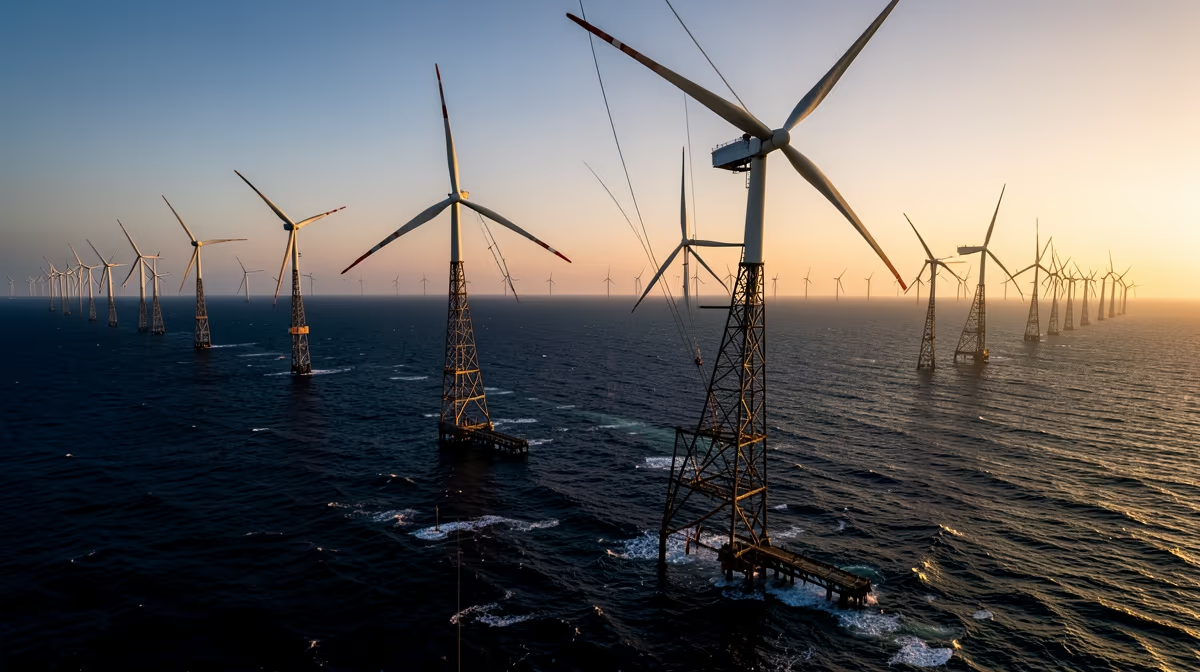
Offshore wind power involves building giant wind turbines in the ocean, typically several miles off the coast, where winds are stronger and more consistent than on land. These massive structures capture the kinetic energy of sea breezes and convert it into clean electricity, which is then sent back to the shore through underwater cables to power homes and businesses. Because the U.S. has a vast coastline, this technology is seen as a major opportunity to generate massive amounts of renewable energy without taking up valuable land space. By tapping into these consistent ocean winds, states can reduce their reliance on fossil fuels and work toward ambitious climate goals while creating a new industry for energy production. Unlike land-based turbines, offshore installations are significantly larger, requiring deep-sea foundations, specialized ships for installation, and complex underwater power grids.
Analyzing Policy Shifts and Federal Oversight
The current U.S. offshore wind industry is in a state of flux as it transitions from a proof-of-concept phase to large-scale deployment. A major element of this evolution is the tension between Green Industrial Policy, supported by tax credits in the Inflation Reduction Act, and the impact of the Trump administration offshore wind policy on future project oversight. This creates a challenging environment for developers like Orsted, Equinor, and Avangrid. Analysts point to a root cause in the structural transition from centralized fossil fuel baseload generation to decentralized, intermittent renewable energy, which necessitates massive grid modernization. The federal-state jurisdictional conflicts over Outer Continental Shelf development continue to influence how the Bureau of Ocean Energy Management (BOEM) approaches project site assessments and permit reviews.
Economic Headwinds and Market Realities
The sector is currently grappling with the intersection of inflationary pressures on steel and specialized shipping, combined with the instability of long-term Power Purchase Agreements (PPAs) in a high-interest-rate environment. These economic factors have forced several high-profile companies to renegotiate or cancel existing contracts, leading to a period of consolidation. The industry is now prioritizing the securing of federal tax credits to stabilize financial viability. Despite these challenges, BOEM continues to hold federal lease auctions, indicating that global energy firms maintain interest in the long-term potential of the U.S. market. The success of these endeavors hinges on the creation of a sustainable domestic supply chain for turbine components, which would help mitigate risks associated with international import dependency and market fluctuations.
The Strategic and Geopolitical Dimension
Beyond domestic economics, the deployment of offshore wind serves a strategic imperative to reduce reliance on foreign-controlled rare earth mineral supply chains and to displace external dominance in wind turbine manufacturing. The transition is not merely about carbon reduction; it is about energy security. However, the industry must also contend with the vulnerability of subsea power infrastructure to potential sabotage and the need to close ecological data gaps regarding benthic disruption in critical North Atlantic fishing zones. These factors, alongside competition for maritime space with commercial fishing and shipping, complicate the regulatory path forward. The historical parallel to this growth is the 1970s development of North Sea oil and gas infrastructure, which required similarly radical leaps in engineering and maritime territorial negotiation.
Regional Impact and Project Status
Current development is heavily concentrated off the East Coast, with significant activity in New Jersey, New York, and Massachusetts. Projects such as Vineyard Wind 1 are already delivering electricity to the New England grid, representing a tangible success in the move away from traditional fossil fuel-fired power generation. The primary focus for these regions is the development of specialized port infrastructure, which is essential for the logistical support of future turbine installation. As the industry advances, the speed at which this domestic port infrastructure is completed remains a major variable affecting project timelines and costs. While the Biden-Harris administration has set a target of 30 gigawatts of offshore wind capacity by 2030, the ability to meet this goal will depend on whether developers can successfully navigate the current logistical and economic volatility.
Future Outlook and Predictions
Over the next 24 hours, the sector expects increased administrative activity regarding BOEM project site assessments and permit reviews. Looking toward the next 72 hours, developers will likely continue intensive negotiations with component manufacturers to address ongoing inflationary pressures. Expert predictions suggest that the industry will continue to prioritize project consolidation throughout the coming year. A best-case scenario involves significant breakthroughs in transmission infrastructure development and a more stable interest rate environment, which would allow for the profitable completion of multi-gigawatt projects. Conversely, a worst-case scenario involves continued project cancellations due to supply chain inflation and local opposition, potentially leading to a stagnation in achieving state-mandated 2030 renewable energy targets.
Frequently Asked Questions
How much offshore wind power does the US produce?
As of early 2024, the United States has limited operational capacity, with commercial-scale projects like Vineyard Wind and South Fork Wind recently coming online. The U.S. government has set an ambitious goal to deploy 30 gigawatts of offshore wind energy by 2030.
Where are the main offshore wind farms located in the US?
Activity is concentrated along the Atlantic Coast, particularly off the shores of Massachusetts, Rhode Island, New York, and New Jersey, where state-level policy supports large-scale maritime projects.
Is offshore wind power reliable for the US energy grid?
Offshore wind is considered highly reliable because oceanic winds are typically stronger and more consistent than winds on land. Providing power near coastal cities also reduces transmission losses.
What are the environmental impacts of offshore wind farms?
Projects undergo rigorous assessments to minimize impacts on marine life, migratory birds, and fishing industries, often utilizing noise mitigation during construction and strategic site planning.
How does offshore wind energy compare to land-based wind?
Offshore turbines are generally larger and more efficient. While more expensive and complex to build than land-based units, they generate more electricity and are situated closer to major population centers.
What are the biggest challenges for US offshore wind development?
Primary challenges include complex permitting, supply chain constraints for specialized installation vessels, the need for port infrastructure upgrades, and the integration of offshore power into aging electrical grids.
Conclusion
The U.S. offshore wind industry is currently at a pivotal juncture, defined by significant federal investment and active lease issuance alongside substantial economic and logistical hurdles. While landmark projects like Vineyard Wind 1 have proven the technical viability of the sector, the path toward achieving the 30-gigawatt target by 2030 remains contingent on stabilizing supply chains, controlling capital costs, and navigating shifting regulatory policies. The continued focus on domestic manufacturing and grid modernization suggests a long-term commitment to this energy transition, even as stakeholders manage the immediate pressures of inflation and grid integration. The future of the industry rests on the balance between ambitious policy goals and the pragmatic reality of maritime engineering and market stability.


.webp)


.webp)
