
Weather Update India: Extreme Climatic Shifts Trigger Urgent Concerns
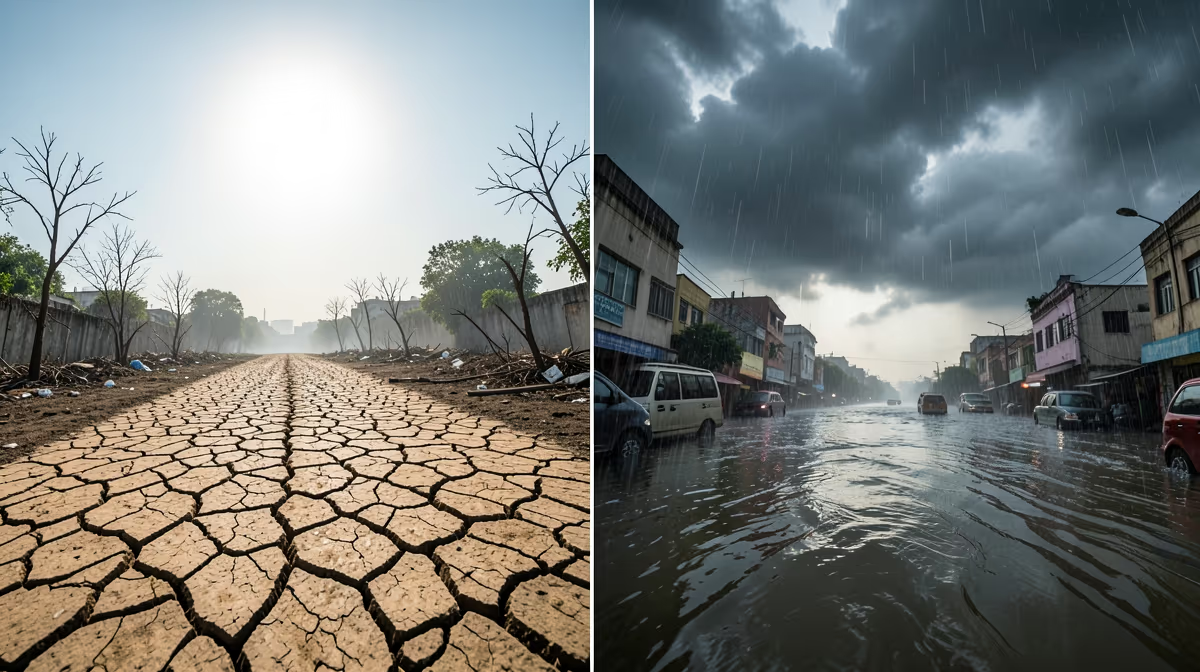
The stark duality of the current Indian climate, where sweltering heatwaves grip the northern plains while moisture-laden pre-monsoon showers drench the southern coast, marks a critical pivot point for national stability. As extreme weather in India continues to disrupt daily life, the latest weather update India reports highlight the urgent need to address monsoon impact on urban infrastructure resilience.
The Current Climatic Divergence
The India Meteorological Department has issued red and orange alerts across several northern and central states as a severe heatwave persists during the peak of the pre-monsoon season. Maximum temperatures in parts of Rajasthan, Punjab, and Haryana have breached the 45-degree Celsius mark, forcing state governments to advise residents against all outdoor activities during peak afternoon hours. Hospitals across these regions have reported an uptick in heat-related illnesses, necessitating emergency guidelines to manage public health risks.
Simultaneously, the southern peninsula is witnessing heavy pre-monsoon showers, offering slight relief to the coastal regions of Kerala and Karnataka. The southwest monsoon has officially advanced into the Andaman Sea, a development that serves as the primary focus for agricultural planning across the subcontinent. While the north battles heat, the south provides a window into the moisture-laden currents that will soon dictate the national landscape.
Root Causes and Historical Context
The intensification of these weather patterns is not an isolated phenomenon but is driven by anthropogenic warming and the transition into a post-El Niño phase. This complex interplay affects the Indian subcontinent's monsoon patterns, forcing a reconsideration of how urban centers are designed. Historically, the 2002 drought crisis serves as the primary parallel for this situation, acting as a catalyst that once forced major shifts in agricultural policy and national water management. Today, the challenge is similarly existential, as the surge in extreme weather events accelerates urban migration to Tier-1 cities, straining aging drainage systems and creating new demographic vulnerabilities.
Managing Infrastructure and Economic Volatility
The economic implications of this volatile weather are profound, directly disrupting food inflation metrics and influencing the monetary policy of the Reserve Bank of India. When agricultural output becomes unpredictable due to the shift between drought-like heat and potential flash floods, the stability of the entire supply chain for essential commodities like wheat and rice is compromised.
From a planning perspective, the current atmospheric instability highlights an urgent need for structural upgrades. Urban infrastructure resilience is being tested as the gap between existing drainage capacity and the intensity of sudden downpours widens. Policy makers are now under pressure to balance these domestic infrastructure requirements with the broader need to maintain India's position as a regional climate leader, particularly as they navigate transboundary water issues and national energy commitments.
Predicting the Shift
Over the next 24 hours, monsoon troughs will intensify across central and western India, triggering widespread moderate to heavy rainfall in coastal regions and the Himalayan foothills. The outlook for the next 72 hours suggests a shift in the weather system, which is expected to increase precipitation in the northern plains. While the moisture may provide relief from the heat, high humidity levels will likely create muggy, uncomfortable conditions in urban centers.
Meteorological experts warn of a dual-track scenario. In a best-case outcome, rainfall remains well-distributed, replenishing water reservoirs without causing large-scale structural damage or agricultural loss. However, the worst-case scenario involves excessive localized downpours leading to flash floods and landslides in mountainous regions, which would significantly disrupt logistics and urban utility networks.
Expert Insights on Seasonal Flux
The meteorological department has noted that the atmosphere is currently stable across most of the heartland, leading to clear skies and abundant sunshine, though mountain regions should prepare for dropping temperatures at higher altitudes. This period represents a classic seasonal flux where the retreat of the southwest monsoon meets the onset of localized pre-monsoon activity. Air quality remains a point of concern in several major urban centers, impacting respiratory wellness for the elderly and outdoor workers. The transition is critical for farmers, who rely on consistent conditions for the ongoing harvest and the planting cycles of winter crops.
Frequently Asked Questions
What is the weather like in India today?
Weather conditions in India vary significantly depending on the region due to the country's vast geography. You can check the specific forecast for your city by searching for your location name followed by weather on Google or by using a reliable weather app.
How can I check the live weather update for my city in India?
You can view live weather updates by searching weather near me on Google, which will automatically detect your current location. Alternatively, official websites like the India Meteorological Department provide precise, real-time data for all states and districts.
Is it going to rain in India today?
Rainfall predictions depend entirely on your specific location and the current season. To get an accurate forecast, check the precipitation probability percentage in your local weather report or monitor satellite imagery provided by the India Meteorological Department.
What is the best app to check daily weather in India?
Popular weather apps in India include The Weather Channel, AccuWeather, and the official Mausam app launched by the Government of India. These platforms provide hourly forecasts, humidity levels, and alerts for extreme weather events.
Does Google provide accurate weather forecasts for India?
Yes, Google weather integrates data from various meteorological sources to provide fairly accurate short-term forecasts. While highly reliable for temperature and precipitation, it is always recommended to cross-reference with the India Meteorological Department during severe monsoon or heatwave conditions.
How often is the weather report updated for Indian cities?
Weather reports for major Indian cities are typically updated every hour to reflect changing atmospheric conditions. During extreme weather events like cyclones or heavy rainfall, these updates may become more frequent to provide real-time safety information.
Conclusion
The current weather landscape in India is defined by a volatile mix of severe heatwaves in the north and emerging monsoon activity in the south. While the India Meteorological Department continues to monitor the progression of moisture-laden winds toward the mainland, the immediate focus remains on public health safety and agricultural readiness. For urban planners and policy makers, these patterns emphasize the urgent necessity of building infrastructure capable of withstanding both excessive heat and intense precipitation. Moving forward, the focus will shift toward the official onset of the monsoon over the Kerala coast, an event that will serve as the final determinant for the national Kharif crop season and dictate the intensity of the upcoming climate-resilience efforts across the country.


