
Weather Today: New Monsoon Shifts Threaten Major Infrastructure Risks
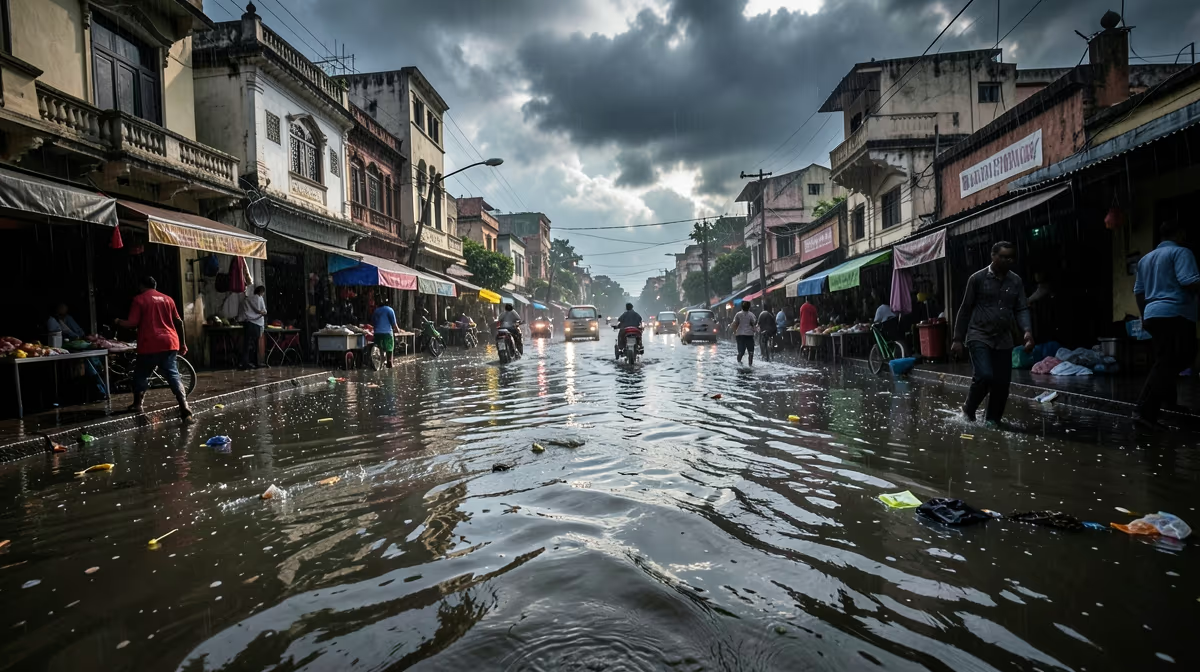
The intricate mechanics of the Southwest Monsoon have thrust the Indian subcontinent into a high-stakes period of climate volatility, where the promise of agricultural replenishment clashes with the harsh reality of crumbling urban infrastructure. As citizens seek the latest weather today in India, it is clear that the current monsoon update serves as more than a simple forecast; it is a diagnostic tool revealing the growing disconnect between modern urban development and the intensifying patterns of the natural environment.
A Shifting Monsoon Landscape
The India Meteorological Department (IMD) has issued a red alert for heavy to extremely heavy rainfall across several districts in Kerala and coastal Karnataka for the next 48 hours as the southwest monsoon intensifies. This is not merely a seasonal fluctuation but an active phase of weather that is testing the limits of local disaster preparedness. Persistent downpours have triggered localized flooding, leading to the disruption of essential transport services and the mandatory closure of educational institutions in the most affected districts. Disaster management teams have been prepositioned in vulnerable zones, specifically focusing on mitigating landslide risks in hilly terrains and managing waterlogging in densely populated metropolitan areas.
Dr. Mrutyunjay Mohapatra, Director General of the IMD, noted that the deep depression over the Arabian Sea is creating a significant pressure gradient, which will sustain heavy rainfall activity across the peninsular region through Friday. While these rains are critical for replenishing reservoirs, they present an immediate risk to standing crops in low-lying fields. Local administrations have urged residents to avoid travel near river banks and hillside roads that are historically prone to soil erosion.
The Mechanics of Volatility
The root cause of these disruptions lies in the intersection of accelerated glacial retreat in the Himalayas and volatile El Niño-Southern Oscillation cycles, which have collectively exacerbated the variability of the monsoon. Historically, the monsoon followed predictable cycles that sustained India's vast agricultural sector. However, the period between 2000 and 2020 marked a clear shift from those steady patterns to erratic, high-intensity flash flooding events.
In 2024, this instability has become a permanent variable in national security and economic planning. The current meteorological data suggests that the monsoon is entering an active phase across Northern and Central India, meaning that while coastal Karnataka and Kerala currently bear the brunt, the Indo-Gangetic plains—including Uttar Pradesh, Bihar, and Uttarakhand—must prepare for increased rainfall intensity as the monsoon trough shifts over the next 72 hours.
Urban Resilience and Infrastructure Gaps
The hidden vulnerability in this narrative is the rapid expansion of informal urban settlements in floodplains. Driven by climate-induced migration, these developments are creating irreversible risks in mega-cities like Delhi and Mumbai, where drainage systems were never designed to handle the high-velocity precipitation now occurring. The situation is exacerbated by the loss of natural sponges, such as wetlands and green belts, which have been replaced by concrete.
The political dimension of this crisis involves friction between center and state authorities regarding disaster relief funding and the management of water resources. Because the monsoon is the lifeblood of the Indian economy, any significant deviation—whether through drought or flood—directly influences food inflation and the stability of global pulse markets. When drainage fails in a major city, it is not just a localized traffic issue; it is a symptom of a broader failure to integrate climate resilience into national fiscal and infrastructure policy.
Expert Predictions and Future Risks
Predictive models for the next 24 to 72 hours paint a complex picture. While the south experiences the current peak, the threat is migrating northward. In the best-case scenario, the rainfall will provide a uniform distribution that boosts Kharif crop sowing without causing widespread devastation. However, the worst-case scenario remains a significant concern: excessive rainfall in the Himalayan foothills could trigger flash floods and landslides, which, when combined with urban drainage failures, could lead to severe socio-economic disruption.
Regional impact areas, including Himachal Pradesh, Uttarakhand, and the Konkan-Goa belt, remain the highest priority for the National Disaster Management Authority and the Ministry of Earth Sciences. The challenge for policy makers is to move beyond reactionary emergency responses and toward a model of permanent infrastructure adaptation that accounts for these intensified climate patterns.
Historical Context and Global Geopolitics
The current instability echoes the socio-economic tremors of the 1918 monsoon failure, which remains a stark historical reminder of how weather shifts can trigger massive internal migration and profound instability. Today, the stakes are magnified by geopolitical tensions, particularly regarding water diplomacy and transboundary river flows. The strategic necessity of maintaining infrastructure in ecologically sensitive border regions means that weather monitoring is now inextricably linked to national security. As utility companies work to restore power in areas where high-velocity winds have downed lines, the reliance on satellite-backed IMD alerts becomes the primary buffer between normal life and crisis.
Frequently Asked Questions
What is the current weather forecast for India?
Weather conditions in India vary significantly across different regions due to its vast geography. You can check the latest forecast for your specific city by visiting the India Meteorological Department (IMD) website or using reliable weather apps.
Which are the best months to visit India for good weather?
The best time to visit most parts of India is during the winter months, from October to March, when the weather is pleasant and cool. Summer months, particularly April through June, can be extremely hot, while the monsoon season brings heavy rainfall between July and September.
Is it currently raining in India?
Whether it is raining in India depends entirely on your specific location and the current season. You can verify real-time precipitation status by checking a live weather radar or a local news portal for your city.
How does the monsoon season affect weather in India?
The monsoon season typically arrives in June and lasts until September, bringing significant rainfall across the country. It is a critical period for Indian agriculture, though it often leads to high humidity and occasional flooding in low-lying coastal and northern areas.
Why is the weather in India so hot in summer?
Summers in India are intense because the sun is positioned directly overhead, leading to high temperatures often exceeding 40 degrees Celsius in the northern and central regions. The lack of cloud cover and hot, dry winds further contribute to the scorching heat experienced during these months.
Where can I find reliable weather updates for India?
For the most accurate and official weather updates in India, the India Meteorological Department (IMD) is the primary source. Additionally, reputable global platforms like AccuWeather and The Weather Channel provide localized hourly forecasts for cities across the country.
Conclusion
The current monsoon situation highlights a critical period of transition for India. While the IMD continues to monitor the active weather systems and provide red alerts for affected regions, the long-term reality is that extreme weather is becoming a permanent feature of the Indian landscape. Verified developments confirm that the monsoon is currently at a peak intensity, with a trajectory moving toward northern and central states. Immediate safety for citizens remains the priority, while for urban planners and policy makers, the focus must shift to structural long-term resilience. The data from the next few days will be essential for managing the immediate risks of flooding and agricultural impact, setting the stage for more robust climate-adaptive urban policies.


