
H-1B Visa Overhaul Triggers Massive Shifts for US Tech Workforce
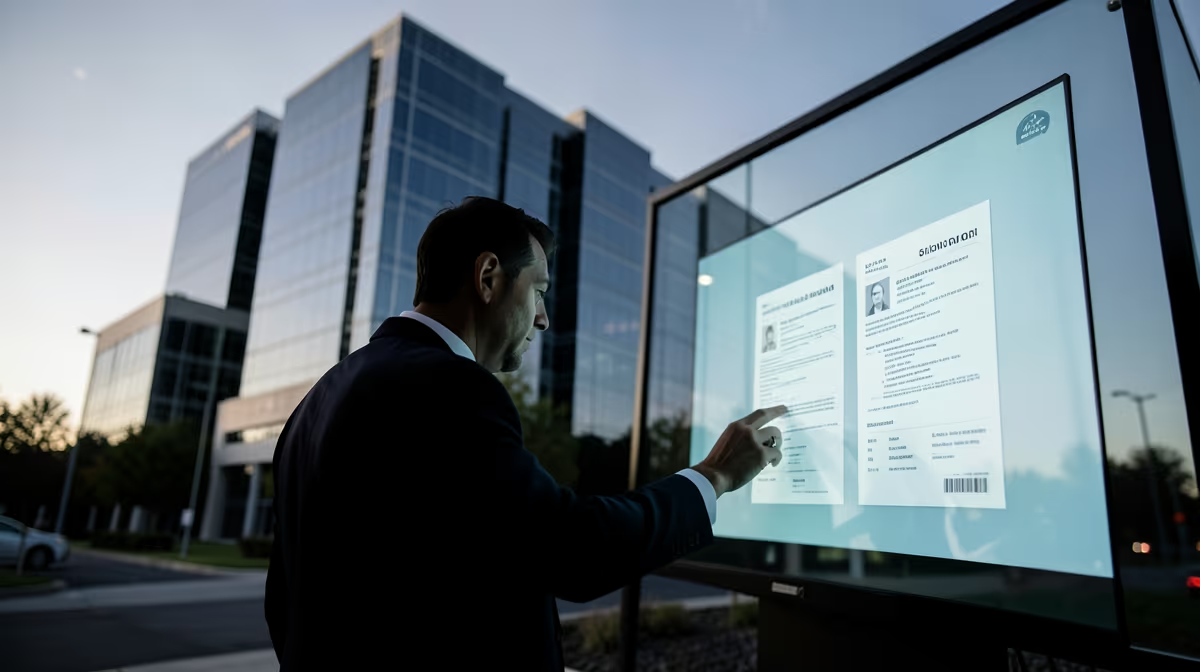
Navigating the complex landscape of the h-1b visa requires staying informed on the latest immigration policy shifts affecting the us tech workforce. United States Citizenship and Immigration Services announced Monday the implementation of a streamlined electronic registration process and updated fee structures for the upcoming H-1B specialty occupation visa lottery, aiming to curb systemic fraud and reduce administrative burdens for employers starting in fiscal year 2025.
Recent Visa Updates Impacting the Tech Sector
The federal agency confirmed that the initial registration period for the upcoming cap will run through March, during which prospective employers must utilize the newly revised beneficiary-centric selection system. This shift ensures that each unique individual is entered into the lottery only once, regardless of how many petitions are submitted on their behalf by different companies, effectively closing a loophole that previously allowed multi-offer manipulation.
Alongside the procedural changes, USCIS adjusted the filing fees associated with employment-based immigration forms to adequately recover operational costs and process backlogs more efficiently. Business immigration attorneys and corporate human resources departments have spent recent weeks preparing compliance strategies to adapt to the stricter identity verification protocols and digital-only submissions mandated by the Department of Homeland Security.
While technology sector leaders acknowledge the necessity of fraud prevention, industry advocacy groups continue to monitor processing timelines closely amid ongoing concerns regarding global talent retention. The agency has pledged to increase transparency through regular data updates as the random selection process concludes in the spring. Ur Jaddou, serving as USCIS Director, stated during the policy briefing that by shifting to a beneficiary-centric selection process, they are creating a fairer and more equitable playing field for both applicants and legitimate employers, while significantly reducing the potential for gaming the system.
Essential Program Mechanics And Core Facts
The H-1B is a non-immigrant visa for specialized workers that allows US companies to temporarily hire foreign workers in jobs requiring highly specialized technical skills. Most of these workers come from countries like India and China to fill important roles in the American technology, healthcare, and engineering sectors. Demand for these permits is always very high, far exceeding the annual statutory cap on the number of new visas issued each year.
The program requires at least a bachelor's degree or equivalent experience in a specific field. Because applications far exceed the available spots, a computer-generated lottery is used to decide who gets an H-1B visa. Visas are typically granted for up to three years initially and can be extended for a total of six years with renewal options. Winning the lottery gives foreign professionals the chance to live and work in the United States, and it serves as the primary pathway for skilled workers to eventually apply for permanent residency, commonly known as a green card.
Structural Realities And Workforce Implications
This visa program is central to the debate over the US economy and talent talent pipeline, as tech giants and startups alike argue they need global talent to innovate and stay competitive. At the same time, critics and labor advocates scrutinize the system to ensure it does not undercut domestic wages or replace American workers, making any policy changes a major flashpoint in national politics. The affected population includes foreign tech workers, international students graduating from US universities, American technology and engineering companies, and domestic job seekers in specialized fields.
The historical roots of this system trace back to the Immigration Act of 1990, which created the program to help US employers plug severe labor shortages in specialized fields when qualified American workers were not available. Later, the American Competitiveness and Workforce Improvement Act of 1998 significantly increased the annual cap to accommodate the dot-com boom. In the 2020s, massive lottery backlogs, tech layoffs exposing visa vulnerability, and the rise of remote offshore work challenge the traditional H-1B paradigm.
From an analytical perspective, the root cause of these ongoing pressures lies in a structural misalignment between the US domestic higher education output in STEM fields and the rapid technological scaling demands of the private sector, compounded by archaic immigration caps. Politically, the issue remains a perennial battleground between corporate lobbying interests seeking suppressed labor costs and populist protectionist factions capitalizing on native-born displacement anxieties. Economically, the program exerts deflationary pressure on high-tech wages balanced against massive productivity gains and innovation clustering, alongside significant dependency risks for foreign capital investment. Geopolitically, it acts as a crucial instrument of US soft power and brain-drain dominance over competitor nations like India and China, serving as a primary tech-talent siphon.
Anticipated Near-Term Outlook
Immigration lawyers and tech companies brace for potential policy updates or announcement leaks regarding upcoming H-1B lottery adjustments and fee structures. Over the next seventy-two hours, industry associations and corporate legal teams will likely publish compliance advisories and start preparations for the upcoming filing season amidst shifting regulatory signals. Key players to watch include USCIS, the Department of Homeland Security, tech industry lobbying groups, and immigration law firms.
Experts predict increased scrutiny on specialty occupation definitions and rising legal compliance costs, alongside potential modernization of the lottery selection process to curb fraud. The best-case scenario involves streamlined digital processing and transparent fee implementation that reduce administrative burdens while safeguarding genuine high-skill foreign talent. Conversely, the worst-case scenario involves sudden procedural changes, processing delays, and heightened litigation creating acute uncertainty for employers and prospective applicants across recruitment, higher education and OPT retention, immigration legal services, and global talent acquisition.
Frequently Asked Questions
What is the H-1B visa and who is it for?
The H-1B visa is a non-immigrant work visa in the United States that allows US employers to temporarily employ foreign workers in specialty occupations. Generally, these positions require a bachelor's degree or higher in a specific field, such as IT, engineering, finance, or science. It serves as one of the primary pathways for skilled international professionals to work in the US.
How does the H-1B lottery work?
Due to high demand and an annual statutory cap of 65,000 regular visas plus 20,000 for US advanced degree holders, USCIS uses a computerized random selection process. Employers must first submit an electronic registration for prospective workers during a designated registration period, usually in March. Only those selected in this lottery are eligible to file a full H-1B petition.
How long can you stay in the US on an H-1B visa?
An H-1B visa is initially granted for up to three years and can be extended for a total of six years. However, extensions beyond the six-year limit are possible if the employee is in the process of seeking lawful permanent residency, commonly known as getting a green card. In certain cases, workers can extend their stay in one-year or three-year increments depending on their priority date status.
Can an H-1B worker change employers?
Yes, H-1B visa holders are able to change employers through a process known as H-1B portability. The new employer must file a new H-1B petition on behalf of the worker before they can begin working. The employee can typically start working for the new company as soon as USCIS receives the properly filed petition, without having to wait for final approval.
Can my spouse and children join me in the US on an H-1B visa?
Yes, dependents such as a legally married spouse and unmarried children under the age of 21 can accompany or join the H-1B visa holder in the US under an H-4 dependent visa. While H-4 visa holders cannot work automatically, spouses of H-1B workers can apply for Employment Authorization Documents if the primary visa holder has reached certain milestones in their green card process.
What happens if I lose my job while on an H-1B visa?
If an H-1B worker loses their job, they are granted a grace period of up to 60 consecutive days, or until the end of their authorized validity period, whichever is shorter. During this time, the worker can find a new employer to file a change of employer petition, apply for a change of status to another visa category, or prepare to leave the United States.
Conclusion
United States Citizenship and Immigration Services has officially implemented the beneficiary-centric electronic registration process and updated fee structures for the fiscal year H-1B visa lottery to prevent multiple submissions per individual and curb fraud. Prospective employers must navigate the digital registration period running through March under stricter identity verification protocols established by the Department of Homeland Security. As corporate legal teams and immigration attorneys finalize compliance strategies for the upcoming filing season, stakeholders continue to monitor adjudication timelines and data transparency updates from federal authorities.


.webp)
