
Iran War Hormuz Escalation Threatens Global Oil Supply and India
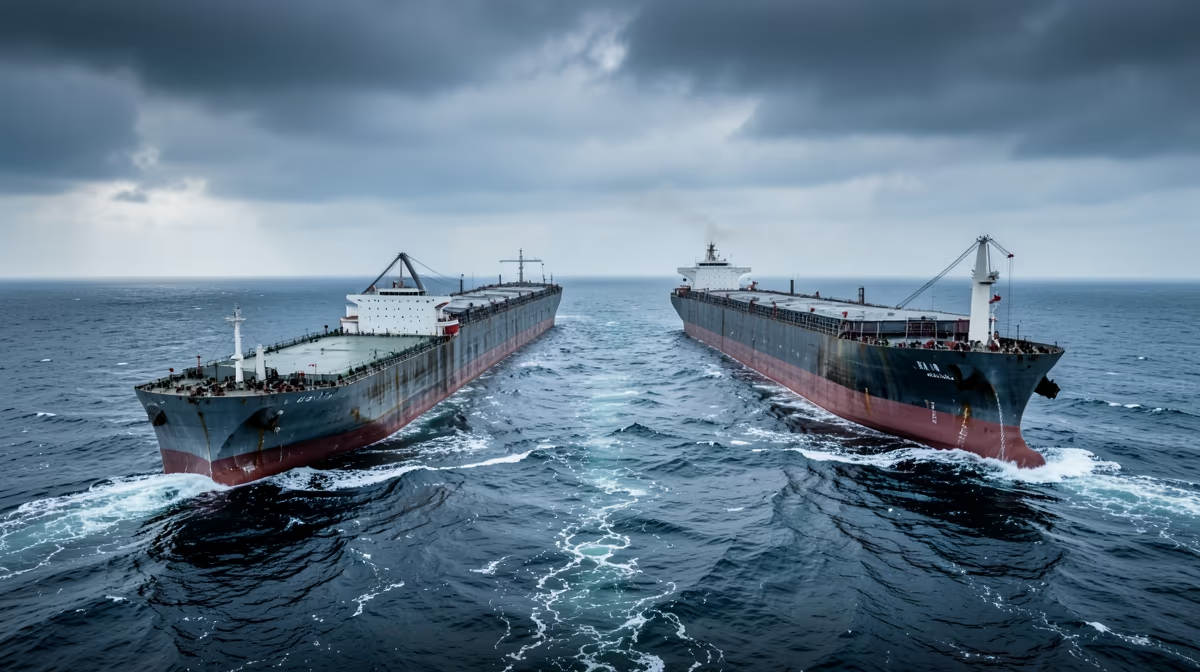
As tensions escalate, the ongoing iran war hormuz situation threatens critical global supply routes. New Delhi faces severe energy security risks as escalating military tensions in the Persian Gulf threaten the Strait of Hormuz, a critical maritime chokepoint through which India imports a significant portion of its crude oil and liquefied natural gas.
Strait of Hormuz Crisis Threatens Global Oil Flows
Tensions are rising around the Strait of Hormuz, a crucial narrow sea channel located between Iran and Oman. This waterway is vital because a massive portion of the world's oil supply travels through it every single day. Recent military friction and threats in the region have sparked fears that the shipping route could be blocked or disrupted. For everyday people, this means that any conflict or instability here can quickly cause global oil markets to panic. Because India imports a huge share of its crude oil to meet its daily energy needs, any threat to ships passing through this region causes immediate anxiety for the government and economists alike.
The Strait of Hormuz is a narrow chokepoint connecting the Persian Gulf to the Gulf of Oman. Roughly a fifth of the world's petroleum passes through this specific sea route. Iran borders the northern coast of the strait and has previously threatened to close it during political standoffs. India relies heavily on Middle Eastern imports for its domestic energy requirements, and global crude oil prices tend to spike instantly whenever military tensions flare up in this area. The Strait has long been a geopolitical flashpoint between Western powers, oil-producing Arab nations, and Iran. Its narrow geography makes commercial ships easy targets during times of geopolitical conflict, making it one of the most heavily watched maritime chokepoints in history.
Impact of Middle East Shipping Disruptions on India
The disruption in the Strait of Hormuz has triggered immediate concern within India's Ministry of Petroleum and Natural Gas, prompting emergency reviews of domestic strategic petroleum reserves and alternative supply routes. Shipping companies have reported heightened threat levels, leading to rerouted vessels and surging insurance premiums that threaten to inflate import bills and destabilize domestic fuel prices. Energy analysts warn that any prolonged blockage or military conflict in the region would severely impact India's macroeconomic stability, given its heavy reliance on Middle Eastern hydrocarbons. The situation compounds existing inflationary pressures, forcing refiners to actively diversify sourcing toward West Africa, the Americas, and Russia to mitigate potential supply shocks. Diplomatic channels in New Delhi are working overtime, engaging with key stakeholders in the Gulf region to ensure the safety of Indian nationals and merchant vessels operating in the volatile waters. The Ministry of External Affairs has reiterated calls for de-escalation and freedom of navigation, emphasizing that uninterrupted energy flows are vital for global economic recovery.
When conflict threatens the Strait of Hormuz, the price of crude oil goes up globally. Since India imports the vast majority of the oil it consumes, expensive oil directly leads to higher fuel prices at petrol pumps, which in turn makes transportation, food, and everyday goods more expensive for the common person. Those affected include Indian consumers facing high fuel and inflation rates, transport companies, manufacturing businesses, and the Indian government trying to manage its import costs. Maritime traffic through the Strait of Hormuz is currently experiencing heightened security protocols and rising transit costs due to regional conflict, while the full extent of potential supply disruptions and the exact diplomatic measures India will take to secure alternative energy corridors remain fluid.
Verified Maritime And Economic Developments
Several key operational metrics and official actions have been confirmed amidst the unfolding crisis. India imports a substantial portion of its crude oil through the Strait of Hormuz. Insurance premiums and shipping costs for tankers operating in the Persian Gulf have surged markedly. In response, the Indian government has initiated emergency reviews of its strategic petroleum reserves, and domestic refiners are actively exploring alternative crude oil sources outside the Middle East. Energy security remains an utmost priority, and authorities are closely monitoring maritime developments in the Persian Gulf to safeguard national economic interests, according to statements from senior officials within the Ministry of Petroleum and Natural Gas.
Analyst View And Structural Drivers
The root cause of the current volatility stems from the structural necessity for the Iranian regime to project asymmetric deterrence against Western naval supremacy by controlling the world's most critical energy choke point, ensuring regime survival through economic hostage-taking. Hardliner factions in Tehran leverage regional escalation to consolidate domestic power, suppress internal dissent, and sideline moderate diplomats, framing national economic distress as a direct consequence of Western aggression. Economically, the disruption of the Strait of Hormuz immediately spikes global crude prices, inflating India's import bill, depreciating the Rupee, widening the current account deficit, and triggering imported inflation that devastates domestic consumption. Geopolitically, India is trapped in a strategic dilemma, forced to balance its critical energy partnerships in the Gulf and historic diplomatic ties with Tehran against its burgeoning security alignment with the US and Israel through regional frameworks. This dynamic echoes the 1984-1988 Tanker War phase of the Iran-Iraq conflict, where third-party commercial shipping was deliberately targeted to internationalize the conflict and pressure global powers into forcing a ceasefire.
Short-Term Outlook And Future Scenarios
Over the next 24 hours, India is expected to closely monitor escalating tensions in the Strait of Hormuz, issuing preliminary advisories for commercial shipping and energy imports as naval patrols increase. Over the next 72 hours, diplomatic engagements will likely intensify between New Delhi and Middle Eastern counterparts to secure alternative energy supply routes and ensure the safety of Indian expatriates and flagged vessels. Key players involved in managing the fallout include the Government of India, the Iranian Armed Forces, the Indian Navy, and OPEC. Impact areas span energy security, inflation and fuel prices, maritime trade routes, and foreign exchange reserves. Expert prediction indicates that a prolonged disruption in the Strait of Hormuz will strain India's current account deficit and force the government to diversify crude oil procurement toward non-Gulf suppliers, causing short-term domestic fuel price volatility. Under a best-case scenario, tensions de-escalate swiftly through international mediation, keeping the Strait of Hormuz open for oil tankers and causing minimal impact on India's energy import costs and inflation. Conversely, a worst-case scenario involves a complete blockade of the Strait of Hormuz triggering severe global oil supply shocks, doubling crude prices, severely depleting India's foreign exchange reserves, and halting non-essential industrial production.
Conclusion
The unfolding situation around the Strait of Hormuz presents significant challenges to global energy markets and India's macroeconomic stability. With verified disruptions driving up insurance premiums and forcing emergency reviews of strategic reserves, New Delhi continues to monitor maritime developments closely while engaging in diplomatic outreach. Realistic next steps involve ongoing naval vigilance, diversification of crude procurement toward non-Gulf suppliers, and continued diplomatic efforts to ensure the safety of commercial shipping and energy corridors.


.webp)


