
Petrol E20 Policy Faces Major Pushback as Advisor Urges Return to E10
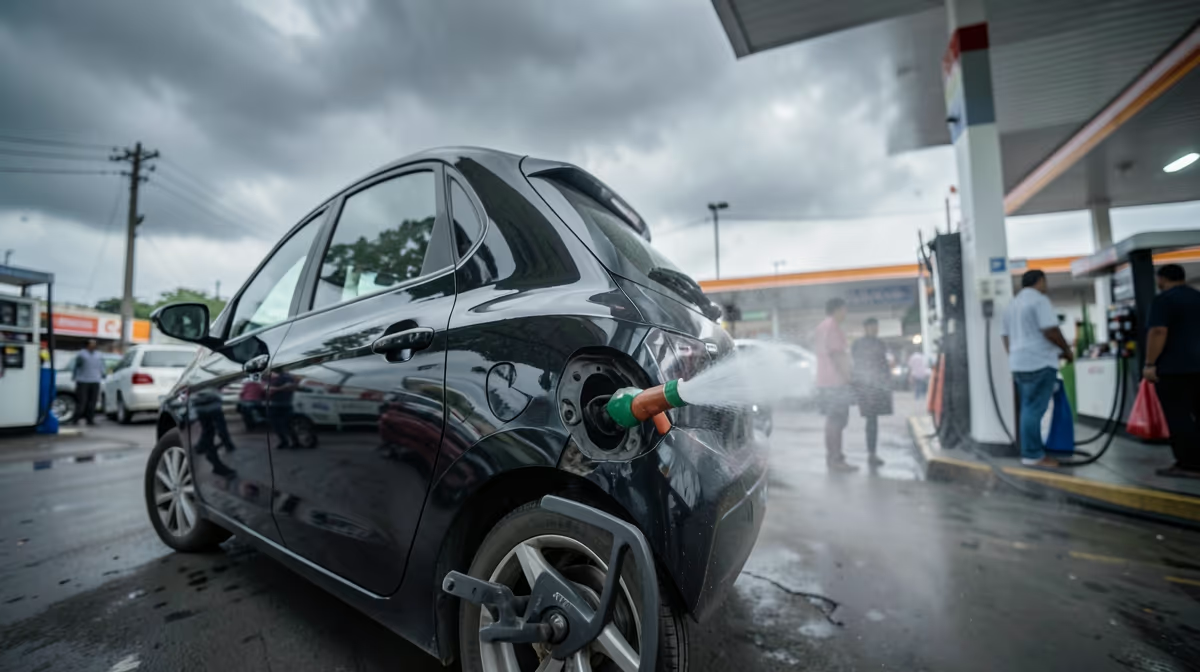
The ongoing debate surrounding the E20 vs E10 petrol India roadmap has taken a fresh turn as a top government advisor suggests pausing higher ethanol targets. A top advisor to the Modi government has suggested reverting from E20 fuel blending back to E10, according to recent reports from TheWire.in.
Background Context and Policy Origins
Governments worldwide promote biofuel blending, such as ethanol mixed with petrol, to lower carbon emissions and reduce reliance on imported crude oil. However, transitioning to higher blends like E20 requires adjustments to engine components and careful management of food versus fuel resource allocation. A top Modi government advisor has recommended bringing back E10 fuel, suggesting that the administration stop the current push toward E20 fuel blending. E10 fuel contains a blend of 10 percent ethanol and 90 percent petrol, whereas E20 represents a higher blend containing 20 percent ethanol. The ongoing discussions highlight challenges in India's broader fuel blending roadmap. Fuel blending policies directly affect fuel prices, vehicle engine longevity, and agricultural supply chains. Re-evaluating the roadmap from E20 back to E10 could shift how vehicle manufacturers design engines and how sugar and grain producers supply ethanol to the fuel sector.
What Unfolded in the Energy Sector
The discussion around fuel blending mandates comes amidst broader price fluctuations and developments in the energy sector across India. Recent reports indicate various pricing adjustments for petroleum products and related services in different regions, adding complexity to national fuel strategies. Specifically, fuel and diesel prices were hiked by Rs 3 per liter, while CNG prices in Delhi saw an increase of Rs 2. Additionally, regional measures such as a specific cess imposed on oil in Himachal Pradesh and infrastructural incidents like a land conversion proposal adding fuel to a Mumbai petrol pump fire have intersected with a general public sensitivity toward fuel availability and cost. The debate over E10 versus E20 fuel blending touches on critical aspects of India's energy policy, environmental goals, and the automotive sector. Policymakers and industry stakeholders continue to navigate the balance between reducing emissions through higher ethanol blending and addressing potential engine compatibility or supply concerns.
Economic and Mechanical Implications
The root cause of the current friction stems from the debate over fuel blending mandates, specifically weighing ambitious environmental targets like E20 against vehicle compatibility, efficiency losses, and inflationary pressures on consumers. From an economic angle, there are potential cost burdens on consumers due to lower fuel efficiency from higher ethanol blends, compounded by broader petroleum and utility price increases. Politically, the administration faces the challenge of balancing its green energy commitments and agricultural branding with the immediate economic backlash from vehicle owners facing engine wear and fuel price hikes. Geopolitically, India's domestic biofuel strategy intersects with global crude oil import dependency, agricultural policies, and food-versus-fuel debates. Internal policy friction within the administration regarding the speed of green transitions versus ground-level technical and economic realities further complicates the landscape, echoing historical global controversies surrounding food-based biofuel mandates in the late 2000s that forced policymakers to re-evaluate blending thresholds.
Future Outlook and Expected Next Steps
Discussions and policy debates are expected to intensify following reports that a top Modi government advisor has recommended rolling back fuel blending from E20 to E10. Over the next 72 hours, automotive sector stakeholders and energy analysts will likely analyze the economic and mechanical implications of adjusting biofuel blending targets amidst ongoing fuel price fluctuations. Analysts would likely expect a formal review of the current E20 roadmap and its practical implementation challenges based on top-level advisory input. The best-case scenario involves a balanced reassessment of biofuel blending targets that optimizes engine longevity while maintaining environmental and economic objectives, while the worst-case scenario points to policy uncertainty and conflicting directives regarding fuel blending standards causing confusion within the automotive and petroleum sectors.
Frequently Asked Questions
What did the Modi government's top advisor recommend regarding fuel blending?
A top advisor has suggested bringing back E10 fuel and stopping the current push toward E20 blending. This recommendation addresses growing concerns over fuel composition and engine compatibility in vehicles.
Why is stopping blending at E20 a major topic of discussion right now?
The debate involves balancing India's ambitious green energy targets with practical concerns about vehicle engine health and fuel efficiency. Higher ethanol blends like E20 can impact older or non-optimized engines, prompting advisors to re-evaluate the blending roadmap.
Who is affected by the potential shift from E20 back to E10?
Automobile owners, vehicle manufacturers, and fuel consumers across India are directly impacted by fuel policy changes. Modifications in petrol composition affect vehicle mileage, maintenance costs, and overall engine longevity.
What happens next regarding India's ethanol blending policy?
Policymakers will likely review the advisor's recommendations alongside existing environmental targets and the domestic sugar and agriculture sectors that supply ethanol. Further technical evaluations may determine whether the transition timeline needs adjustment.
What is the difference between E10 and E20 fuel?
E10 fuel contains 10 percent ethanol and 90 percent gasoline, whereas E20 doubles the ethanol content to 20 percent. While higher ethanol blends reduce carbon emissions, they also lower fuel economy and can cause corrosion in standard fuel systems.
Are fuel prices impacting the current discussions on petrol blends?
Recent fuel price hikes and additional cesses in various regions have heightened consumer sensitivity toward fuel quality and economy. While price adjustments are driven by taxation and global oil markets, they intersect with debates on the cost-effectiveness of alternative fuel blends.
Conclusion
A top advisor to the Modi government has advised bringing back E10 and stopping blending at E20, as reported by TheWire.in. While discussions continue at high levels regarding the optimal blending percentage, the government has not yet issued a formal policy reversal. Observers note that any official shift in the E20 roadmap would require careful coordination between agricultural producers, oil marketing companies, and automobile manufacturers. Further updates are anticipated as stakeholders assess the technical and economic realities of fuel blending targets moving forward.
Sources
- हिमाचल में तेल पर लगा अनाथ और विधवा सेस, महंगा हुआ पेट्रोल-디जल — AajTak
- Petrol & diesel prices hiked by Rs 3/L; CNG prices hiked in Delhi by Rs 2 — News On AIR
- Land conversion proposal adds fuel to Mulund petrol pump fire — Mumbai Mirror
- Modi Govts Top Advisor Says Bring E10 Back, Stop Blending at E20 — TheWire.in
- Rain delays Chandigarh's free 'petrol langar' — Rediff


.webp)
