
Strait of Hormuz Transit Fees Spark Major Global Shipping Alarm
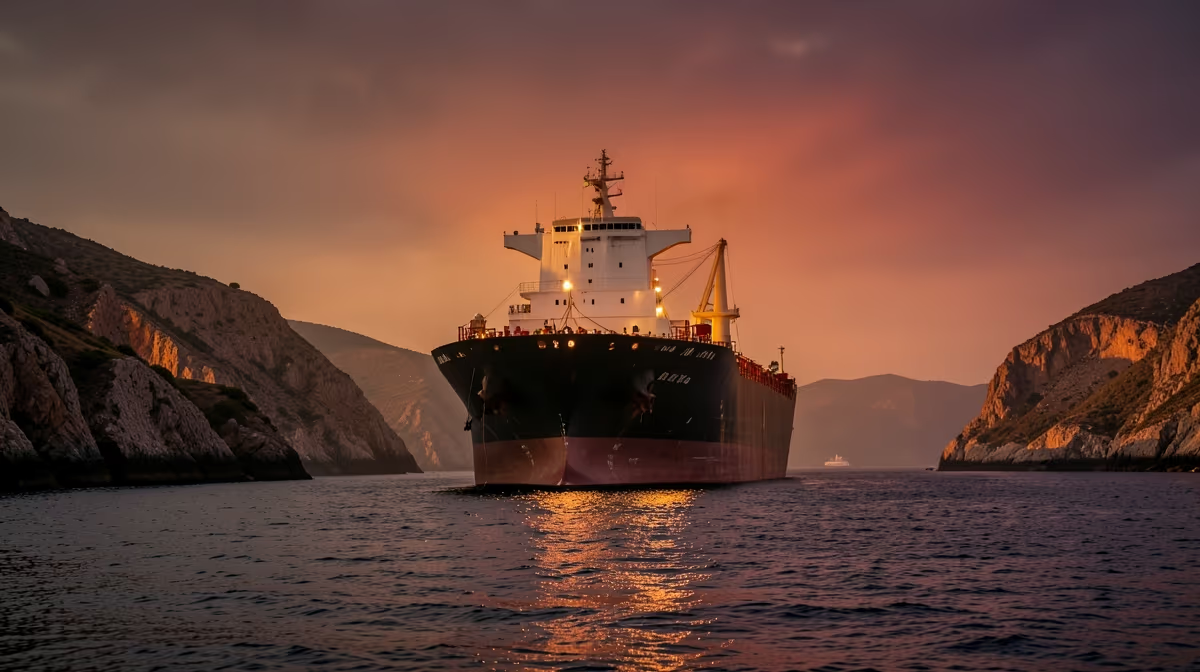
Washington policymakers and maritime trade organizations have raised urgent concerns following unverified reports that regional authorities are considering the implementation of new transit fees for commercial vessels navigating the Strait of Hormuz, a critical global oil chokepoint. Discussions surrounding strait of hormuz transit fees have sparked major concerns across international markets, forcing energy traders, global investors, and policymakers to closely monitor the stability of the Persian Gulf corridor. The Strait of Hormuz, situated between Oman and Iran, serves as the passage for approximately one-fifth of the world's petroleum consumption, making any potential toll or fee structure a matter of severe international economic anxiety. U.S. defense and energy officials are closely monitoring maritime communications in the Persian Gulf amid fears that additional financial burdens could disrupt global supply chains and drive up crude oil futures.
Background Context and Maritime Law
Imagine the Strait of Hormuz as a narrow, watery highway between the Persian Gulf and the open ocean. A huge portion of the world's oil travels through this bottleneck on giant ships every single day. While waterways used for international shipping are generally open to everyone under international law, regional actors and shifting geopolitical powers sometimes challenge these rules. Introducing fees could dramatically increase the cost of moving oil and goods out of the Middle East, sparking international concern.
International maritime law, specifically the United Nations Convention on the Law of the Sea, guarantees the right of transit passage through international straits used for international navigation. Imposing unilateral fees on foreign-flagged commercial vessels could violate established international legal frameworks and provoke a robust diplomatic or military response from the United States and its allies. Historically, the Strait of Hormuz has long been a geopolitical flashpoint due to its strategic importance for oil exports. Historically, tensions between Middle Eastern nations and Western powers often center around the security and freedom of navigation in this vital channel.
Economic Fallout and Market Disruption
Energy analysts warn that even the discussion of transit fees creates undue volatility in global energy markets. Shipping insurers and freight operators are already recalculating risk premiums for voyages through the Gulf, anticipating potential cost increases that would ultimately be passed on to global consumers. The imposition of transit fees threatens to artificially inflate global crude prices, drive up maritime insurance premiums, and exacerbate inflationary pressures in energy-importing economies.
When it costs more to move oil through the Strait of Hormuz, those extra expenses get passed down to everyday consumers. This means everyday consumers could see higher prices at the gas station and increased costs for everyday goods that rely on global supply chains, ultimately adding to inflation and economic pressure. American drivers, everyday consumers, global shipping companies, airlines, and businesses that rely on imported goods and petroleum products face direct exposure to these cost shifts. Crude oil markets remain highly sensitive to geopolitical developments in the Persian Gulf region, and the quiet emergence of digital asset and non-SWIFT financial clearing mechanisms orchestrated by sanctioned states could alter how maritime tolls are handled without triggering standard financial oversight.
Political and Geopolitical Dimensions
Tehran is seeking alternative revenue streams and exerting asymmetric leverage to counter comprehensive Western economic sanctions and deter maritime coalition presence. By testing the resolve of the administration and regional Gulf monarchies, regional authorities frame sovereignty over territorial waters as a direct challenge to the rules-based international maritime order. This dynamic accelerates the decoupling of global trade choke points from Western security guarantees, potentially prompting other major energy-importing nations to negotiate separate bilateral security accommodations.
The situation mirrors historical parallels such as the 1956 Suez Crisis, where the nationalization of a critical global transit artery exposed the limits of declining naval power and permanently altered regional hegemony. Maximum pressure sanctions severely restrict certain national oil exports, leading to asymmetric naval skirmishes and tanker seizures that escalate tension in the Persian Gulf. As legal frameworks are formalized to levy transit fees on foreign commercial vessels, global insurers reprice Gulf transit risk while naval powers monitor deployment options.
Operational Outlook and Next Steps
US diplomatic and maritime agencies issue warnings regarding proposed transit fees in the Strait of Hormuz, emphasizing freedom of navigation. Shipping companies begin assessing potential insurance cost hikes and route alternatives while monitoring international legal challenges. While explicit toll enforcement remains legally contentious and risks naval confrontation, rhetoric around transit fees will elevate shipping premiums and heighten the regional naval posture maintained by the U.S. Department of Transportation, the International Maritime Organization, regional Gulf states, and global shipping associations.
In the best-case scenario, international diplomatic pressure successfully deters fee implementation, preserving unrestricted and cost-free transit through the strait. In the worst-case scenario, unilateral fee enforcement leads to the detention of commercial vessels, triggering a military escort response and a sharp spike in global crude prices.
Frequently Asked Questions
Does the US pay transit fees for the Strait of Hormuz?
No, the United States does not pay direct transit fees to use the Strait of Hormuz. Under international maritime law, specifically the UN Convention on the Law of the Sea, the strait is recognized as an international strait subject to transit passage rights. This ensures that commercial and military vessels from the US and other nations can navigate the waterway freely without paying tolls.
Who controls the Strait of Hormuz and can they charge tolls?
The Strait of Hormuz is bordered by Oman and Iran, with the shipping lanes primarily falling within Omani territorial waters. While Iran has periodically threatened to close the strait or levy fees on passing tankers, international law does not recognize their right to unilaterally restrict traffic or charge transit tolls. Any attempt to impose such fees would violate international maritime agreements and disrupt global oil supplies.
Are there any hidden costs or taxes for ships transiting the Strait of Hormuz?
Commercial vessels transiting the strait do not pay government-mandated tolls, but they do face indirect financial costs. Shipowners must factor in soaring marine insurance and war-risk premiums due to ongoing geopolitical tensions in the Persian Gulf. Additionally, vessels often hire armed security teams and consume extra fuel to navigate the narrow corridor safely.
How do geopolitical tensions affect shipping costs in the Strait of Hormuz?
While official transit fees do not exist, geopolitical friction heavily impacts the overall cost of moving cargo through the region. When conflicts escalate between Iran and Western powers, war-risk insurance rates spike dramatically for tankers operating in the Persian Gulf. These increased operational expenses are ultimately passed down to consumers through higher energy and oil prices.
Is the Strait of Hormuz considered international waters?
Yes, the shipping lanes passing through the Strait of Hormuz are designated as international waters under the principle of transit passage. This legal framework allows continuous and expeditious navigation for all foreign ships and aircraft through the strait. Consequently, coastal states are legally prohibited from obstructing passage or demanding fees from international vessels.
What would happen if Iran tried to enforce transit fees in the Strait of Hormuz?
If Iran attempted to unilaterally enforce transit fees or block the Strait of Hormuz, it would provoke a severe international crisis. The United States Navy maintains a strong presence in the region specifically to deter such disruptions and keep the crucial oil transit chokepoint open. Any forceful collection of tolls would likely be met with severe economic sanctions, legal challenges, and potential military intervention by global powers.
Conclusion
The strategic importance of the Strait of Hormuz remains absolute, with roughly one-fifth of global petroleum consumption dependent on its unhindered passage. While official transit fees have not been formally implemented or recognized under international law, discussions surrounding maritime tolls have introduced measurable volatility into global shipping and energy markets. Regulatory bodies, shipping associations, and defense agencies continue to monitor regional developments, balancing freedom of navigation against escalating operational and financial risks. Stakeholders across the energy supply chain will track diplomatic engagements and insurance adjustments as maritime authorities maintain their presence in the Persian Gulf.


.webp)

