
Strait of Hormuz Transit Fees Spark Major Global Shipping Crisis
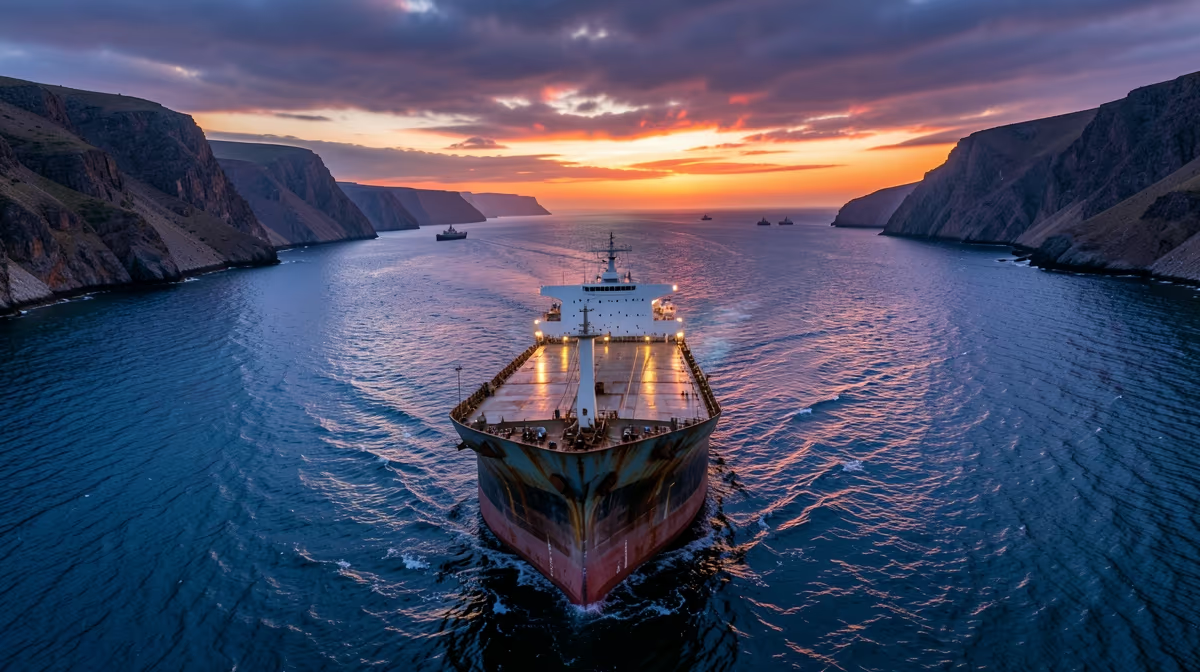
Washington and maritime allies are closely monitoring proposals by regional actors to impose strait of hormuz transit fees, a critical global energy chokepoint, raising serious legal and economic concerns for international shipping lanes. Imagine this narrow corridor as a crucial hallway in a giant apartment building, but instead of people, it serves as the main watery highway for a huge chunk of the world's energy supply. Discussions have popped up about charging a toll or transit fee for ships passing through this narrow passage, introducing a brand-new financial hurdle into global trade where international waters normally allow ships to pass freely without local tolls.
Understanding The Strait And Its Strategic Significance
The Strait of Hormuz connects the Persian Gulf with the Gulf of Oman, flanked geographically by Oman and Iran. Roughly a fifth of the world's petroleum and a significant percentage of global liquefied natural gas passes through this narrow waterway. For decades, the corridor has been recognized as one of the most geopolitically sensitive routes on Earth, serving as the primary outlet for Persian Gulf oil exports while frequently acting as a flashpoint for international military and political tensions. The waters are shared primarily between Oman and Iran, with shipping lanes falling within their respective territorial waters. Despite this geographic positioning, international law guarantees unhindered navigation for all foreign-flagged vessels.
The Legal And Regulatory Framework
Legal experts and international maritime law organizations emphasize that the United Nations Convention on the Law of the Sea guarantees transit passage through international straits used for international navigation. No official toll or transit fee is currently charged for commercial vessels passing through the strait. Under international frameworks, the corridor is considered an international strait used for navigation, allowing ships the right of transit passage, provided they comply with regional maritime safety regulations and local port authorities. Imposing tolls or fees without broad international consensus could lead to heightened naval tensions and legal challenges at the International Maritime Organization. Iran cannot legally close the strait or impose arbitrary transit fees, as international maritime law protects this vital waterway, though Iranian military forces have occasionally threatened closure or boarded vessels in disputes.
Economic Consequences And Market Reactions
Energy analysts warn that even minor disruptions or perceived threats to free navigation in the Persian Gulf can trigger immediate upward spikes in crude oil futures. While direct strait of hormuz transit fees do not officially exist, ship operators incur significant indirect expenses when navigating the corridor. These expenses include soaring war-risk insurance surcharges, higher fuel consumption for security maneuvers, and potential delays from naval escorts. The economic cost of transiting the region typically stems from increased marine insurance premiums rather than direct government fees, testing the resilience of global supply chains and artificially inflating crude oil and LNG transit costs.
Geopolitical Pressures And Naval Deterrence
The United States Fifth Fleet, headquartered in Bahrain, maintains a continuous regional presence to ensure the free flow of commerce and deter potential maritime harassment. Enforcement of security and naval patrols in the area is frequently conducted by international coalitions, including the United States Navy. Tehran tests the limits of Washington deterrence posture in the Middle East, while the US administration faces domestic political pressure to secure shipping lanes without triggering a regional war. This dynamic creates a direct challenge to the US-led international maritime order and the principle of freedom of navigation, forcing regional powers like the UAE and Saudi Arabia to recalibrate their security architecture.
Timeline Of Regional Tensions
The evolution of these maritime tensions stems from a multi-stage background. Maximum pressure sanctions initially reduced Iranian oil exports to near-zero, prompting subsequent asymmetric naval provocations and covert seizures of commercial tankers in the Gulf. This history laid the groundwork for formalization of transit fee proposals and gray-zone maritime taxation discussions by Tehran. Shipping companies and international maritime bodies now find themselves navigating an ongoing standoff involving militarized escort operations, insurance market panic, and quiet backchannel diplomacy, drawing historical parallels to the 1980s Tanker War phase of the Iran-Iraq War where commercial vessels were systematically targeted.
Future Outlook And Market Risk
Within the next twenty-four hours, shipping companies and international maritime bodies are expected to issue statements condemning potential transit fee proposals in the Strait of Hormuz, while US naval forces increase reconnaissance. Over the next seventy-two hours, diplomatic channels will activate to warn regional actors against disrupting free navigation, and energy markets will price in a moderate risk premium. Expert prediction suggests that while rhetoric regarding transit fees will escalate market tension, actual implementation is unlikely due to the high risk of military escalation and severe economic retaliation. The best-case scenario involves the proposal being dropped following back-channel diplomacy and warnings from major global powers, stabilizing energy markets. Conversely, the worst-case scenario entails the enforcement of unauthorized fees leading to the detainment of commercial vessels, prompting US and allied naval escorts and a spike in oil prices.
Frequently Asked Questions
Are there transit fees to pass through the Strait of Hormuz?
No official toll or transit fee is charged for commercial vessels passing through the Strait of Hormuz. Under the United Nations Convention on the Law of the Sea, the strait is considered an international strait used for navigation, allowing ships the right of transit passage. However, vessels must still comply with regional maritime safety regulations and local port authorities.
Who controls the Strait of Hormuz?
The waters of the Strait of Hormuz are shared primarily between Oman and Iran, with the shipping lanes falling within their respective territorial waters. Despite this geographic positioning, international law guarantees unhindered navigation for all foreign flag vessels. Enforcement of security and naval patrols in the area is frequently conducted by international coalitions, including the United States Navy.
Do oil tankers pay tolls in the Strait of Hormuz?
Oil tankers and other commercial cargo ships do not pay specific tolls or fees to transit the strait. The economic cost of transiting the region typically stems from increased marine insurance premiums rather than direct government fees. Shippers often face higher war-risk insurance rates due to ongoing geopolitical tensions in the Middle East.
Can Iran close the Strait of Hormuz and charge fees?
Iran cannot legally close the strait or impose arbitrary transit fees under international maritime law, as it is a vital international waterway. While Iranian military forces have occasionally threatened closure or boarded vessels in disputes, such actions violate international norms. Major global powers closely monitor the region to ensure the strait remains open and toll-free for international commerce.
What are the hidden costs of transiting the Strait of Hormuz?
While direct transit fees do not exist, ship operators incur significant indirect costs when navigating the strait. These expenses include soaring war-risk insurance surcharges, higher fuel consumption for security maneuvers, and potential delays from naval escorts. These added operational costs ultimately impact global energy and shipping prices.
Is the Strait of Hormuz considered international waters?
The strait consists of overlapping territorial waters belonging to Oman and Iran, but international shipping lanes within it are designated for transit passage. This legal status allows vessels from all nations to navigate the corridor freely without seeking permission or paying fees. Consequently, it functions similarly to international waters for commercial and military transit.
Conclusion
Discussions regarding potential transit fees in the Strait of Hormuz highlight the fragile balance governing global energy corridors and international shipping routes. While international maritime law protects unhindered navigation through the strait, regional tensions and economic pressures continue to test maritime security frameworks. Global markets, naval coalitions, and diplomatic bodies remain focused on maintaining free passage to prevent broader economic disruption. Realistic next steps involve ongoing diplomatic engagement, heightened naval monitoring by the United States and allied forces, and continuous assessment of maritime insurance and trade risks by commercial operators.


.webp)

