
Data centers infrastructure stress reaches a tipping point in the US
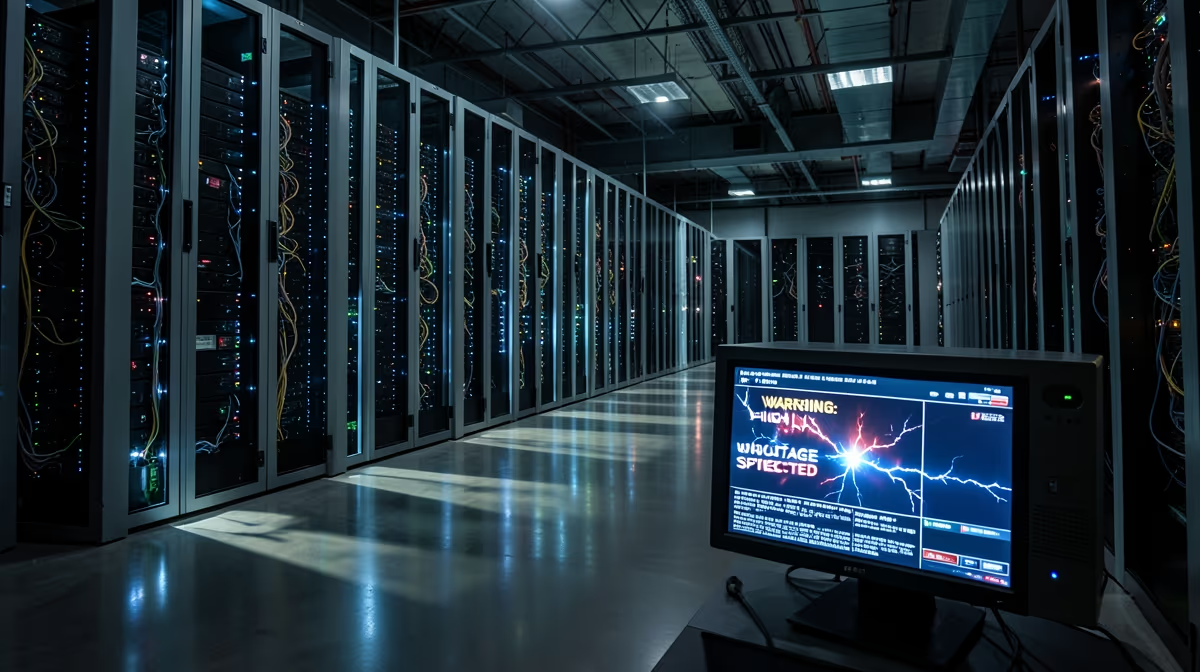
As artificial intelligence adoption accelerates across the country, data centers infrastructure stress has become an urgent concern for utility providers and tech giants alike. Data centers in the United States are facing what has been described as an 'oh s--t' moment, as reported by Politico, highlighting mounting pressures within the digital infrastructure sector.
The Digital Infrastructure Reality Check
The technology industry is facing a sudden and massive reality check regarding how much electricity modern data centers require. As artificial intelligence and cloud computing grow at an unprecedented pace, the facilities powering these digital systems are demanding more power than local electrical grids can comfortably supply. Industry leaders and energy experts are calling this a wake-up call because the infrastructure simply wasn't built to handle this sudden surge in demand. Power companies are now scrambling to figure out how to keep up without causing blackouts or missing climate goals.
- Modern data centers are experiencing a massive surge in electricity demand
- The rapid growth of artificial intelligence is a primary driver behind increased power consumption
- Local electrical grids are struggling to keep up with the unexpected scale of energy required
- Industry observers and media outlets refer to this urgent realization as a major turning point
- Power companies and tech firms are being forced to rethink their energy sources and grid capacity
Historically, data centers grew at a steady, predictable pace that allowed local utilities to plan and build power infrastructure years in advance. The recent explosion of generative artificial intelligence completely disrupted this slow-growth model, creating sudden spikes in energy demand that caught the utility industry off guard. The digital infrastructure industry in the United States is confronting significant challenges that have caught the attention of observers and industry analysts alike. As demand for data processing and storage continues to surge, the underlying systems supporting this growth are encountering unprecedented hurdles. These pressures stem from a combination of resource demands, scaling constraints, and operational realities that are forcing a critical reevaluation within the sector.
Root Causes and Structural Pressures
The underlying root cause driving this situation is the exponential growth in AI computational demands colliding with physical grid capacity limits and natural gas infrastructure constraints in key US markets. Industry stakeholders are increasingly aware of the bottlenecks affecting modern data center operations, which threaten to outpace current capacity and infrastructural readiness. The situation underscores a broader tension between the rapid expansion of technology services and the physical limits of power, cooling, and spatial resources available in key US markets.
- Rapid acceleration of generative AI infrastructure investments outpaces regional grid interconnection studies
- Power grid operators issue emergency warnings regarding localized capacity shortages near major data center hubs
- Policy makers and tech executives confront an urgent supply-demand mismatch threatening digital infrastructure expansion
Observers note that addressing these emerging hurdles will require substantial strategic shifts and potential collaboration between technology firms and utility providers. As the sector navigates this critical juncture, the implications of these growing pains are likely to influence future investments and operational strategies across the country.
Political and Economic Dimensions
The political dimension involves regulatory friction between federal clean-energy mandates, local utility ratepayer protections, and aggressive corporate lobbying by big tech for priority power access. At the same time, soaring utility capital expenditures are threatening to drive up residential electricity rates while straining the balance sheets of regional grid operators.
From a geopolitical perspective, the race for technological supremacy over China is forcing US policymakers to choose between climate goals and maintaining unthrottled artificial intelligence development. Meanwhile, a hidden angle involves potential behind-the-meter generation deals where tech giants bypass public utilities entirely, creating private microgrids that could destabilize local municipal power markets. This dynamic closely mirrors historical parallels such as the 2000-2001 California electricity crisis, where surging demand and market deregulation exposed severe vulnerabilities in regional power generation and transmission.
Near-Term Outlook and Scenario Analysis
Discussions and initial commentary are expected to emerge regarding the capacity constraints and operational challenges facing data centers in the US over the next 24 hours. Looking further ahead into the next 72 hours, industry analysts and stakeholders will likely begin evaluating the broader infrastructure and power grid implications highlighted by the current data center strain. Key players navigating these developments include data center operators, energy providers, market regulators, and infrastructure planners across impacted regions.
Analysts expect increased scrutiny on power consumption and infrastructure scaling limits as demand continues to strain existing networks.
Under the best-case scenario, stakeholders proactively collaborate on energy efficiency and grid upgrades, mitigating immediate bottlenecks and stabilizing expansion plans. Conversely, the worst-case scenario warns that severe power shortages and infrastructure delays could stall critical data center projects, creating cascading bottlenecks across the digital economy.
Frequently Asked Questions
What is the data centers oh shit moment?
The phrase refers to a critical turning point where the explosive growth of digital infrastructure and artificial intelligence meets severe real-world constraints. Industry stakeholders are facing unexpected challenges regarding resource consumption and grid reliability.
Why does the data centers infrastructure crunch matter?
This moment matters because data centers require immense amounts of electricity and water to operate continuously. Failing to manage these demands efficiently risks destabilizing local power grids and accelerating environmental concerns.
Who is affected by the data center power constraints?
Tech companies, utility providers, and local communities near major hub regions are all significantly impacted. Residents may face rising electricity bills, while operators must navigate tighter regulatory scrutiny and grid connection delays.
What happens next for data center expansion?
Operators are increasingly forced to seek alternative energy solutions, such as nuclear power or dedicated renewable microgrids, to sustain growth. Policymakers and utility companies are also rethinking how to balance tech industry needs with public grid stability.
What is the background behind the rapid surge in data centers?
The unprecedented boom in generative artificial intelligence, cloud computing, and big data analytics drove a massive wave of new facility construction. This rapid scaling quickly outpaced the speed at which traditional power generation and transmission infrastructure could be upgraded.
How are power limitations changing facility planning?
Developers can no longer simply plug massive new facilities into existing municipal grids without extensive long-term planning and cooperation. Future sites are increasingly being selected based on proximity to dedicated power sources rather than traditional tech hub locations.
Conclusion
Data centers in the United States have reached a critical juncture driven by the rapid expansion of artificial intelligence and surging energy demands. With Politico reporting on this sudden reality check, industry stakeholders, utility providers, and policymakers are forced to confront severe physical and grid capacity limits. As discussions and operational adjustments unfold, the sector faces a delicate balance between maintaining digital growth and ensuring regional energy stability.
Sources
- Data centers’ ‘oh s--t’ moment — Politico


.webp)
