
US Soldier Spouse Detained ICE Action Sparks National Security Debate
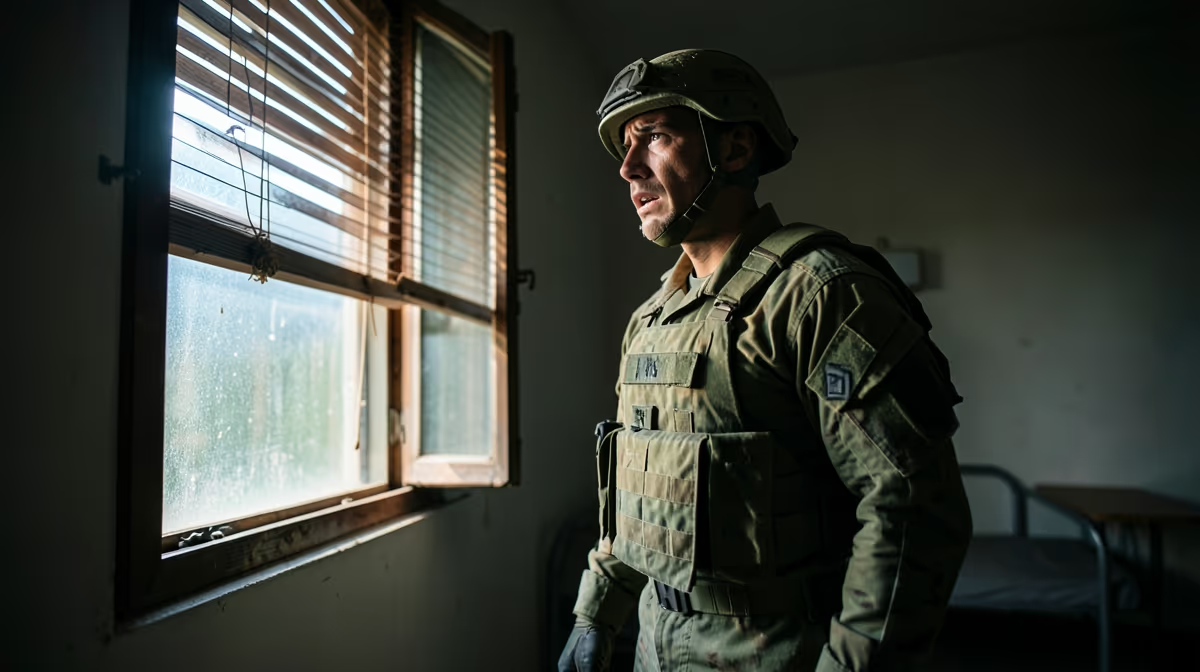
The sudden detention of a us soldier spouse detained ice has sparked widespread concern among military advocates and lawmakers regarding current immigration enforcement protocols. Immigration and Customs Enforcement (ICE) agents detained the undocumented spouse of a U.S. Army soldier during a routine traffic stop in Texas last week, sparking intense scrutiny from lawmakers and veterans' advocates over current immigration enforcement priorities regarding military families.
What Unfolded
The detention occurred on November 12 near a military installation in San Antonio, according to legal representation and family statements. The spouse, whose identity has been withheld for privacy and safety concerns, has lived in the United States for over a decade and has no criminal record. Advocates note that the individual was in the process of seeking legal status through the Parole in Place program, a policy designed to protect military families from deportation.
Following the arrest, local congressional offices intervened, and the soldier's unit commander offered support, highlighting the strain that immigration enforcement actions place on service members. Military families have historically been granted a degree of discretionary relief under federal guidelines, making this high-profile detention a departure from typical enforcement protocols.
Immigration attorneys and veterans' groups have ramped up pressure on federal authorities for an immediate release, arguing that detaining the spouses of active-duty personnel directly undermines military readiness and morale. ICE officials have not yet provided a comprehensive public statement regarding the specific reasoning behind prioritizing this particular case. ICE currently holds the soldier's spouse in a civil detention facility in Texas while legal counsel attempts to secure a stay of deportation and release.
Policy Friction And Legal Vulnerabilities
This situation exposes the immense stress and vulnerability faced by military families who live with mixed immigration statuses. It forces the public and policymakers to confront whether active-duty military service should grant certain protections or considerations to a soldier's immediate family, impacting morale and the sense of security within the armed forces. Bureaucratic rigidity within the Department of Homeland Security (DHS) and U.S. Citizenship and Immigration Services (USCIS), combined with a fragmented legal framework, fails to automatically protect military families from immigration enforcement.
For years, military families have navigated complex immigration laws. Programs like Parole in Place were previously established to help certain undocumented family members of military personnel avoid deportation, but policies and enforcement priorities frequently shift depending on the administration in power. This creates a legal vulnerability where service members deployed overseas or working on active duty must simultaneously worry about the legal safety of their dependents at home.
Broader Implications And Systemic Pressures
The high-profile nature of the case exposes the tension between national security and border enforcement agendas and the traditional support given to military families, forcing bipartisan politicians into uncomfortable defensive postures. Economically, critics point out the waste of taxpayer funds on detaining families of service members while military recruitment and retention are already in deep crisis. Geopolitically, such incidents can damage the soft power and moral authority of the U.S. military abroad, raising questions about how the nation treats the dependents of its own combat personnel.
Historically, military families have faced challenges reminiscent of the deportation of green-card holding veterans in the late 20th century under expanded 1996 immigration laws. The current framework relies on enforcement mechanisms that can inadvertently sweep up protected classes due to rigid systemic guidelines with limited initial human oversight at the field level.
Future Outlook And Expected Developments
Within the next 24 hours, increased media scrutiny and advocacy group mobilization are expected regarding the detention, prompting requests for an immediate administrative stay of deportation. Over the next 72 hours, congressional inquiries and potential intervention by lawmakers will likely demand that DHS review the case, alongside possible public statements from military leadership addressing service member family welfare.
Experts predict that the high-profile nature of the case involving a military family will result in a temporary stay of deportation and a discretionary release pending further review, reflecting standard policy adjustments for service members' families. In the best-case scenario, ICE grants a swift discretionary stay or administrative closure, reuniting the spouse with the U.S. soldier and sparking renewed bipartisan dialogue on formalizing protections for military families. In the worst-case scenario, the spouse is rapidly deported despite public outcry, leading to severe morale issues within the armed forces, intense political backlash against immigration authorities, and protracted legal battles.
Frequently Asked Questions
Can ICE deport the spouse of a US soldier?
Yes, ICE can technically detain or initiate deportation proceedings against the undocumented spouse of a US service member. Military status does not automatically grant immunity from immigration laws, though special policies do exist. These families often face extreme stress due to the threat of separation while serving the country.
What is parole in place for military spouses?
Parole in Place (PIP) is a specialized immigration policy that allows certain undocumented spouses, parents, and children of active-duty military personnel, veterans, or reservists to apply for lawful status. If granted, PIP protects the military spouse from deportation and provides a pathway to apply for a green card without leaving the United States. This program recognizes the sacrifices of military families and helps prevent forced separation.
What should I do if my military spouse is detained by ICE?
If your spouse is detained by ICE, you should immediately contact an experienced immigration attorney who specializes in military cases. You should also notify your spouse's military command, as they may be able to provide letters of support or assistance through military legal assistance offices. Gathering evidence of your military service and filing for Parole in Place quickly can also be crucial strategies.
Does being married to a veteran protect against ICE detention?
Marriage to a US military veteran provides certain immigration benefits, but it does not automatically stop ICE detention or deportation. Veterans' spouses may still be eligible to apply for Parole in Place or adjustment of status, but the process is generally more complex than for spouses of active-duty personnel. Legal representation is strongly recommended to navigate the specific guidelines for veteran families.
How long does ICE detention last for a military spouse?
The duration of ICE detention for a military spouse varies widely depending on the complexity of the case and whether immigration bonds are granted. Some individuals may be released within a few days if an emergency stay of deportation or Parole in Place is successfully filed. However, other cases can take weeks or months to resolve through the immigration court system.
Can a military spouse get a green card if detained by ICE?
Yes, a detained military spouse can potentially obtain a green card if they qualify for adjustment of status through Parole in Place. Securing PIP while in detention allows the individual to bypass the requirement of returning to their home country for consular processing. An immigration lawyer must work swiftly to halt removal proceedings while the green card application is pending.
Conclusion
The detention of a U.S. Army soldier's spouse by Immigration and Customs Enforcement in Texas has brought national attention to the vulnerabilities faced by military families with mixed immigration statuses. With the individual currently held in a civil detention facility, legal representatives, local lawmakers, and veterans' advocates are actively pursuing discretionary relief and an administrative stay of deportation. As congressional offices engage with the Department of Homeland Security, the case underscores ongoing debates regarding enforcement priorities and the need for consistent protections for the families of active-duty service members.


.webp)

.webp)