
ASML Semiconductor Supplier Base in India Faces a Critical Transition
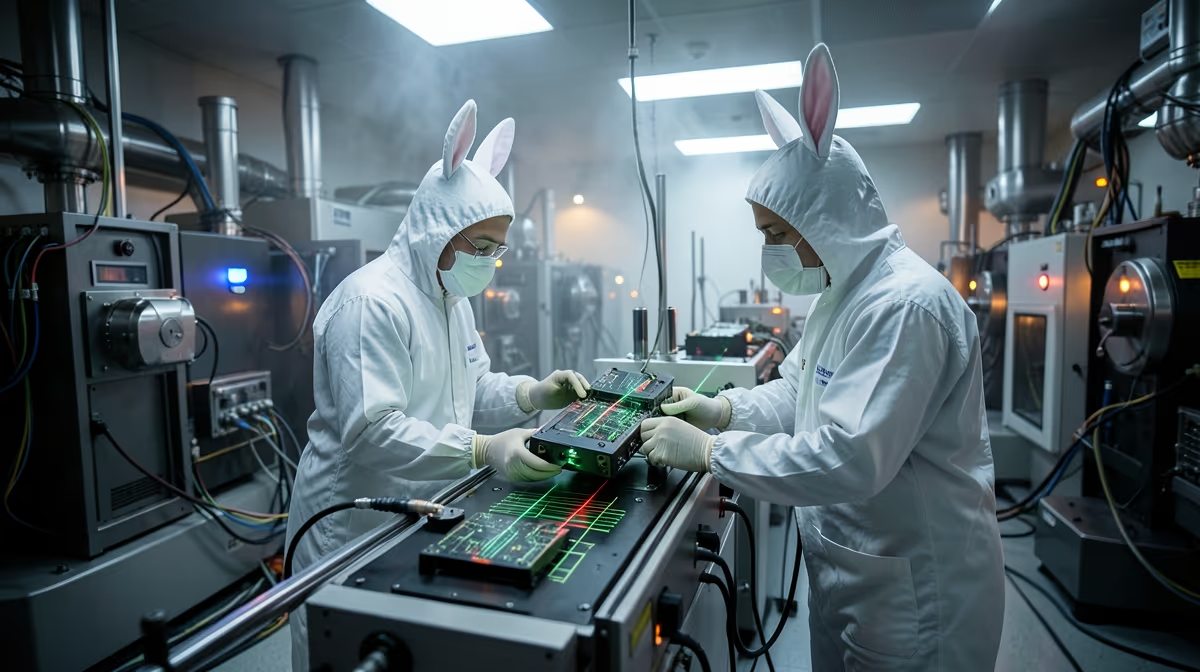
The high-stakes race to construct physical fabrication facilities represents only half the battle in achieving domestic semiconductor sovereignty; the true frontier lies in the ultra-precision supply network required to sustain them. As semiconductor fabrication plants begin to take shape across the country, global equipment leader ASML has identified substantial scope to cultivate an **ASML semiconductor supplier base in India**, signaling a major strategic shift in high-tech manufacturing ecosystems.
Building a localized precision engineering supply network is essential for sustaining domestic semiconductor fabrication units and integrating local firms into global equipment chains.
The Structural Shift in Global Chip Equipment
The global semiconductor landscape is undergoing a systemic realignment driven by the need for operational redundancy outside traditional East Asian hubs. For decades, advanced wafer fabrication and high-tech lithography systems were tightly concentrated in a small handful of geographic regions, leaving the broader electronics manufacturing supply chain vulnerable to localized disruptions.
As major economies move to establish redundant production capacity, equipment manufacturers are expanding their search for reliable regional supply bases. ASML, a foundational player in the global chip-making ecosystem, specializes in highly sophisticated lithography systems essential for advanced semiconductor manufacturing. The company's observation that India offers viable scope for local supplier integration comes at a pivotal juncture, as domestic fabrication facilities move from policy frameworks to concrete industrial infrastructure.
Laying the Groundwork for Local Fabrication Units
Establishing domestic fabrication plants—commonly known as fabs—is the cornerstone of India’s push to secure its positioning within the global technology architecture. However, operating a modern semiconductor fab requires far more than cleanrooms and silicon wafers; it relies on a vast, multi-tiered ecosystem capable of producing hyper-specialized sub-assemblies, high-purity chemical distribution parts, and ongoing maintenance components.
Reports from Moneycontrol.com confirm that ASML sees distinct scope for establishing a localized support network in India precisely as these initial fabrication plants take shape. The synchronized timing between fab construction and equipment supplier evaluation highlights a critical operational reality: without a resilient local tier-1 and tier-2 vendor base, advanced fabrication facilities risk operational bottlenecks and extended downtime during maintenance cycles.
Economic Dynamics and the Precision Engineering Challenge
The push to cultivate a domestic supplier ecosystem operates at the intersection of aggressive government policy and rigorous technical mandates. Indian federal and state governments have rolled out substantial policy incentives and industrial support programs designed to attract investments across high-tech lithography and electronics manufacturing supply chains.
From an economic standpoint, integrating domestic component manufacturers into ASML’s global supply chain offers access to high-margin, specialized manufacturing contracts. However, industry analysts point to a critical hidden bottleneck that local firms must navigate:
The primary obstacle for local vendor integration lies in the steep technical learning curve and stringent intellectual property standards required by global lithography giants.
Local engineering firms seeking to support lithography systems and wafer fabrication operations must transition from general high-precision machining to sub-micron accuracy standards. Meeting these rigorous quality controls and IP protections remains a foundational prerequisite before local vendors can fully merge into global equipment supply lines.
Historical Context and Implementation Timelines
The path toward becoming an indispensable node in the global chip supply chain requires long-term alignment between state policy, institutional funding, and private engineering capabilities. Historical precedents in Taiwan and South Korea demonstrate that domestic semiconductor maturity is rarely achieved overnight; rather, it develops over decades through targeted industrial policy, institutional technology transfer, and deep multinational partnerships.
- Policy Push: Establishment of national targets and incentive structures to attract semiconductor fabrication investment.
- Ecosystem Assessment: Global equipment suppliers like ASML evaluate local vendor capabilities as physical fabs take shape.
- Capability Upgrading: Technical training, infrastructure enhancement, and intellectual property alignment for regional precision engineering firms.
- Integration: Gradual inclusion of domestic suppliers into global equipment support roles, specialized sub-assemblies, and maintenance frameworks.
Evaluating Near-Term and Long-Term Ecosystem Outlooks
As initial reports regarding ASML's outlook circulate, immediate industry dynamics are expected to shift toward ecosystem assessment and policy alignment.
Near-Term Horizon
Long-Term Trajectory
- Domestic component suppliers must build specialized cleanroom manufacturing and precision machining capabilities.
- Regional policymakers will likely need to refine industrial infrastructure and institutional IP protection support.
- Semiconductor fab operators must coordinate closely with equipment giants to align supplier qualification schedules.
The ultimate trajectory depends heavily on execution speed across two primary scenarios:
- Best-Case Scenario: An accelerated timeline where domestic precision engineering firms rapidly meet global quality standards, creating a seamless, highly integrated supply network that drives swift ecosystem maturity.
- Worst-Case Scenario: Structural technical gaps or project delays in fab development slow down the qualification process, delaying local vendor integration into advanced global semiconductor chains.
Geopolitical Implications and Strategic Redundancy
The prospective expansion of an equipment supplier network in India also reflects broader geopolitical realignments. Ongoing strategic competition between the United States and China, alongside an increased emphasis among Western nations on building trusted supply networks, has accelerated the search for alternative tech manufacturing hubs.
By embedding domestic engineering and component firms into the global semiconductor equipment pipeline, India aims to reduce its historical dependence on imported high-tech hardware. If successful, this integration will establish the country not merely as an assembly point, but as an essential contributor to global chip supply chain resilience.
Frequently Asked Questions
What is ASML's outlook on India's semiconductor supplier base?
ASML sees significant scope to build India's semiconductor supplier base as new fabrication plants take shape across the country. This development aligns with India's growing ambitions to establish a robust domestic electronics and chip manufacturing ecosystem.
Why does developing an ASML supplier base in India matter?
Building a local supplier network is crucial for reducing reliance on foreign supply chains and supporting the operational needs of upcoming semiconductor fabs. It helps create a self-sustaining ecosystem that can attract further investments in high-tech manufacturing.
Who is affected by ASML's focus on India's semiconductor industry?
Local component manufacturers, engineering firms, and emerging semiconductor startups stand to benefit from potential integration into global supply chains. Additionally, policymakers and industry stakeholders are impacted as they work to shape favorable infrastructure and policies.
What happens next for ASML and India's semiconductor manufacturing?
As semiconductor fabrication plants continue to take shape and mature, collaboration between global equipment leaders like ASML and local entities is expected to deepen. Further partnerships and supply chain assessments will likely follow as production timelines draw closer.
What is the background of ASML's involvement with Indian semiconductor fabs?
ASML's recent observations come as India aggressively pushes its national semiconductor mission to incentivize local chip manufacturing and assembly. The country has been actively courting global technology giants to help establish foundational capabilities in the sector.
What specific role could suppliers play in India's ASML ecosystem?
Suppliers in India could potentially provide specialized components, maintenance services, and sub-assemblies required by advanced semiconductor manufacturing equipment. Integrating local vendors helps streamline logistics and technical support for fabs operating within the region.
Conclusion
The potential establishment of an ASML semiconductor supplier base in India marks a notable milestone in the country's push toward advanced electronics manufacturing maturity. As fabrication plants progress from initial construction to active operational status, the focus must inevitably shift toward cultivating high-precision domestic engineering capabilities. While technical learning curves and intellectual property requirements present real hurdles for local tier-1 and tier-2 firms, targeted policy support and international equipment partnerships offer a clear blueprint for integration. The next immediate steps will depend on technical assessments, policy coordination, and direct engagement between global equipment giants and domestic engineering suppliers to ensure long-term supply chain resilience.


.webp)


