
UK Sanctions West Bank Settlements Sparking A Major Diplomatic Crisis
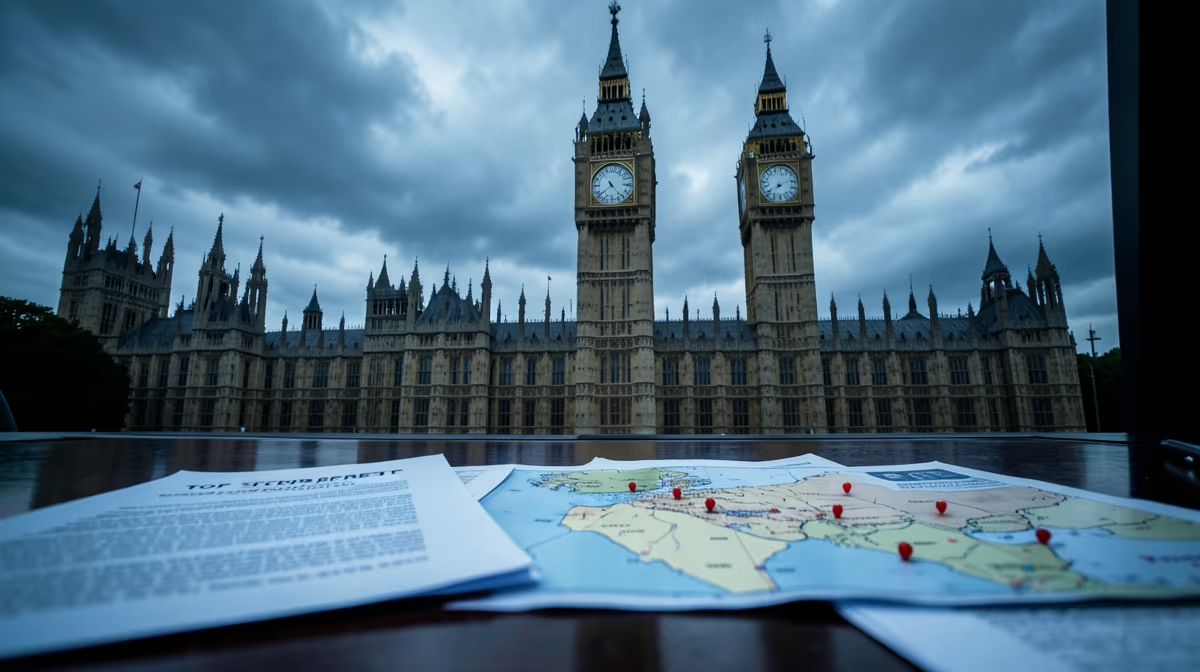
A quiet diplomatic shift in London has ignited a fierce international dispute that is reshaping relations between long-standing allies. The implementation of UK sanctions West Bank settlements represents a major shift in British foreign policy, triggering an immediate and furious diplomatic backlash from the Israeli government. This sudden escalation has not only strained bilateral ties but has also sent political shockwaves directly into the House of Commons, where British officials must now defend the strategic decision. As diplomats on both sides scramble to manage the fallout, the move exposes deep-seated disagreements regarding international law, territorial governance, and the future of Middle East diplomacy.
The UK's targeted sanctions on West Bank settlements have sparked a severe diplomatic rift with Israel and triggered immediate parliamentary cross-examination in Westminster.
Background on the UK Sanctions on West Bank Settlements
The roots of this diplomatic clash lie in the UK government's decision to announce fresh sanctions targeting specific West Bank settlements and the individuals or groups associated with them. Historically, West Bank settlements have long been a contentious issue in international politics. Much of the global community, including the United Kingdom, considers these settlements to be illegal under international law and a major barrier to achieving a viable two-state solution. However, Israel strongly disputes this legal interpretation, which frequently leads to intense diplomatic friction whenever foreign governments impose punitive measures.
In early September 2026, the UK government chose to transition from verbal opposition to concrete policy action. By deploying targeted financial and travel restrictions, British policymakers sought to directly penalize actions and groups linked to settlement activities in the region. The escalation of tensions over the expansion of Israeli settlements served as the primary root cause for this sudden shift. Rather than offering the traditional diplomatic cushioning that has historically characterized relations between the two countries, London's latest action indicates a much more rigid and uncompromising stance regarding the legal status of the disputed territories.
Official Israeli Government Response and Domestic Backlash
The Israeli government's reaction to the British sanctions was immediate, severe, and characterized by outright fury. Israeli officials strongly condemned the measures, viewing them as an unacceptable intervention and an escalation that threatens the diplomatic framework between the two nations. This furious response has triggered an immediate and highly visible diplomatic fallout, the repercussions of which have quickly reverberated back to the British capital.
Within the UK, the domestic political fallout was instantaneous. In the House of Commons, parliamentary officials and political leaders found themselves under intense pressure. Specifically, the political figure Burnham faced being "tackled" in the Commons by colleagues and opponents demanding clarity on the strategic consequences of the policy. The debates in parliament have highlighted deep domestic divisions over the wisdom of the sanctions and how the government should manage the severe Israeli government response to UK policy. British politicians now face the difficult task of defending these foreign policy objectives while navigating the intense diplomatic pressure exerted by Jerusalem.
Geopolitical Shifts in British Foreign Policy Middle East
This development signals a profound change in how London approaches its British foreign policy Middle East relations. For years, UK Israel diplomatic relations have relied on a delicate balance of cooperation, mutual security interests, and quiet diplomacy, even when disagreements arose over settlement expansions. By directly targeting individuals and entities within the West Bank, the UK has initiated a significant shift.
This policy transition demonstrates that the UK is willing to risk public diplomatic confrontation to enforce its stance on international law. The diplomatic fallout illustrates that the traditional cushioning that once protected bilateral relations from major disruptions is weakening. Analysts observing the situation suggest that this move could influence how other European nations and global allies structure their own policies toward the West Bank, potentially leading to a broader international alignment against settlement expansion. However, the immediate cost is a highly strained relationship with Jerusalem, raising serious questions about the future of cooperative political engagements and bilateral trust.
Economic Compliance and Corporate Implications
Beyond the highly publicized political theater in Westminster and Jerusalem, the UK's sanctions on West Bank settlements carry quiet but significant economic implications. The introduction of targeted financial and travel restrictions creates immediate secondary compliance hurdles for trade relations and financial institutions that operate across both jurisdictions.
British and European financial institutions are now facing the necessity of conducting detailed audits of their portfolios. To avoid violating the new sanctions regime, these institutions must carefully scrutinize their broader supply chain and real estate exposure tied to the contested territories. This regulatory pressure could trigger quieter corporate divestments, as businesses seek to minimize legal and reputational risks associated with West Bank settlement activities. The economic friction generated by these compliance audits may end up having a more lasting, structural impact on trade and investment than the immediate political rhetoric.
A Historical Parallel in Allied Sanctions Policy
The current crisis is not entirely unprecedented, as it mirrors past historical friction points where allied nations clashed over disputed land policies. Historically, when global powers transition from diplomatic statements to concrete human rights and territorial sanctions against specific allied state actors, it frequently results in a temporary freeze in cooperative relations.
This historical parallel suggests that while the current outrage is severe, the long-term trajectory of relations will depend on how successfully both sides manage their communication channels. In previous instances of policy divergence, allied states have eventually found ways to compartmentalize their disagreements to preserve security and intelligence cooperation. However, because the current sanctions directly target economic and physical operations within the West Bank, resolving or bypassing this dispute may prove significantly more challenging than in the past, marking a permanent evolution in the region's geopolitical landscape.
Short-Term Outlook and Predictor Scenarios
The trajectory of this diplomatic crisis over the coming days will be critical in determining whether the damage to bilateral ties is temporary or permanent. According to strategic predictors, the immediate and short-term developments are expected to unfold along the following timeline:
- Next 24 hours: Continued political fallout is anticipated, accompanied by intense parliamentary discussions in the UK regarding the domestic and international consequences of the sanctions.
- Next 72 hours: Ongoing diplomatic friction will persist between London and Jerusalem as authorities on both sides attempt to address the severe Israeli reaction.
Analysts expect that diplomatic tensions will remain highly elevated in the short term as both governments navigate the immediate fallout of the announcement. Under a best-case scenario, formal diplomatic channels will remain open, allowing both nations to de-escalate tensions and clarify the precise, targeted scope of the sanctions without triggering a permanent breach in relations. Conversely, the worst-case scenario could see the dispute deepen further, potentially resulting in retaliatory diplomatic measures by Israel or a sustained freeze in cooperative political engagements between the UK and Israel.
Frequently Asked Questions
Why did the UK announce sanctions regarding West Bank settlements?
The UK imposed sanctions targeting West Bank settlements as part of its foreign policy stance on the region. This decision directly addressed concerns over settlement activities and human rights issues.
What was Israel's reaction to the UK's West Bank sanctions?
The UK's announcement prompted a furious response from the Israeli government. Israeli officials strongly condemned the measures, leading to heightened diplomatic tensions between the two nations.
Who is affected by the UK sanctions on West Bank settlements?
The sanctions primarily impact individuals and entities associated with West Bank settlement activities identified by the UK government. Diplomatic relations and political dialogue between the UK and Israel are also influenced by these fallout measures.
What happens next following Israel's reaction to the sanctions?
Political figures face increased scrutiny and debate in parliament regarding the diplomatic fallout. Further diplomatic exchanges and policy adjustments may occur as both governments navigate the strained relationship.
What is the background of the UK's policy on West Bank settlements?
The UK, alongside much of the international community, views Israeli settlements in the occupied West Bank as illegal under international law. Recent actions represent a tightening of measures to address ongoing disputes in the region.
How did political leaders respond domestically in the UK?
Domestic politicians faced intense questioning in the Commons following the severe Israeli reaction. Lawmakers debated the implications of the sanctions on international alliances and foreign policy objectives.
Conclusion
The UK's implementation of sanctions on West Bank settlements and the resulting furious response from the Israeli government have created a significant diplomatic rift between the two nations. Verified reports from sources such as the BBC and Sky News confirm that these measures have quickly led to political friction within the UK, with parliamentary figures like Burnham facing intense questioning in the House of Commons. As both nations deal with the immediate fallout, the realistic next steps involve navigating the scheduled parliamentary debates and managing open diplomatic channels. Whether both governments can de-escalate tensions or if the dispute will lead to a deeper political freeze remains the critical focus of international observers in the days ahead.
Sources
- UK announces sanctions on West Bank settlements prompting furious Israeli response — BBC
- Politics latest: Burnham to be 'tackled' in Commons after Israel reacts with fury to UK's West Bank sanctions — Sky News
- UK datacentres will create just 25% of jobs predicted by tech sector, analysis finds — The Guardian
- Motorists rescued from shortcut after Peak District road closure — BBC
- I've been given a parking charge notice - do I have to pay it? — BBC
- UK air traffic control breakdown strands hundreds of thousands of passengers — The Guardian


.webp)


.webp)