
Artemis II Launch Rips Ionosphere Hole That Disrupts Ground Signals
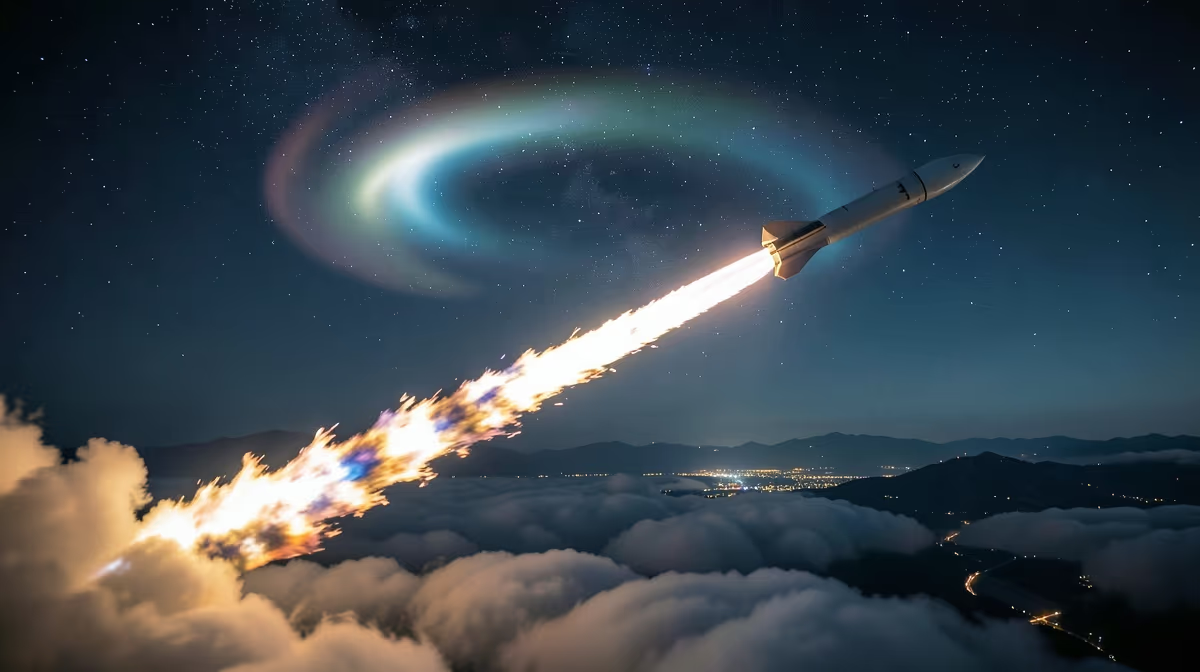
When heavy-lift engines ignite to carry humanity back toward the moon, the most profound physical consequences may not be occurring on the lunar surface, but in the thin layer of plasma hovering directly above Earth. The Artemis II launch ionosphere hole—a massive upper-atmosphere disturbance spanning up to 5,000 kilometers—has drawn intense focus from atmospheric scientists and navigation authorities after triggering measurable signal errors across global positioning systems.
As rocket launches accelerate globally, heavy vehicles like NASA's Artemis II deposit large volumes of exhaust gases directly into Earth's upper atmosphere. While the mission represents a pivotal milestone for human space exploration, its physical footprint included a temporary depletion of charged particles high above Earth, generating widespread satellite navigation anomalies across a vast geographic expanse.
Massive heavy-lift rocket launches like Artemis II interact chemically with the ionosphere, creating temporary plasma holes spanning thousands of kilometers that alter precision satellite navigation.
Atmospheric Physics: Exhaust Gas and Plasma Depletion
The ionosphere is a vital, charged layer of Earth's atmosphere stretching from approximately 60 kilometers to 1,000 kilometers above the surface. Filled with a rich concentration of charged ions and free electrons, this layer plays a critical role in reflecting and transmitting radio waves and satellite communications. When heavy rockets ascend through this ionized environment, their exhaust plumes introduce uncharged chemical molecules that rapidly react with ambient charged particles, triggering localized plasma depletion.
During the NASA Artemis II moon launch, atmospheric monitoring networks registered a distinct localized disturbance measuring approximately 3.7 Total Electron Content Units (TECU). As the rocket propelled upward, chemical reactions between its exhaust gases and the ionized atmospheric layer tore a sweeping structural opening in the ionosphere. Scientists note that this mechanism has clear historical parallels; early space-age rocket tests and mid-20th century supersonic flight programs similarly caused documented disruptions in the upper atmosphere and ozone layer. However, the Artemis II disturbance, stretching up to 5,000 kilometers, highlights the significantly larger atmospheric footprint produced by modern heavy-lift launch systems.
Data indicates that atmospheric disturbances spanning up to 5,000 kilometers can be triggered by heavy rocket launches, measuring around 3.7 TECU in local plasma depletion.
Navigation Disruptions and Operational Risks
The primary operational fallout of tearing a temporary hole in the ionosphere is the disruption of global positioning systems (GPS) and related satellite navigation networks. Because satellite signals must travel through the ionosphere to reach receivers on the ground, passing through a depleted plasma zone introduces unexpected signal propagation delays and position calculation errors. Following the Artemis II launch, GPS disruptions and positioning errors were recorded across an area extending up to 5,000 kilometers from the flight trajectory.
Despite the immense geographic reach of the disruption, space scientists and navigation authorities verified that no complete GPS blackout or widespread system failure occurred. The atmospheric hole generated measurable signal degradation before the ionosphere naturally recombined and healed itself. Nonetheless, for ground-based technologies and industries deeply dependent on high-precision satellite positioning—such as commercial agriculture, civil aviation, maritime navigation, and automated logistics—even temporary signal anomalies introduce operational inefficiencies and compliance challenges.
Additionally, military and defense intelligence networks operating in regions affected by high launch cadences face potential operational vulnerabilities. Defense systems rely heavily on uninterrupted civilian and military satellite frequencies, making upper-atmosphere plasma depletion a key strategic focus during peak launch periods.
Timeline of Space Launch Atmospheric Impacts
Public awareness and scientific scrutiny regarding the environmental footprint of heavy space missions have expanded rapidly alongside the modern space race.
| Year / Milestone | Space Environmental & Atmospheric Developments |
|---|---|
| 2024 | Public and scientific awareness expands regarding space pollution, stratospheric emissions, and the upper-atmosphere environmental footprint of spaceflight. |
| July 2026 | Media scrutiny intensifies as high-cadence commercial and government rocket launches demonstrate cumulative atmospheric degradation. |
| November 2026 | NASA's Artemis II launch tears a 5,000 km ionosphere hole, sparking global debate over **GPS disruption spaceflight** risks and launch regulations. |
Economic, Political, and Geopolitical Dimensions
The emergence of massive atmospheric holes poses complex challenges for national space agencies and launch providers. Agencies such as NASA operate under significant political pressure, balancing high-visibility exploration mandates against increasing domestic and international demands for environmental stewardship. As rocket launch cadences increase, regulators are under growing pressure to evaluate the cumulative chemical consequences of frequent space missions.
From an economic perspective, modern global commerce relies extensively on satellite navigation accuracy. When precision positioning signals experience sudden degradation, commercial logistics networks and transport systems face operational friction. While these localized errors do not permanently paralyze commercial infrastructure, their recurring nature creates operational uncertainty for sectors reliant on guaranteed positioning data.
Geopolitically, the accelerating space race among major international powers has brought upper-atmosphere degradation into broader diplomatic discussions. Scientific and policy communities are beginning to examine whether international space environmental standards are needed to govern atmospheric exhaust emissions and mitigate upper-atmosphere impacts as global launch frequencies rise.
Predictive Analysis and Operational Scenarios
Over the next 24 hours, atmospheric scientists and researchers will continue analyzing data regarding the full physical extent of the ionospheric hole and the exact duration of the recorded GPS disruptions. Within the next 72 hours, broader technical discussions within the aerospace engineering and scientific communities are expected to focus on assessing the environmental consequences of heavy rockets on Earth's upper atmosphere.
Industry analysts predict that rising launch frequencies will lead to heightened scrutiny and monitoring of rocket launch schedules and their chemical effects on the ionosphere.
- Best-Case Scenario: GPS disruptions remain temporary and localized without causing critical failures, allowing researchers to refine predictive atmospheric models for future heavy-lift missions like Artemis.
- Worst-Case Scenario: Escalating space launch activities create persistent navigation anomalies, unpredicted upper-atmosphere degradation, and cumulative environmental damage from frequent rocket emissions.
Evaluating Future Launch Cadences and Space Pollution
As global space exploration reaches unprecedented activity levels, scientists are placing greater emphasis on evaluating the long-term impact of rocket atmospheric impact and upper-altitude space pollution. Unlike lower atmospheric layers where wind patterns rapidly disperse chemical compounds, the ionosphere recovers through complex, solar-driven chemical processes that can take significant time to stabilize.
Ensuring that future lunar and deep-space missions proceed safely without jeopardizing terrestrial navigation systems requires enhanced scientific modeling. Aerospace engineers, atmospheric researchers, and aviation navigation authorities will need to collaborate closely, using advanced monitoring tools to predict atmospheric holes, refine flight corridors, and safeguard critical satellite navigation networks.
Frequently Asked Questions
What happened during the NASA Artemis II moon launch regarding the atmosphere?
The NASA Artemis II moon launch tore a massive hole in Earth's upper atmosphere, specifically the ionosphere. This atmospheric disturbance created holes spanning thousands of kilometers.
Did the Artemis II ionosphere hole cause GPS disruptions?
Reports indicate the disturbance disrupted GPS signals across a wide region, with errors spanning thousands of kilometers. However, specific impact assessments note varying levels of disruption, with some areas experiencing technical anomalies while others maintained standard operations.
How large was the ionosphere hole caused by the Artemis II launch?
Data and reports show that the ionosphere holes spanned an impressive 5,000 kilometers across the upper atmosphere. Such massive atmospheric footprints highlight the growing scale of rocket launch impacts.
Why are rocket launches increasingly leaving marks on the upper atmosphere?
As the frequency of space missions and the new space race accelerates, rockets are launched more often than ever before. The cumulative exhaust and energy release from these heavy lift vehicles interact with the ionosphere, leading to noticeable chemical depletion and structural holes.
Who is affected by GPS disruptions caused by atmospheric rocket holes?
Navigation systems, aviation, and ground-based technologies relying on satellite positioning can experience temporary errors or disruptions when upper atmospheric anomalies occur. Scientists and aerospace regulators monitor these events closely to understand potential risks to global positioning networks.
What happens next regarding space launch pollution and atmospheric monitoring?
Researchers and environmental scientists continue to study how frequent rocket launches impact Earth's upper atmosphere and space weather. Future missions will likely face increased scrutiny and modeling to better predict and mitigate atmospheric pollution.
Conclusion
The NASA Artemis II moon launch has confirmed that heavy-lift spaceflight operations can leave a substantial temporary mark on Earth's upper atmosphere, tearing an ionospheric hole spanning up to 5,000 kilometers and triggering localized GPS disruptions. While the atmospheric disturbance dissolved naturally without causing a catastrophic blackout, the event highlights a clear operational challenge as global space traffic rises. Moving forward, NASA, atmospheric scientists, and satellite navigation authorities will focus on increased atmospheric monitoring and predictive modeling to balance ambitious space exploration with the protection of vital terrestrial navigation networks.
Sources
- NASA's Artemis II moon launch tore a hole in Earth's upper atmosphere so huge it disrupted GPS signals — Space
- Artemis II Ionosphere Hit: 3.7 TECU, No GPS Outage [2026] — shattered.io
- We’re Sending More Rockets to Space than Ever Before. They’re Leaving a Catastrophic Mark. — Popular Mechanics
- Artemis II Ionosphere GPS Errors Hit 5,000 km [2026] — https://tech-insider.org/
- The New Space Race Is Causing New Pollution Problems (Published 2024) — The New York Times
- Artemis II Ionosphere Holes Span 5,000 km [2026] — shattered.io


