
Brazil Election 2026 Faces Intense Courtroom Battles Over Ballots
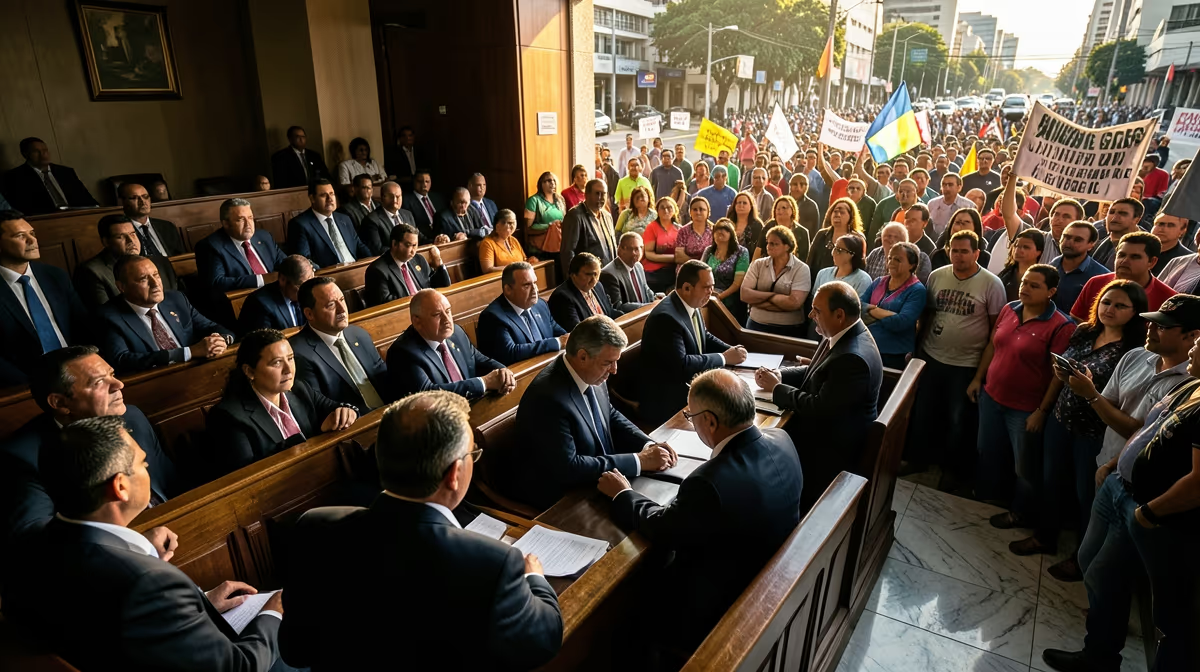
The political gravity of South America is shifting as the road to the Brazil election 2026 becomes a high-stakes arena of judicial rulings and polarized polling. As the continent's largest democracy prepares for a pivotal transition, the intersection of legal eligibility and voter sentiment is defining a landscape where the courtroom often holds as much influence as the campaign trail.
The 2026 Brazilian election is increasingly shaped by judicial interventions and court rulings, shifting the primary political battlefield from public squares to courtroom dockets.
Current data from major poll trackers, including the Americas Society/Council of the Americas (AS/COA) and Reuters, indicates that the early stages of this race are dominated by familiar figures. Incumbent President Luiz Inácio Lula da Silva maintains a visible lead in first-round projections, yet the statistical reality suggests a decisive victory is far from guaranteed. Analysts and historical patterns point toward a likely runoff election, a second-round showdown that has become a hallmark of Brazil’s deeply divided political environment.
Current Standings in Brazil Presidential Polls
Early tracking of voter sentiment reveals a nation still processing the ideological split that defined its most recent general elections. President Lula da Silva remains the frontrunner in initial polling for the first-round vote, benefiting from the visibility of his incumbency and a core base of support. However, the data also suggests that the path to a simple majority—exceeding 50% of the valid votes—remains a significant hurdle.
- First-round projections currently favor the incumbent, though not with a definitive majority.
- A runoff election is widely expected by political analysts to determine the final winner.
- Polling data from Reuters highlights that while Lula leads, the margin for a second round remains the most probable outcome.
- Tracking from AS/COA identifies a fractured opposition landscape that is still coalescing around a primary challenger.
The current environment is characterized by intense polarization. While the incumbent leads, the conservative opposition remains a potent force, even as it navigates legal and leadership challenges. This divide is not merely ideological but also geographic and demographic, reflecting a country that remains split between the leftist leadership of the current administration and a strong conservative movement that has shown resilience in recent years.
The Legal Battlefield and Media Constraints
A defining characteristic of the 2026 cycle is the prominent role of judicial authorities. The Superior Electoral Court and other judicial bodies are making decisions that directly impact how candidates communicate with the electorate. In a notable development, the major broadcaster Globo was forced to cancel a scheduled presidential debate following specific court rulings. Such cancellations limit the opportunities for direct public scrutiny and alter the traditional rhythm of a Brazilian campaign.
Candidate Eligibility and Bans
The race is further complicated by the legal status of high-profile figures. Authorities have faced scrutiny over attempts to ban certain candidates from participating in the election. Reports from The Economist and other outlets have highlighted the controversies surrounding potential contenders who have been declared ineligible or face ongoing judicial challenges. These legal hurdles create a sense of uncertainty for both the candidates and the voters, as the final list of names on the ballot remains subject to court confirmation.
- Legal battles regarding candidate disqualification are expected to intensify through mid-2026.
- Judicial interventions have already disrupted traditional campaign milestones, such as televised debates.
- The tension between electoral authorities and political figures continues to shape the national narrative.
Judicial interventions and court rulings may increasingly shape the campaign narrative, shifting the battlefield from public squares to courtroom dockets.
Key Figures Shaping the 2026 Presidential Race
The 2026 election features a lineup of contenders that represents the broad and often volatile spectrum of Brazilian politics. At the center is President Lula da Silva, whose campaign focuses on continuity and social programs. On the other side of the aisle, the political future of figures like Jair Bolsonaro remains a central point of contention. Despite legal restrictions currently facing certain leaders, their influence over the electorate and their ability to endorse successors remains a critical factor in the race.
The opposition is not a monolith; it includes a variety of top contenders who are attempting to capture the conservative and centrist vote. The ability of these figures to form a united front against the incumbent will likely dictate whether the expected runoff becomes a competitive race or a clear path for the current administration. Administrative developments, such as court-mandated debate cancellations, have forced these candidates to rely more heavily on digital platforms and alternative media to reach their constituents.
Economic and Geopolitical Implications
The outcome of the Brazil election 2026 carries weight far beyond the nation’s borders. As the largest economy in Latin America, Brazil’s political direction influences market stability and investor confidence throughout the region. Markets are currently sensitive to candidate positions on public spending, fiscal policy, and economic reform. Electoral uncertainty often leads to volatility, and international investors are closely monitoring whether the next administration will lean toward state-led economic models or market-oriented reforms.
Regional Stability and Environmental Policy
Geopolitically, the election will determine Brazil’s role in regional integration and global dialogues. The country’s approach to the preservation of the Amazon remains a top priority for international partners. The 2026 results will likely shape:
- Latin American trade alignments and regional cooperation.
- Global environmental strategies, specifically regarding the Amazon rainforest.
- Brazil’s participation in multilateral organizations and its diplomatic stance on global conflicts.
Foreign trade partners and global communities are watching the transition closely, as the winner will inherit the responsibility of navigating Brazil’s complex relationship with both Western powers and emerging global blocs.
A Shifting Electoral Timeline
The road to the 2026 vote is marked by specific milestones that will determine the final field of candidates. The transition from legal challenges to active voting is a multi-stage process that will play out over the next year.
| Timeline Period | Expected Developments |
|---|---|
| Late 2025 to Mid-2026 | Intensification of disqualification battles and court rulings on candidate eligibility. |
| September to October 2026 | Initial polling and first-round voting; Lula currently projected to lead. |
| Late 2026 | Likely runoff elections between the top two contenders to decide the presidency. |
As these dates approach, the campaign strategies of both the incumbent and the opposition will need to adapt to a landscape defined by strict judicial oversight and a potential lack of traditional media debates.
Expert Perspective and Future Outlook
Political analysts anticipate that the upcoming 24 to 72 hours will see continued tracking of poll updates and reactions to recent court rulings. The cancellation of the Globo debate has sparked a debate over media freedom and the role of the judiciary in the electoral process. Experts suggest that if judicial disputes continue to escalate, the electorate may face increased polarization and uncertainty.
Best and Worst Case Scenarios
In the best-case scenario, the electoral process proceeds with transparency and fair judicial oversight, allowing for constructive public debate despite the current scheduling changes. This would involve clear poll tracking and a smooth transition to the first-round vote.
Conversely, the worst-case scenario involves escalating judicial disputes that lead to further cancellations of major media events. This could heighten political tension and leave voters without a clear platform to compare candidate policies, potentially leading to a more volatile runoff environment. Regardless of the scenario, the consensus among observers is that Brazil remains in a state of high political tension as it navigates these legal and administrative hurdles.
Frequently Asked Questions
Who is leading in the polls for Brazil's 2026 presidential election?
Current polling data indicates that incumbent President Luiz Inácio Lula da Silva is maintaining a lead ahead of the first-round vote. However, analysts note that a runoff election is likely to determine the final outcome.
What are the latest updates on Brazil's 2026 presidential candidates?
The race features prominent political figures including Lula and former leaders like Bolsonaro, alongside other top contenders. Media coverage has closely followed candidate eligibility and legal challenges affecting the campaign landscape.
Why was a major Brazilian presidential debate cancelled?
TV Globo cancelled a scheduled presidential debate following recent court rulings impacting the electoral proceedings. These judicial decisions have added significant complexity to how candidates campaign and reach voters.
What happens next in the 2026 Brazilian election cycle?
As the race progresses toward the first-round vote and a potential runoff, campaigns are adapting to new legal realities and media restrictions. Observers will be closely monitoring how shifting poll numbers impact candidate strategies.
Why does Brazil's 2026 presidential election matter globally?
As Latin America's largest economy and democracy, Brazil's political trajectory carries immense weight for regional stability and international policy. The election results will shape the country's economic direction and foreign relations for years to come.
Who is the presidential candidate Brazil's authorities tried to ban?
Media reports from outlets like The Economist have highlighted controversies surrounding specific candidates facing legal bans from holding office. These high-profile exclusion attempts have become a central talking point of the 2026 election cycle.
Conclusion
The road to the 2026 Brazilian presidential election is being paved with a mix of familiar political rivalries and unprecedented judicial interventions. While President Luiz Inácio Lula da Silva currently holds a lead in the polls, the high probability of a runoff and the ongoing legal battles over candidate eligibility suggest a volatile path ahead. The cancellation of key debates and the restriction of media platforms have shifted the campaign’s dynamic, forcing candidates to navigate a landscape where legal rulings are as influential as voter sentiment. As Brazil moves toward the first round of voting, the international community and domestic voters alike remain focused on the stability of the nation’s democratic institutions and the future of its economic and environmental policies. Realistic next steps involve the finalization of candidate ballots and the adaptation of campaign strategies to a more restricted media environment.
Sources
- Poll Tracker: Brazil’s 2026 Presidential Election — AS/COA
- Lula ahead in polls for Brazil's first-round vote; runoff likely — Reuters
- EXPLAINER - What to know about Brazil's 2026 presidential election — Anadolu Ajansı
- The presidential candidate Brazil’s authorities tried to ban — The Economist
- Globo cancels Brazil presidential debate after court rulings — Valor International
- Brazil’s 2026 Presidential Candidates: Lula, Bolsonaro, and Other Top Contenders — AS/COA


.webp)
