
US B1 Bombers UK Base Evacuation Triggered by Urgent Iran Threat
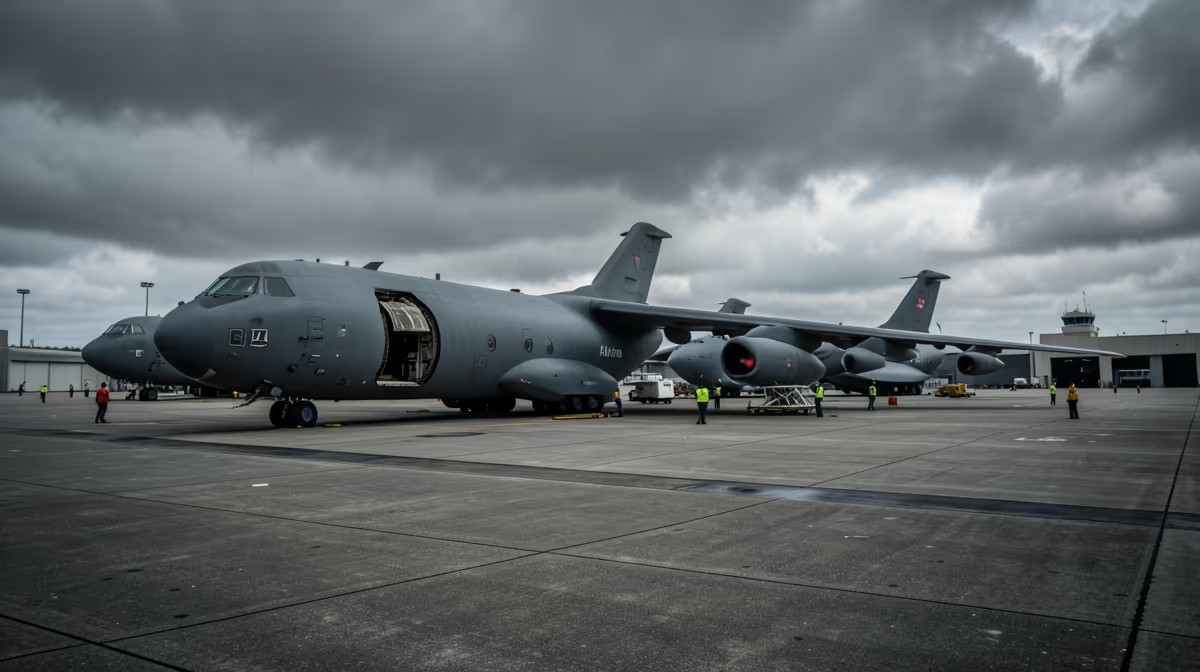
The silence now hanging over the Gloucestershire countryside signals a sudden and dramatic shift in the Western defense posture. The US Air Force has unexpectedly relocated its US B1 bombers UK assets away from a key British installation as regional tensions escalate. This move, executed with high urgency, was not a scheduled rotation but a defensive maneuver triggered by intelligence of a suspected Iranian-linked terrorist plot.
The US Air Force’s decision to withdraw all B-1 bombers from RAF Fairford underscores a critical vulnerability in forward-deployed strategic assets and marks a significant escalation in force protection protocols following specific Iranian-linked threat intelligence.
The Evacuation of RAF Fairford
The Pentagon and senior defense officials have confirmed the total withdrawal of B-1 bomber aircraft from RAF Fairford, a facility that has long served as a vital hub for US strategic operations in Europe. Major news organizations, including NBC News, Axios, and Al Jazeera, have verified that the evacuation was a direct response to credible intelligence regarding attack threats. This was not a routine movement; the Pentagon treated the security alert with enough gravity to order the immediate removal of these high-value aircraft to ensure the safety of both military personnel and the assets themselves.
RAF Fairford has historically been a cornerstone for U.S. Bomber Task Force deployments, providing a strategic jumping-off point for missions across the Atlantic and toward the Middle East. The sudden movement of these aircraft underscores the mounting security concerns in the region and reflects a heightened state of readiness among military installations facing potential asymmetric threats. While operations have been adjusted, officials are working to ensure that the necessary defense missions continue from alternative locations while the credibility of the threat is fully evaluated.
The Nature of the Iranian Plot
Rooted in heightened threat assessments, the decision to pull the bombers follows reports of a suspected terrorist plot targeting the UK air base. Intelligence indicates that Iranian-backed actors may have been planning an attack on the facility, prompting an immediate re-evaluation of base security. This development highlights the acute sensitivity of Western military deployments to emerging threats, placing significant pressure on allied governments to balance the need for regional force projection with the necessity of domestic base security.
The specific nature of the threat involves potential targeting of coalition and allied military infrastructure. In this environment, the US Air Force prioritized the protection of the B-1 Lancer—a heavy, long-range supersonic strategic bomber. These aircraft are capable of carrying massive payloads of conventional weapons and represent a significant portion of the U.S. military's conventional deterrent. Their vulnerability to a ground-based plot or asymmetric attack at a known fixed location necessitated the rapid relocation.
Key Developments in the Deployment Timeline
| Phase | Action Taken |
|---|---|
| Initial Assessment | Intelligence identifies potential security threats targeting RAF Fairford linked to Iran. |
| Immediate Response | The U.S. Air Force orders the precautionary removal of all B-1 bombers from the UK air base. |
| Operational Shift | Pentagon and defense analysts begin assessing force posture adjustments across European allied bases. |
| Security Review | Heightened monitoring and evaluation of the suspected plot are initiated to neutralize potential vulnerabilities. |
Strategic Shifts and Deterrence
The removal of these assets is more than a simple safety precaution; it represents a complex geopolitical calculation. Defense analysts suggest that this relocation may reflect a shift toward a more distributed and unpredictable model of operations. This approach, often referred to as Agile Combat Employment, focuses on maintaining strategic deterrence through mobility rather than permanent positioning at fixed, high-profile installations. By dispersing assets, the US Air Force can mitigate the risks posed by state-sponsored sabotage or asymmetric threats linked to broader Middle Eastern tensions.
Historically, the repositioning of strategic assets during periods of heightened tension has been a standard force protection measure. Similar realignments were seen during past Middle Eastern crises, where the vulnerability of forward-deployed assets forced commanders to prioritize survival over immediate positioning. In this instance, the evacuation of RAF Fairford serves as a stark reminder of the delicate balance between maintaining global defense readiness and protecting personnel on allied soil.
Global and Economic Implications
The operational costs associated with the rapid relocation and redeployment of strategic bomber assets are substantial. Beyond the immediate fuel and logistics expenditures, there are potential long-term implications for local infrastructure investments tied to RAF Fairford. The base is not only a military installation but a point of economic intersection for the local region and a symbol of the UK-US defense relationship. A prolonged absence of high-value deployments could lead to a re-evaluation of how such bases are utilized and funded.
Who is affected by this decision: - U.S. Air Force personnel stationed at or operating through RAF Fairford. - British military authorities responsible for the management and security of the base. - Regional defense planners navigating the heightened security tensions involving Iran. - Local communities and infrastructure stakeholders connected to the base’s operations.
This sudden relocation highlights how quickly global tensions can directly impact military posture and international alliances.
Security Assessment and Future Outlook
The immediate focus for the next 24 hours remains on increased security monitoring and a rigorous assessment of the suspected Iranian threats. Intelligence agencies and the Pentagon are working to verify the full scope of the plot and the capabilities of the actors involved. Over the next 72 hours, analysts expect a broader evaluation of regional force posture adjustments across all allied air bases in Europe to ensure that the vulnerability identified at Fairford is not present elsewhere.
Experts predict that defense officials will likely maintain heightened force protection measures for the foreseeable future. This may involve the temporary dispersal of strategic assets to various undisclosed locations to prevent them from becoming "sitting ducks." The best-case scenario involves the neutralization of the threat through intelligence and security measures without escalating into a kinetic conflict. However, the worst-case scenario remains a manifest attack or a broader regional escalation that could involve other allied military infrastructure across Europe.
Strategic Capabilities of the B-1 Lancer
The B-1 Lancer serves as a critical component of the U.S. strategic arsenal. Because it is a supersonic aircraft capable of delivering massive conventional payloads, its presence at a base like RAF Fairford is a major signal of deterrence. When such an asset is moved due to a security threat, it sends a message about the seriousness of the intelligence received. Future deployments to the UK and the wider European theater will likely be contingent on the ongoing security assessments and the ability of allied forces to guarantee the safety of these high-value platforms against asymmetric and state-sponsored threats.
Frequently Asked Questions
Why did the US Air Force remove B-1 bombers from the UK?
The US Air Force withdrew its B-1 bombers from the UK following intelligence regarding a suspected terrorist and attack plot linked to Iran. The move was taken out of an abundance of caution to protect personnel and high-value aircraft.
Which UK air base was affected by the bomber removal?
The aircraft were evacuated from RAF Fairford, a key British air base frequently used by the U.S. military for strategic deployments in Europe. All bombers stationed at the facility were successfully pulled.
What is the significance of the B-1 bombers?
B-1 Lancer bombers are heavy, long-range supersonic strategic bombers capable of carrying massive payloads of conventional weapons. Their deployment and sudden relocation highlight heightened regional tensions and the constant need to safeguard critical military assets.
Who is affected by the withdrawal from RAF Fairford?
U.S. military personnel stationed at the British air base are directly impacted by the heightened security measures and relocation orders. Additionally, regional defense posture in Europe and UK security forces are involved in addressing the threat.
What happens next following the evacuation of the bombers?
Defense officials and intelligence agencies are continuing to investigate the alleged Iranian plot while monitoring force protection levels. Future deployments to the region will likely depend on ongoing security assessments.
Did the Pentagon confirm the B-1 bomber relocation?
Yes, Pentagon officials confirmed the removal of the aircraft following reports of a targeted security threat. International news outlets verified that the decision was made swiftly in response to the specific plot.
Conclusion
The withdrawal of B-1 bombers from RAF Fairford marks a pivotal moment in the ongoing security challenges facing Western allies. Confirmed by the Pentagon and multiple international news outlets, the removal of these strategic assets was a direct response to a suspected Iranian-backed terrorist plot. This event underscores the vulnerability of fixed military installations to asymmetric threats and highlights the necessity of the **Agile Combat Employment** strategy. Moving forward, the destination of the relocated aircraft and the full scope of the security threat remain under investigation. Defense officials and intelligence agencies are expected to maintain a heightened state of readiness as they reassess force protection protocols across Europe to mitigate future risks to personnel and critical military infrastructure.
Sources
- U.S. Air Force removes all bombers from British air base targeted in a suspected terrorist plot — NBC News
- U.S. B-1 bombers evacuated from UK base after attack threats from Iran — Axios
- US pulls all bombers from RAF Fairford air base threatened by alleged Iranian plot — The Jerusalem Post
- US withdraws B-1 bomber aircraft from UK’s Fairford base amid Iran fears — Al Jazeera
- U.S. removes B-1 bombers from U.K. airbase targeted in suspected plot: Pentagon — CBC
- Air Force pulls bombers from RAF Fairford — Task & Purpose


.webp)
