
US B-1 Bombers UK Withdrawal Triggers Major Security Alert
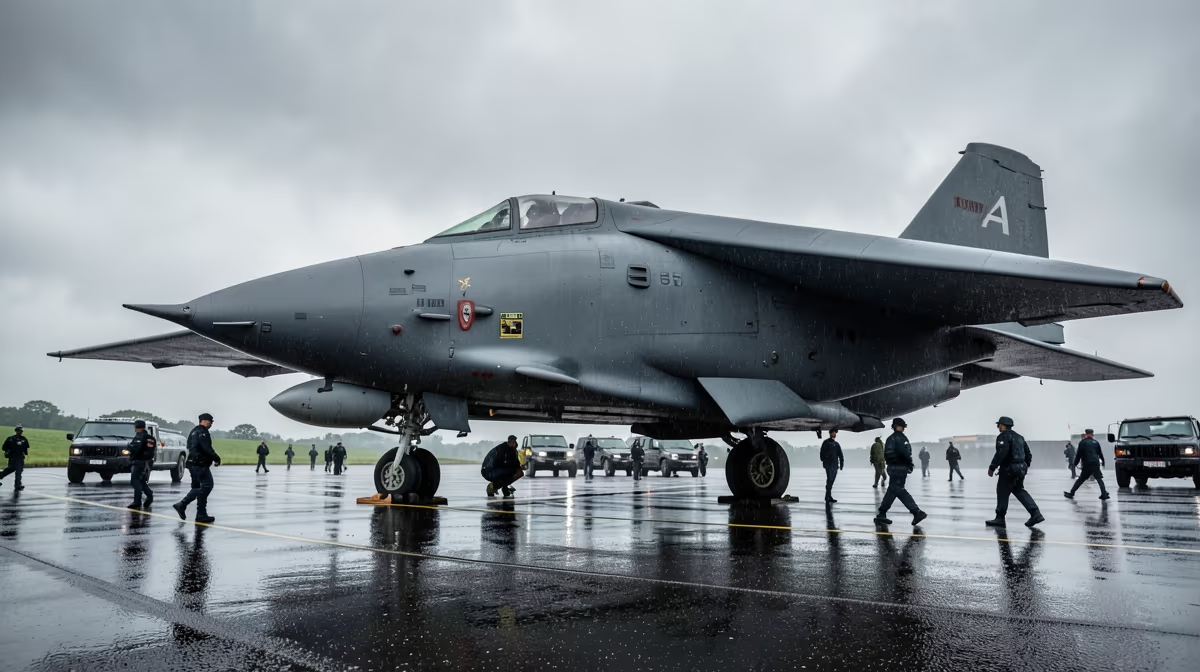
The runways of Gloucestershire stand unusually quiet today as the heavy engines of American strategic power have departed under the shadow of a mounting security crisis. In response to escalating regional tensions, the US B-1 bombers UK Iran threats situation has prompted a strategic redeployment from RAF Fairford, marking a sudden and significant shift in Western military posture.
The sudden withdrawal signals a volatile shift in regional security, forcing a total clearance of the base to protect high-value assets from credible Iranian threats.
The United States Air Force has taken the extraordinary step of pulling its fleet of B-1 Lancer strategic bombers out of the United Kingdom, sending them back to their home stations across the Atlantic. This move was not a scheduled rotation or a planned end to a deployment exercise; rather, it was an urgent evacuation triggered by specific intelligence regarding attack threats and security concerns linked to Iran. Defense authorities made the decision to remove all bomber aircraft from the facility rather than leave them vulnerable on British soil while investigations into suspected terror plots continue.
The Rapid Exodus from Gloucestershire
The departure of the B-1 bombers from RAF Fairford has been characterized by its speed and completeness. Typically, these aircraft are part of a Bomber Task Force deployment, intended to project power and reassure allies across Europe. However, the sudden relocation back to the United States indicates that the threat level reached a threshold where the risk of remaining forward-deployed outweighed the benefits of strategic deterrence.
Major news outlets, including the BBC and The New York Times, confirmed that all aircraft stationed at the base were cleared out. This total withdrawal suggests that military leadership viewed the threat as specific to the location or the assets themselves, rather than a general regional tension. For the personnel stationed at RAF Fairford, the operation shifted from routine mission support to a high-priority evacuation within a matter of hours.
Intelligence and the Iranian Connection
The root cause of this emergency relocation lies in heightened threat assessments and credible security risks originating from Iranian state actors. While the specific nature of these threats remains classified, reports from the National News Desk and Axios indicate that a suspected terror plot was being probed in connection with the presence of the heavy bombers in the UK.
Moving high-value military assets like B-1 bombers away from forward operating bases is a standard defensive measure when intelligence indicates an elevated risk of attack.
The decision to pull back suggests that the intelligence sharing between the US and UK identified a vulnerability that could not be adequately mitigated by ground security alone. This has raised questions about the security of allied military installations in Europe and the reach of asymmetric threats originating from the Middle East.
The Scope of the Threat Probe
Investigative details suggest that the security agencies were not merely looking at external missile or drone threats but were potentially investigating more complex scenarios. The abrupt nature of the pullout may signal deeper intelligence sharing vulnerabilities or specific insider threat warnings. Such warnings often necessitate an immediate and complete clearance of a base to ensure the safety of both the high-value equipment and the personnel operating them.
| Phase | Action Taken | Current Status |
|---|---|---|
| Threat Detection | Intelligence indicates emerging threats from Iran | Verified |
| Evacuation Order | US Air Force orders emergency withdrawal of B-1 fleet | Completed |
| Asset Recovery | Aircraft successfully return to home stations in the US | Confirmed |
| Base Security | Heightened alert levels maintained at RAF Fairford | Active |
Strategic Vulnerability and Allied Cooperation
The relocation of these bombers highlights a critical political and geopolitical challenge for the West. It demonstrates the vulnerability of forward operating bases in Europe to both direct and indirect threats. While RAF Fairford is a key airfield for US Air Force operations, its status as a forward-operating location makes it a high-profile target during times of Middle East conflict military redeployment and tension.
There is intense political pressure on military leadership to prioritize force protection. In this instance, the decision-makers chose to preserve the B-1 fleet—a limited and expensive strategic asset—rather than maintain a forward-deployed presence that could be compromised. This move tests the agility and responsiveness of US-UK defense cooperation, proving that both nations are willing to take drastic measures to preempt security incidents.
Economic and Logistical Realities
The cost of such an emergency redeployment is substantial. Rapidly repositioning a fleet of B-1 bombers, along with the necessary support personnel and maintenance equipment, incurs significant logistical expenses. These unplanned movements place additional strain on defense maintenance budgets and disrupt long-term operational planning.
Beyond the immediate financial cost, there is the strategic cost of a diminished presence. The B-1 Lancer is a cornerstone of American air power, capable of carrying the largest conventional payload of both guided and unguided weapons in the Air Force inventory. Its absence from the European theater, even if temporary, alters the regional balance of power and requires a reassessment of how the US and its allies project force during a crisis.
Predicted Security Trajectory
In the next 24 hours, the US Air Force is expected to complete the full repositioning of its assets, ensuring all personnel and equipment associated with the B-1 mission are secured at their home stations. However, the mission is far from over for intelligence agencies. Over the next 72 hours, security services in both the US and UK will likely maintain heightened alert levels at all military installations.
- Completion of the B-1 repositioning to home stations.
- Intensive investigation into the nature of the Iranian-linked terror plots.
- Review of base security protocols at RAF Fairford and other European installations.
- Coordination between US and UK defense officials on future deployment timelines.
Expert analysts expect the US military to temporarily posture its strategic bomber assets away from exposed forward-operating European bases while these intelligence assessments are thoroughly verified. The best-case scenario is that this withdrawal serves as a successful precautionary measure that preempts any incident. However, the worst-case scenario suggests this could be the beginning of a broader, more volatile escalation in regional tensions, leading to further force posture changes globally.
Security Assessment of RAF Fairford
As a Royal Air Force station in Gloucestershire, RAF Fairford has long been a vital hub for the United States Air Force. Its long runway and specialized infrastructure make it one of the few bases in Europe capable of supporting heavy bomber operations. This significance also makes it a focal point for international security attention.
The current situation demonstrates that the safety of populations residing near major military installations is intrinsically linked to global geopolitics. As threats evolve, the defensive adjustments made by major powers must be equally rapid. The withdrawal of the B-1 bombers is a reminder that in the modern era of asymmetric warfare, no base is entirely beyond the reach of regional tensions.
Frequently Asked Questions
Why did the US Air Force withdraw B-1 bombers from RAF Fairford?
The US Air Force withdrew its B-1 bomber aircraft from the UK base following specific attack threats and security concerns linked to Iran. Authorities acted swiftly to relocate the strategic assets after receiving intelligence regarding potential threats to the facility.
Where were the B-1 bombers relocated after leaving the UK?
Following the withdrawal from RAF Fairford in the United Kingdom, the B-1 bombers were flown back to their home stations in the United States. The decision was made to ensure the safety and security of the aircraft and personnel amid escalating tensions.
What is RAF Fairford and why is it significant?
RAF Fairford is a Royal Air Force station in Gloucestershire, England, frequently used by the United States Air Force for strategic bomber deployments. Its recent use has placed it at the center of international security attention due to ongoing Middle East tensions.
Who is affected by the sudden withdrawal of US bombers from the UK?
The redeployment directly impacts US military personnel stationed at RAF Fairford as well as regional security cooperation between the UK and the US. It highlights the immediate operational adjustments required when facing heightened geopolitical threats.
What happens next regarding the security of US forces in the UK?
Defense officials are likely to continue monitoring threat levels closely while evaluating the security posture at international bases. Future deployments to RAF Fairford will depend on ongoing threat assessments and the stabilization of regional tensions.
Was there a specific terror plot suspected during the bomber withdrawal?
Reports indicate that the withdrawal occurred amid concerns of a suspected security plot or targeted threats stemming from Iran. Security agencies and military officials coordinated the emergency evacuation to preemptively mitigate any potential risks.
Conclusion
The emergency withdrawal of US B-1 bombers from RAF Fairford marks a sobering moment in international defense relations. Prompted by credible threats from Iranian state actors and the discovery of a potential security plot, the US Air Force prioritized the safety of its personnel and high-value assets over continued forward deployment. While the aircraft have successfully returned to their home stations, the investigation into the underlying threats continues. This event serves as a stark reminder of the agility required in modern military operations and the persistent vulnerability of forward-deployed forces in an increasingly volatile global landscape. Moving forward, the focus remains on intelligence verification and the reinforcement of base security to ensure that such strategic assets can eventually return to their roles in international deterrence.
Sources
- U.S. Rushes to Withdraw Bombers From U.K. Air Base After New Threats — The New York Times
- U.S. B-1 bombers evacuated from UK base after attack threats from Iran — axios.com
- US withdraws B-1 bomber aircraft from UK’s Fairford base amid Iran fears — Al Jazeera
- US Air Force pulls B-1 bombers from RAF Fairford amid suspected terror plot probe — National News Desk
- Air Force pulls bombers from RAF Fairford — Task & Purpose
- US removes all bombers from RAF Fairford back to home stations — BBC


.webp)
