
Delhi Pollution Strategy Faces a Major Test as Weather Shift Hits
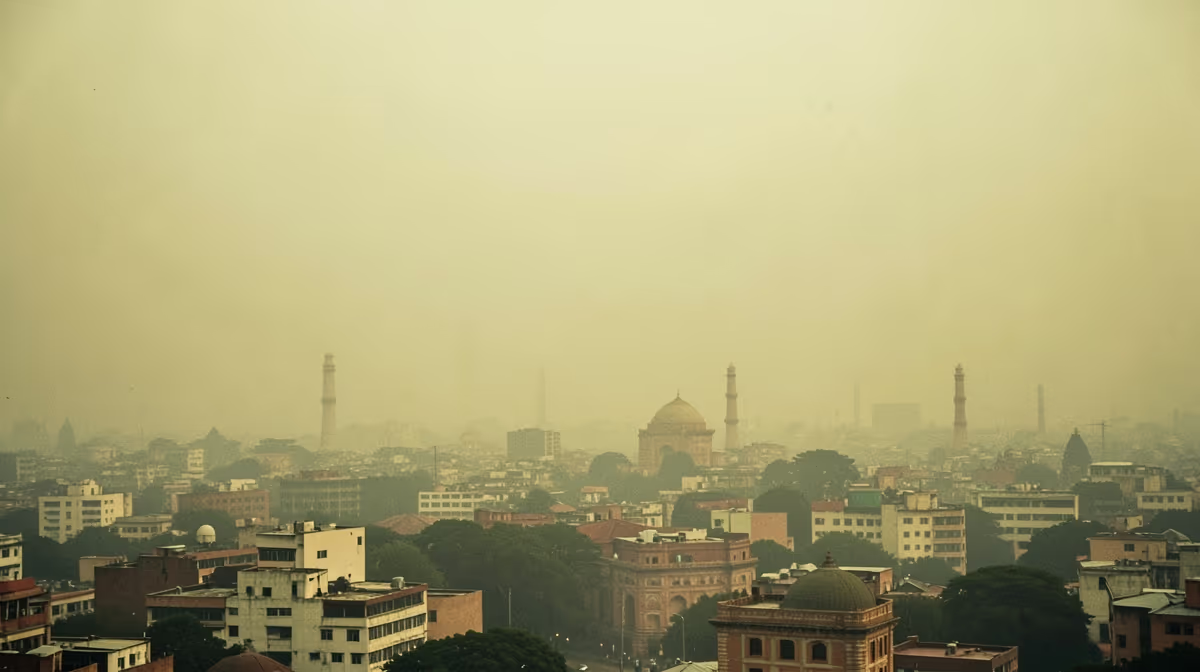
The silent descent of autumn over northern India is no longer just a change in season; it is the closing of an atmospheric trap. As toxic smog blankets the national capital once again, experts argue that an effective Delhi pollution strategy must look far beyond municipal borders to tackle the root causes that transform a city into a geographic basin of trapped toxins.
Recent meteorological data underscores a troubling reality: air quality is now inextricably linked to shifting weather patterns that act as a severe weather pollution multiplier. When seasonal shifts occur and weather conditions trap pollutants instead of dispersing them, smog levels spike significantly across the entire region, rendering localized, city-specific measures fundamentally insufficient. Experts and policy analysts have long pointed out that Delhi's smog crisis cannot be resolved by city-centric interventions alone, as the capital cannot tackle its air crisis in isolation from the broader meteorological and agricultural landscape of northern India.
An effective pollution strategy for Delhi requires treating northern India as a unified ecological zone, moving beyond municipal boundaries to manage the entire regional airshed.
Understanding the Weather Pollution Multiplier Effect
The primary challenge facing the National Capital Region (NCR) is the role of meteorological conditions in exacerbating existing emission levels. Factors such as wind speed, temperature inversions, and seasonal shifts serve as multipliers, either cleaning the air or holding pollutants close to the ground. Recent updates from the Indian Meteorological Department (IMD) indicate that fluctuating temperatures and varying rainfall patterns across northern India heavily influence how pollutants disperse or get trapped in the lower atmosphere.
Meteorological factors like temperature drops and stagnant wind speeds significantly influence how particulate matter accumulates. For instance, cooler temperatures can trap pollutants closer to the surface, causing sudden spikes in the AQI Delhi metrics. This phenomenon turns standard urban emissions—from vehicular exhaust and industrial activity—into a persistent health hazard that lingers for days or weeks.
Recent Meteorological Data Points
Recent snapshots of the region's weather provide a clear picture of this transition: - In early October 2026, Delhi recorded a minimum temperature of 25.2 degrees Celsius. - During the same period, the Air Quality Index (AQI) was recorded at 173, sliding into concerning brackets as the weather began to shift. - Significant monsoon activity was noted earlier in the year, with Delhi crossing its typical August rainfall average within the first eight days of the month.
While intense downpours temporarily wash away pollutants, the subsequent shifts into cooler, stagnant weather patterns quickly alter the environmental outlook, setting the stage for the annual winter air crisis.
Why a Regional Framework is Essential for Long-Term AQI Delhi Improvement
The realization that Delhi’s air quality is a regional issue rather than a localized one is gaining traction among environmental scientists. Neighboring states play a massive role in contributing to seasonal pollution surges. Whether through agricultural stubble burning, industrial emissions, or vehicular traffic moving across interstate borders, the pollutants do not respect administrative lines.
A coordinated approach involving areas outside the capital is now considered essential for effective long-term pollution management. Because pollution travels across state lines and is heavily influenced by regional meteorological factors, authorities need a framework that spans multiple states. Localized traffic restrictions and anti-pollution drives within Delhi yield limited results when the surrounding states are not part of a synchronized mitigation plan.
Key Factors in Regional Pollution Management
- Stubble Burning: Agricultural practices in Punjab and Haryana remain a critical seasonal contributor to the regional airshed.
- Industrial Emissions: Clusters of industries across the NCR contribute to a constant baseline of pollutants.
- Vehicular Traffic: Massive interstate movement of goods and people ensures that vehicle exhaust is a shared regional burden.
- Meteorological Conditions: Wind patterns carry smoke and dust from across the northern plains, concentrating them in the Delhi basin.
The Analyst’s View: Root Causes and Political Friction
The severity of the pollution crisis is heavily exacerbated by regional weather patterns, rendering hyper-local, city-only mitigation strategies fundamentally insufficient. Analysts identify several layers to this ongoing challenge, ranging from political friction to economic consequences.
Inter-state governance friction between the National Capital Territory of Delhi and surrounding agricultural states like Punjab and Haryana complicates cohesive anti-pollution policies. This often results in a cycle of shifting political blame rather than fostering the regional cooperation necessary for airshed management. Furthermore, persistent high pollution levels and unfavorable weather multipliers disrupt economic productivity and strain public healthcare infrastructure.
The 1952 Great Smog of London demonstrated that local containment measures are useless without addressing broader meteorological conditions and regional emissions sources.
Economic and Geopolitical Dimensions
The economic angle of the crisis is profound, demanding massive capital outlays for short-term emergency responses rather than sustainable regional infrastructure. On a geopolitical level, India's struggle with urban air quality and regional airshed management draws international scrutiny regarding its global climate commitments and sustainable development targets. There is a "hidden angle" to this crisis: effective airshed management may eventually require federal interventions that override state-level agricultural policies and power dynamics to treat northern India as a unified ecological zone.
Impact on Public Health and Vulnerable Populations
Air pollution directly threatens public health, leading to severe respiratory issues and a reduced quality of life for millions. Because weather patterns easily carry pollutants across regional boundaries, localized solutions fail to address the root causes, making a broader regional strategy a matter of urgent public health.
The groups most affected by these weather-driven pollution spikes include: 1. Children and the Elderly: Those with developing or declining respiratory systems are at the highest risk. 2. Individuals with Pre-existing Conditions: Those with asthma, heart disease, or chronic obstructive pulmonary disease (COPD) see their conditions exacerbated by stagnant smog. 3. Outdoor Workers and Commuters: Those whose livelihoods require them to be outside are directly exposed to elevated pollutant levels compounded by stagnant weather.
Forecasting the Crisis: The Next 72 Hours and Beyond
As the region moves further into the post-monsoon season, IMD Delhi weather tracking becomes the primary tool for anticipating air quality shifts. Monitoring agencies continue to track weather patterns as a potential pollution multiplier.
| Timeframe | Expected Environmental Conditions |
|---|---|
| Next 24 Hours | Fluctuating temperatures and moderate air quality levels; continuous tracking of wind patterns. |
| Next 72 Hours | Potential temperature dips; regional authorities expected to issue updated health and weather advisories. |
| Seasonal Outlook | Increasing pressure to implement coordinated inter-state strategies as winter weather multipliers intensify. |
Expert Predictions for the Near Future
Analysts expect that as seasonal weather shifts act as pollution multipliers, authorities will face increasing pressure to implement coordinated inter-state strategies.
- Best-Case Scenario: Favorable meteorological conditions—such as higher wind speeds or unexpected rainfall—combine with proactive regional coordination to prevent significant spikes in air pollution levels.
- Worst-Case Scenario: Adverse weather conditions, including extreme temperature inversions, combine with regional emissions to trap pollutants, causing a sharp deterioration in air quality that local city-level measures fail to mitigate.
Addressing weather-aggravated pollution requires proactive planning that transcends administrative boundaries, ensuring that mitigation policies are implemented concurrently across the entire airshed rather than in isolated pockets. Whether neighboring state administrations and central authorities will formalize a unified regional policy to counter these weather-driven pollution spikes remains the critical question as the colder months approach.
Frequently Asked Questions
Why is Delhi's pollution crisis considered a regional issue rather than just a city problem?
Weather patterns often act as a pollution multiplier in northern India, trapping smog over the region and rendering localized municipal efforts insufficient. To tackle hazardous air quality effectively, experts and reports emphasize that Delhi needs a coordinated strategy extending far beyond city boundaries.
How does weather impact air quality and pollution levels in Delhi?
Meteorological factors like temperature drops, wind speeds, and seasonal rainfall significantly influence how pollutants disperse or accumulate in the atmosphere. For instance, cooler temperatures and shifting wind directions can trap particulate matter closer to the ground, causing sudden spikes in the Air Quality Index (AQI).
What was the recent weather update regarding rainfall in Delhi?
Recent weather reports highlighted significant monsoon activity, with Delhi crossing its typical August rainfall average within the first eight days of the month. Such intense downpours temporarily wash away pollutants, but shifting weather conditions quickly alter the environmental outlook.
What was Delhi's recorded minimum temperature and AQI recently?
Recent meteorological data from early October recorded a minimum temperature of 25.2 degrees Celsius alongside an AQI reading of 173. These fluctuating figures illustrate the transition into cooler seasonal weather patterns which often precede harsher air quality phases.
Who is most affected when weather conditions worsen Delhi's air pollution?
Residents across the National Capital Region, particularly children, the elderly, and those with pre-existing respiratory or cardiovascular conditions, face the highest health risks during high pollution episodes. Outdoor workers and commuters are also directly exposed to elevated pollutant levels compounded by stagnant weather.
What happens next as Delhi prepares for cooler weather and potential pollution spikes?
As temperatures continue to dip and winter approaches, meteorological departments and policymakers anticipate heightened smog formation driven by regional stubble burning and unfavorable wind speeds. Authorities are pressured to implement interstate pollution control frameworks before weather multipliers intensify the crisis.
Conclusion
Delhi's air quality crisis is a stark reminder that environmental challenges do not stop at city limits. With weather patterns acting as a consistent pollution multiplier, the National Capital Region finds itself at the mercy of meteorological conditions that can trap toxic smog for days. Recent data showing fluctuating temperatures and the move toward cooler seasonal patterns highlight the urgency for a strategy that transcends municipal boundaries. Experts agree that until a coordinated, regional airshed management plan is implemented across northern India, localized efforts within Delhi will continue to be offset by regional emissions and unfavorable weather. The next steps for policymakers involve moving past inter-state friction and treating the region as a single ecological entity to safeguard public health.
Sources
- When weather becomes a pollution multiplier, Delhi needs a strategy beyond the city — The Indian Express
- Weather LIVE Updates: Delhi Crosses August Rainfall Average In First 8 Days — NDTV
- Delhi Min Temp of 25.2 Deg C, AQI 173 — Deccan Chronicle
- Weather today October 8: Will there be heavy rain in Tamilnadu, Delhi? check IMD latest update — The Economic Times
- Delhi to see cooler day; heavy rain likely in Uttarakhand, southern states — Business Standard
- IMD predicts dip in temperatures in Delhi — NewsBytes


.webp)
