
JK Police Reshuffle Triggers Major Command Overhaul Across Region
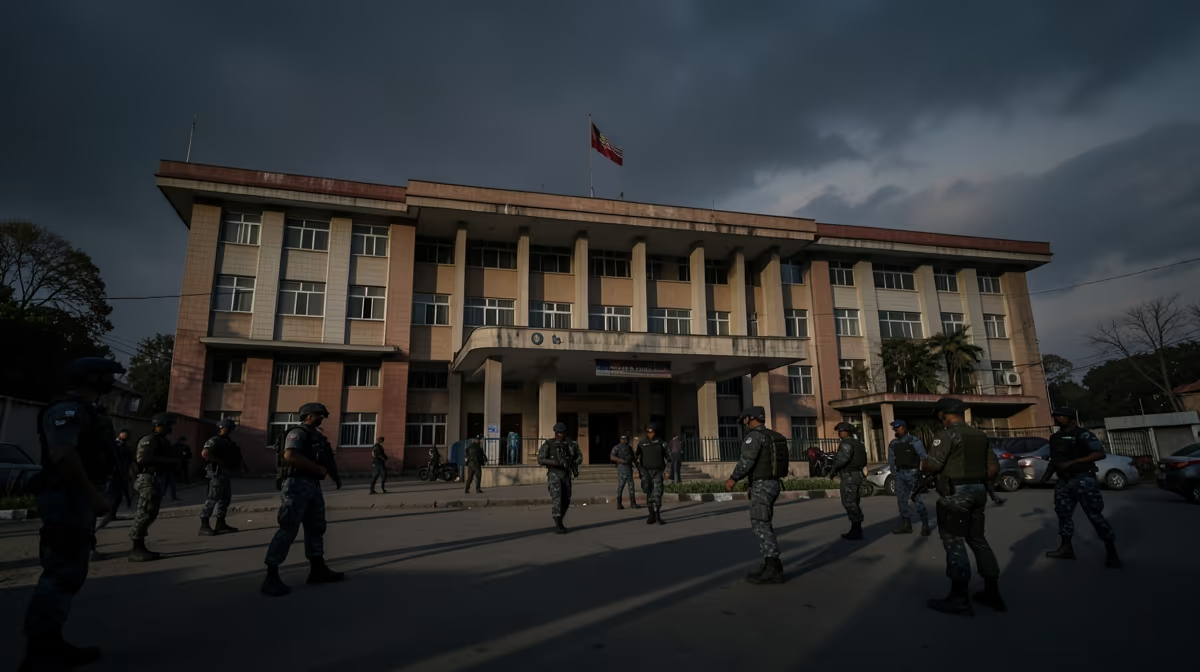
The command structure governing one of the most strategically sensitive regions in India has undergone a massive transformation overnight. In a massive administrative overhaul, the latest JK Police reshuffle has seen the transfer of 100 officers across the Union Territory, signaling a profound shift in the management of regional security and law enforcement.
The reshuffle of 100 senior officers marks a significant operational shift, signaling an effort to optimize command chains and refresh leadership across the region's internal security apparatus.
The Jammu and Kashmir government issued the formal orders between late Friday, October 9, and Saturday, October 10, 2026. This sweeping directive impacts both the Indian Police Service (IPS) and the Jammu and Kashmir Police Service (JKPS) cadres, reaching into the highest levels of the regional police force. Such large-scale administrative realignments are typically aimed at streamlining operational readiness and command structures across sensitive districts and departments. The timing of this transition is particularly noteworthy, as it marks an intentional pivot for the region's law enforcement leadership during a period of ongoing administrative review.
Key Details of the Jammu and Kashmir Police Transfers
The scale of this reshuffle is nearly unprecedented in recent administrative history for the region. By reassigning 100 senior officers simultaneously, the government has initiated a wholesale refresh of the personnel responsible for internal security and civil administration. Reports from verified outlets, including the Kashmir Observer, NDTV, and the Kashmir News Service, confirm that the orders encompass a diverse range of roles, from district-level leadership to specialized departmental heads.
Composition of the Affected Cadres
The reshuffle does not discriminate between federal and regional services, involving a strategic mix of personnel:
- Indian Police Service (IPS) officers, who represent the federal oversight and standardized policing protocols.
- Jammu and Kashmir Police Service (JKPS) officers, who provide essential local expertise and longitudinal knowledge of the region's unique security landscape.
This combined approach suggests a goal of balancing national security priorities with the nuances of local administration. By moving 100 officials at once, the administration is effectively resetting the bureaucratic clock, ensuring that no single network becomes too entrenched in a specific jurisdiction.
Strategic Rationale for the Massive Realignment
The root cause of this administrative overhaul is identified as an ongoing effort to restructure the internal security apparatus. By optimizing command chains, the government aims to ensure that leadership in sensitive districts is both fresh and aligned with the current executive vision. Analysts suggest that such moves are designed to address administrative bottlenecks that naturally occur when leadership remains static for extended periods.
Addressing Bureaucratic Stagnation
A hidden angle to this large-scale transfer of both IPS and JKPS officers may reflect shifting intelligence priorities. Moving 100 officers simultaneously allows the state to dismantle localized power structures that may have developed over time. This "refresh" of command dynamics is a historical parallel to routine administrative overhauls implemented in post-conflict or sensitive border regions to ensure that the central administration maintains firm control over the bureaucratic machinery.
| Milestone | Date / Period |
|---|---|
| Issuance of Government Transfer Orders | October 9, 2026 |
| Public Announcement and Media Verification | October 10, 2026 |
| Commencement of Transfer Implementation | October 11, 2026 |
| Expected Completion of Command Transition | October 13, 2026 |
Impact on Law Enforcement and Regional Stability
A reshuffle of this scale at the senior leadership level can significantly alter administrative approaches, operational strategies, and community policing efforts across Jammu and Kashmir. The primary impact areas identified include law enforcement efficacy, internal security management, and the overall police administration.
Large-scale transfers of senior police and civil service officers are standard administrative practices used by governments in India to periodically rotate leadership and realign security priorities.
The practical effect of these transfers is a direct influence on how local security is managed on a day-to-day basis. New leadership often brings new perspectives on community engagement and conflict resolution, which can lead to a period of adjustment for both the police force and the residents they serve. While the goal is optimized leadership, the immediate consequence is a period of high-intensity logistical coordination as 100 offices change hands.
Political and Geopolitical Implications
From a political perspective, the reshuffle is a clear attempt to reinforce bureaucratic control and project state capacity. By realigning security leadership, the administration signals governance stability and a firm hand on the region's internal affairs. This has a direct economic angle as well; perceived security stability is a cornerstone of investor confidence and local commerce. While the administrative transition itself might temporarily slow down bureaucratic approvals, the long-term goal is a more efficient environment for economic activity.
On a geopolitical level, this move demonstrates internal state consolidation to both regional and international observers. It signals a firm administrative management over strategically sensitive border territories, highlighting the government’s commitment to maintaining a robust and responsive security framework. The move is less about a single incident and more about a holistic demonstration of administrative strength and the ability to pivot resources as needed.
Operational Transitions: The Next 72 Hours
The immediate future following the announcement involves a complex logistical exercise. Within the next 24 hours, the implementation of transfer orders for the 100 senior officers is expected to begin in earnest. Administrative handovers will be initiated across various police departments, a process that requires meticulous attention to detail to ensure that ongoing investigations or security operations are not compromised.
Short-term Coordination and Best-Case Scenarios
In the next 72 hours, newly transferred officers are likely to assume their respective charges and new postings. Local administration will be tasked with managing the logistical transition, which includes housing, office assignments, and the briefing of new commanders on the specific challenges of their new jurisdictions.
- Best-case scenario: The transition of 100 senior police officers proceeds without friction, bringing renewed efficiency and optimized leadership to security operations across the Union Territory.
- Worst-case scenario: Administrative bottlenecks or coordination delays during the massive transition period could create temporary gaps in command structure and local security management.
Experts anticipate that while there may be a temporary disruption to standard operational workflows as officers transition, the long-term benefit of refreshed leadership will likely outweigh these short-term hurdles.
Frequently Asked Questions
What happened in the recent Jammu and Kashmir Police reshuffle?
The Jammu and Kashmir government ordered a major police reshuffle involving the transfer of 100 senior officers. This large-scale administrative shift was widely reported by outlets like NDTV and the Kashmir Observer in October 2026.
Who is affected by the J&K police transfers?
A total of 100 senior police officers, including various IPS and JKPS officers, are impacted by these sudden transfers. The move affects key administrative roles across the region's police infrastructure.
Why does this major police reshuffle matter?
Such large-scale transfers of senior leadership are crucial for administrative efficiency and maintaining law and order in the union territory. They often reflect shifting security strategies and priorities of the government.
What are the specific details of the transferred officers?
While exact placement lists vary by official government orders, the recent directives encompass exactly 100 senior personnel. Both IPS and JKPS cadres have seen significant repositioning in this administrative overhaul.
What happens next following the police officer transfers?
The transferred officers are expected to assume their new postings promptly to ensure seamless continuity in policing operations. Further internal reassignments at lower levels could also follow to align with the new senior leadership.
Is this type of police reshuffle common in Jammu and Kashmir?
Major administrative shake-ups involving dozens of senior police officials are frequently utilized by the government to optimize security management. These strategic realignments occur periodically depending on administrative and regional requirements.
Conclusion
The transfer of 100 senior IPS and JKPS officers in Jammu and Kashmir represents a deliberate and wide-reaching effort to recalibrate the region's security and administrative framework. By refreshing leadership across sensitive districts and key departments, the government is seeking to eliminate bureaucratic stagnation and optimize the command chain. While the next 72 hours will be defined by the logistical challenges of this massive transition, the long-term objective remains the enhancement of operational readiness and state capacity. As newly appointed officers assume their roles, the focus will shift to how this fresh leadership implements the evolving security and governance priorities of the Union Territory.


.webp)
