
Google Maps UK Fuel Prices Now Live for Petrol and Diesel Drivers
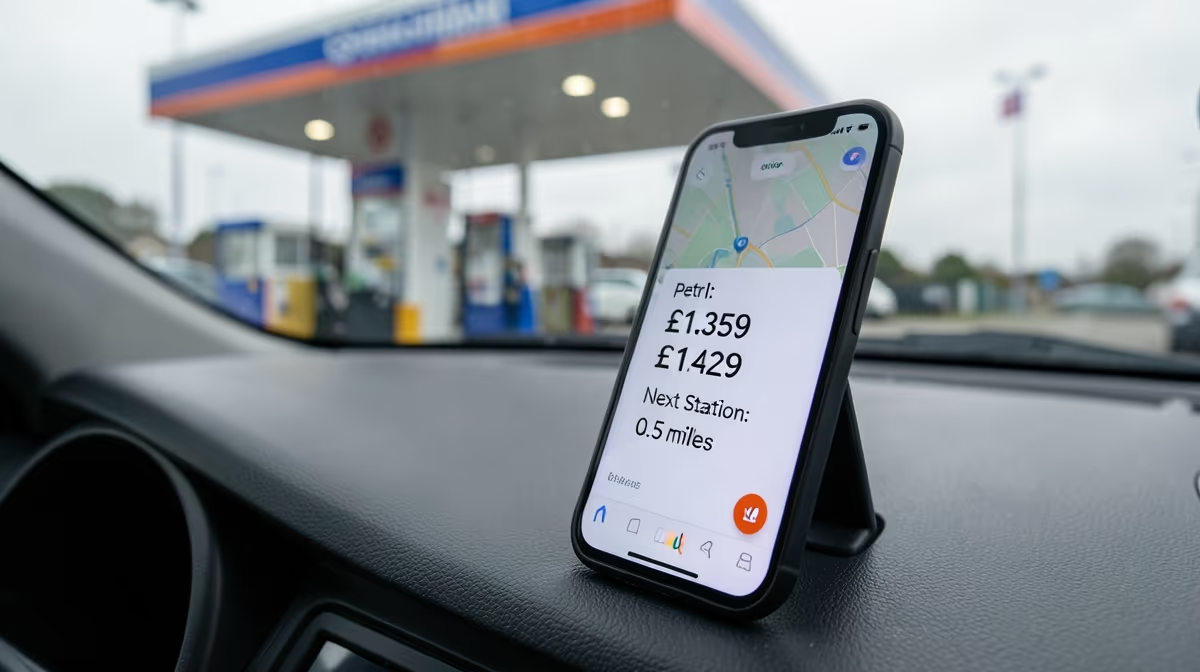
The glowing pixels of a navigation screen are no longer just guiding drivers through traffic; they are now serving as a front-line defense against the volatile economics of the energy market. As motorists navigate the complex landscape of the British road network, the introduction of Google Maps UK fuel prices marks a fundamental shift in how digital tools interface with the household budget. Drivers across the country can now easily compare Google Maps UK fuel prices directly within the navigation app, transforming a simple mapping tool into a comprehensive UK fuel price tracker.
The integration of live pump pricing into a dominant mapping platform transforms consumer behavior from passive navigation to active economic arbitrage during periods of inflationary fuel spikes.
A New Era of Price Transparency at the Pump
As pump prices remain a significant financial burden, the feature is designed to help motorists find the cheapest options available near their current location or along a planned route. The data appears as users search for filling stations, providing a side-by-side comparison that was previously unavailable in a single, unified interface. This move follows similar successful integrations in the United States and selected international markets, signaling a global shift toward real-time economic data integration within consumer software.
How the live tracker functions
- Real-time updates for individual service stations.
- Integration along active navigation routes to minimize detours.
- Comparative lists of nearby stations ranked by proximity and cost.
- Coverage spanning major retail outlets and local independent stations.
Economic Implications for the UK Motorist
For delivery drivers, commuters, and fleet operators, the ability to optimize fueling stops can lead to significant cumulative savings. Industry reports from Fleet News and The Grocer indicate that this level of data democratization is a direct response to escalating fuel costs and persistent inflation across the UK, which have intensified consumer pressure on both retailers and technology platforms to increase transparency.
The Shifting Retail Landscape
The Analyst View: Digital Infrastructure as a Market Force
Real-time visibility of petrol and diesel prices compresses retail profit margins by intensifying hyper-local price competition, driving motorists toward the cheapest available options.
There is also a political dimension to this technological shift. Governments facing intense scrutiny over cost-of-living crises are increasingly relying on digital transparency tools as a surrogate for direct market intervention. By encouraging the use of apps to find cheaper fuel, there is an indirect pressure placed on fuel retailers to remain competitive without the need for new legislation or subsidies.
Proprietary Datasets and Future Trends
Historical Parallels and Market Power
Just as travel aggregators forced airlines to become more transparent with their pricing structures, the inclusion of live fuel prices on a platform used by millions of UK drivers is expected to force a similar reckoning for fuel retailers. The era of a station charging a premium simply because it is the only one visible from a specific junction may be coming to an end as drivers gain the ability to see a cheaper alternative just a mile away.
Projected Impact and Potential Friction
Expert Predictions for the Road Ahead
- Best-case scenario: Increased transparency helps UK drivers easily locate cheaper fuel during a period of soaring costs, easing financial pressure on households and businesses across the country.
- Worst-case scenario: Inaccurate or delayed live pricing data could lead to driver frustration at the pump if the listed prices on the app do not match the actual costs at the station.
The success of the tool depends heavily on the accuracy of the data feed. If retailers fail to update their digital pricing in sync with their physical pumps, the resulting frustration could undermine the utility of the feature.
Navigating the Real-Time Update
As the cost-of-living crisis continues to influence consumer habits, the transition of Google Maps from a navigation tool to an economic assistant is a logical evolution. It reflects a broader trend where mapping applications integrate real-time consumer data—such as parking availability and EV charging stations—to make travel planning more efficient and cost-effective for everyday users.
Frequently Asked Questions
How can I see UK fuel prices on Google Maps?
Google Maps now includes real-time petrol and diesel prices directly at the pump across the UK. Users can search for fuel stations along their route to compare live costs and find the cheapest options available nearby.
Why did Google add fuel prices to Maps?
This feature was rolled out as fuel costs soared and drivers faced increasing pressure at the pump. Providing transparent pricing helps motorists manage expenses and easily locate more affordable options in their local area.
Who is affected by the new Google Maps fuel pricing feature?
UK drivers and motorists benefit directly from this update, as it simplifies the process of tracking fluctuations in petrol and diesel prices. Fleet operators and everyday commuters can use the tool to optimize their fueling stops and save money.
What petrol and diesel information does Google Maps show?
The app displays current, live pricing information for individual service stations at the pump. This specific detail allows drivers to check exact costs before arriving at a station rather than relying on outdated estimates.
What happens next for UK drivers using this Google Maps feature?
Motorists can continuously check live updates directly within the app as market prices fluctuate over time. As more stations integrate data, drivers will have even greater visibility into regional fuel cost trends.
Are live fuel prices available nationwide in the UK?
Yes, the rollout spans across the UK, allowing drivers in various regions to track live petrol and diesel costs. Major outlets and local stations are progressively being included to give a comprehensive view of pump prices.
Conclusion
The integration of live petrol and diesel prices into Google Maps marks a significant milestone for UK motorists facing the ongoing challenges of a cost-of-living crisis. By providing a real-time UK fuel price tracker within a familiar interface, the platform empowers consumers to make informed financial decisions at the pump. While this development is expected to drive hyper-local competition and offer immediate relief to household budgets, its long-term success will rely on the accuracy of the live data and the willingness of retailers to adapt to a more transparent marketplace. As drivers begin to utilize this tool, the focus shifts toward how these digital datasets will shape the future of energy consumption and retail competition in the UK.
Sources
- Fuel prices added to Google Maps as petrol and diesel costs soar — BBC
- Petrol and diesel prices included on Google Maps for the first time — Fleet News
- Google Maps to show live UK fuel prices at the pump — The Grocer
- UK drivers can now track live petrol prices on Google Maps — The Bury Times
- PETROL PRICES: Google Maps now shows you the cheapest fuel near you — Swansea Bay News


.webp)
