
US Aircraft Losses in Iran War Revealed in New Defense Reports
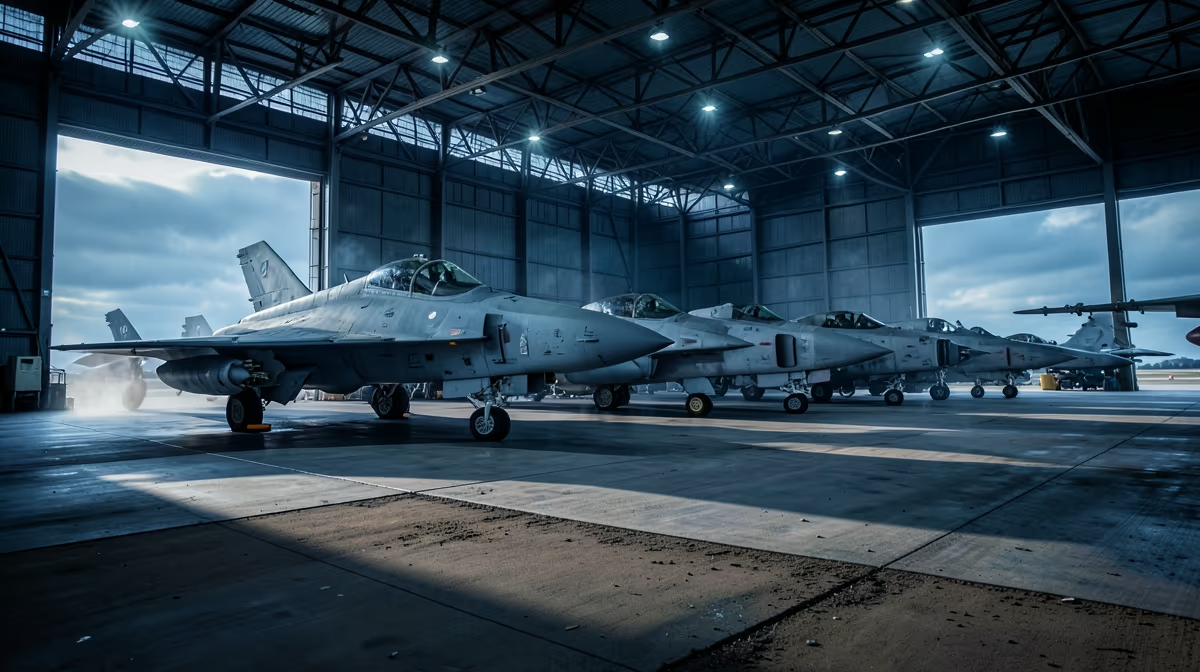
The strategic landscape of the Middle East has shifted under the weight of a staggering new assessment of aerial combat attrition. Recent developments in the region have brought significant attention to US aircraft losses Iran war analysts are currently evaluating, marking a definitive turning point in the transparency of current military engagements.
A recent congressional report states that 81 US military aircraft have been lost or sustained damage in the Iran war, with an estimated value of up to $3.3 billion.
Assessing US aircraft losses in the Iran conflict
This surge in reported equipment damage reflects the intensifying nature of aerial engagements in the region. Military analysts are observing a pattern where technological superiority is being met with sophisticated defense challenges, leading to an attrition rate that few predicted at the onset of the conflict. The financial weight of these losses is equally profound, with the total valuation of the affected hardware reaching an estimated $3.3 billion.
Findings from the Operation Epic Fury congressional report
| Metric | Reported Value |
|---|---|
| Total Aircraft Lost or Damaged | 81 |
| Estimated Financial Valuation | Up to $3.3 Billion |
| Percentage Change | Nearly Doubled in Latest Update |
| Primary Operation | Operation Epic Fury |
The logistical strain is not merely about the destroyed airframes; it includes aircraft that have sustained damage significant enough to remove them from active sortie rotations. This distinction is vital for understanding the true "fighter jet attrition" occurring in contested airspace. The report indicates that the high value of these assets—ranging from advanced fighter jets to specialized support craft—places a massive burden on the current defense budget.
The Root Cause of Aviation Attrition
- Operation Epic Fury commences with initial aerial engagements against Iranian targets.
- Congressional oversight committees receive updated assessments detailing mounting equipment damage.
- Latest congressional report reveals 81 aircraft lost or damaged, sparking renewed debate.
Economic and Political Dimensions
Politically, the Department of Defense is facing increased scrutiny from Congress. Lawmakers are demanding a clearer trajectory for Operation Epic Fury, questioning whether the current strategy justifies the rapid depletion of the nation’s primary aerial combat tools. This friction is expected to intensify as the debate over the defense budget planning for the coming fiscal year begins to take center stage.
Geopolitical Angle and Regional Impact
This shift in regional deterrence calculations occurs as adversaries observe the vulnerability and operational limits of advanced U.S. hardware in active combat.
Furthermore, the strain on maintenance supply chains cannot be overlooked. Sustaining high sortie rates under intense combat conditions requires not only replacement parts but also specialized technical personnel who are being pushed to their limits. The "hidden angle" of this conflict is the potential for a breakdown in the logistical tail that supports these sophisticated aircraft, which could further exacerbate the loss of readiness.
Strategic Defense Fallout
Military analysts suggest that the current situation underscores the severe human and material costs associated with prolonged engagements in the Middle East. The data serves as a reality check for those who anticipated a conflict with minimal equipment turnover. Instead, the reality of "military aviation losses" has become a central pillar of the strategic assessment.
What Comes Next
Expert predictions suggest that there will be increased legislative pressure on military leadership to provide a detailed "equipment attrition" roadmap. The best-case scenario involves transparent reporting that leads to targeted improvements in operational resilience and strategic adjustments. However, the worst-case scenario remains a situation where escalating losses intensify political friction and raise serious doubts about the long-term sustainability of the current defense expenditure.
Frequently Asked Questions
How many US aircraft have been lost or damaged in the conflict?
According to the latest congressional report, a total of 81 US military aircraft have been reported lost or sustained damage.
What is the estimated cost of these military losses?
The estimated value of the aircraft affected during the conflict is up to $3.3 billion.
What is the name of the operation mentioned in the report?
The losses occurred during military actions referred to as Operation Epic Fury.
Why has the number of lost aircraft increased?
The number has nearly doubled in the latest update due to escalating military engagements and the intense nature of aerial operations in contested airspace.
Conclusion
The release of the latest congressional report on Operation Epic Fury has provided a stark look at the material reality of the Iran conflict. With 81 aircraft lost or damaged at a valuation of $3.3 billion, the US military is facing a period of intense strategic and financial reassessment. These developments highlight the significant challenges of modern aerial warfare against a sophisticated adversary. Moving forward, the focus will remain on how the Department of Defense and Congress collaborate to address equipment replacement, maintain operational readiness, and adjust the strategic direction of the conflict to mitigate further attrition.
Sources
- US aircraft lost or damaged in Iran war nearly doubles in latest congressional report — Military Times
- US has lost or sustained damage to 81 military aircraft worth up to $3.3 billion in Iran war, congressional report says — CNN
- Report to Congress on U.S. Aircraft Combat Losses in Operation Epic Fury — USNI News


.webp)
