
Karl Deisseroth Nobel Prize Win Signals a Massive Shift in Neuroscience
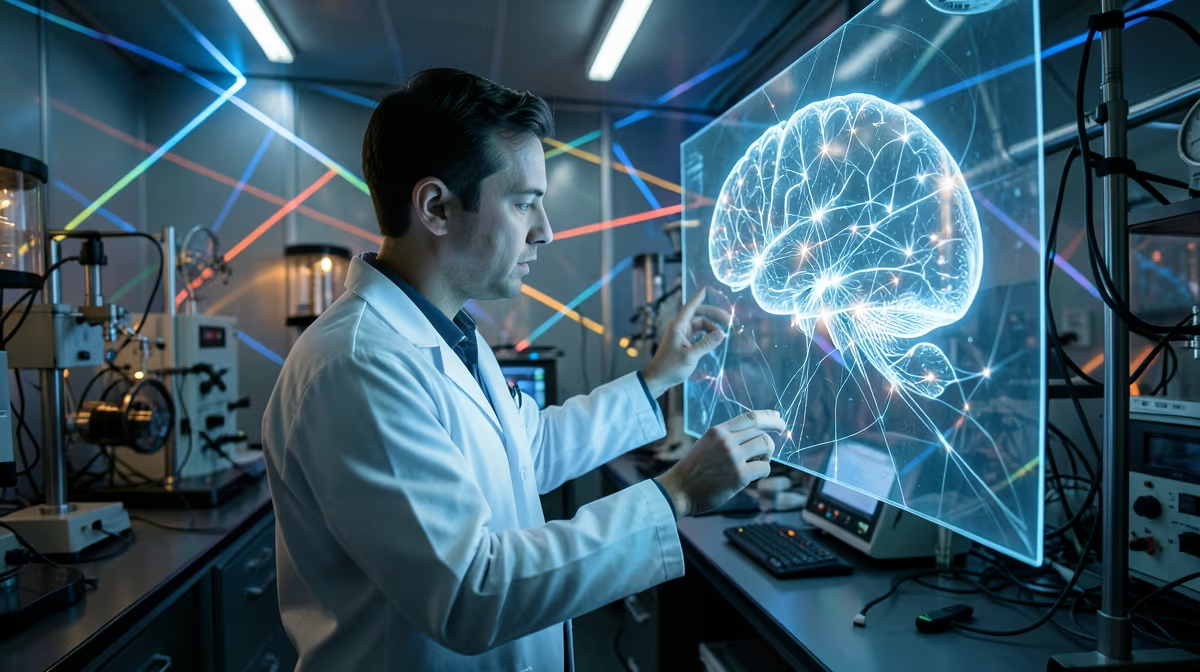
The ability to control the human mind with the simple flick of a light switch has transitioned from the realm of science fiction into the core of modern medical reality. In a decision that confirms the profound impact of this technological leap, the Karl Deisseroth Nobel Prize in Medicine has been awarded to a trio of researchers whose work on optogenetics has forever changed the landscape of neuroscience.
Karl Deisseroth Nobel Prize in Medicine recognizes groundbreaking work in neuroscience, shared with Peter Hegemann and Georg Nagel. The Nobel Assembly at Karolinska Institutet announced the honor on October 5, 2026, marking a pivotal moment in the quest to unravel the brain’s mysteries. By allowing scientists to turn specific brain activity on and off with incredible precision, this revolutionary neuroscience breakthroughs have moved from a foundational biophysics discovery to a tool that is currently reshaping our understanding of behavior, movement, and mood.
Optogenetics has transformed neuroscience by giving researchers a tool to map brain circuitry with unprecedented accuracy, paving the way for developing novel treatments for complex neurological and psychiatric disorders.
The 2026 Nobel Prize in Physiology or Medicine
The announcement by NobelPrize.org confirms that the trio of scientists—Karl Deisseroth, Peter Hegemann, and Georg Nagel—has been recognized for discoveries concerning optogenetics. This technique represents a bridge between optics and genetics, two fields that were previously separate but have now combined to provide a high-resolution window into the living brain.
A Trio of Scientific Visionaries
The collaboration between these researchers spans decades of biophysics and molecular biology. Peter Hegemann and Georg Nagel are credited with the foundational work on light-sensitive microbial proteins, while Karl Deisseroth played a central role in adapting these proteins for use in mammalian brain tissue. Together, their efforts established the foundational methods that define modern optogenetics today. International media outlets, including The Independent, New Scientist, and NBC News, have highlighted the discovery as one of the most significant technological leaps in modern neurobiology, noting its ability to activate or deactivate brain circuits in real time.
Decoding the Mechanics of Optogenetics
To understand why this discovery is worthy of the highest honor in science, one must look at the mechanics of neural circuits. Historically, studying the brain was a blunt process; researchers could stimulate areas with electricity or drugs, but these methods lacked precision, often affecting many unrelated cells simultaneously. Optogenetics changed this by utilizing light-sensitive proteins called channelrhodopsins.
The Role of Light-Sensitive Proteins
The method relies on light-sensitive proteins integrated into targeted neurons. These proteins are derived from microbes that naturally respond to light. By using genetic engineering to insert these proteins into specific types of brain cells, researchers can make those cells "responsive" to light. When a specific frequency of light—often delivered via thin fiber-optic cables—is introduced, the targeted neurons are activated or suppressed. This allows for:
- Precise control over specific neural pathways without affecting neighboring cells.
- Real-time observation of how specific circuits influence behavior.
- The ability to map complex brain networks with unprecedented accuracy.
Why Optogenetics Matters for Global Health
The medical and scientific research communities are the primary beneficiaries of this technology today, but the long-term impact on patient care is where the true value lies. Optogenetics has transformed neuroscience by providing a map where there was once only a mystery. It has opened unprecedented avenues for studying neurological and psychiatric disorders that have long remained untreatable or poorly understood.
Potential Therapeutic Applications
According to reports from NDTV and NBC News, the scientific community expects these insights to eventually benefit patients suffering from a wide range of conditions. The mapping of neural circuitry is the first step toward developing targeted therapies that could one day address:
- Parkinson's disease: By identifying and controlling the circuits responsible for motor control.
- Depression: By understanding the neural networks that regulate mood and emotional response.
- Blindness: Through the use of light-sensitive proteins to restore some level of visual perception in damaged retinas.
This innovative technique allows researchers to control brain cells using light, providing unprecedented insight into the mysteries of the brain by allowing researchers to map neural pathways more accurately than ever before.
The Analytical Perspective: Root Causes and Global Competition
The root cause of this breakthrough lies in decades of foundational research intersecting neurobiology and microbial genetics. It was the discovery that microbial proteins could be adapted to control neuronal activity that provided the spark. This intersection highlights a broader trend in science: the most significant breakthroughs often occur at the edges of traditional disciplines.
Geopolitical and Economic Dimensions
The validation of optogenetics through a Nobel Prize is expected to have significant economic consequences. Analysts suggest that this recognition will likely accelerate venture capital investment in neurotech startups, particularly those focusing on neuroprosthetics and precision therapeutics. From a geopolitical angle, scientific eminence in foundational biotechnology serves as a pillar of soft power. There is an intense competition between Western and Asian research ecosystems to secure technological sovereignty in the field of high-risk, multidisciplinary biotechnology.
Regulatory and Ethical Considerations
While the Nobel Prize celebrates a triumph of basic science, the "hidden angle" of optogenetics involves the rapid translation of these tools into potential clinical applications. This shift raises subtle regulatory and ethical questions regarding cognitive enhancement and mind-control technologies. Governance bodies are currently viewed as ill-equipped to handle the implications of a technology that can so directly manipulate the brain's internal activity.
Historical Context and Comparison
The 2026 award draws a historical parallel to the discovery and commercialization of green fluorescent protein (GFP). Much like GFP, which bridged marine biology with cellular imaging and earned its own Nobel Prize, optogenetics has bridged microbial biophysics with neuroscience. Both discoveries revolutionised molecular biology by providing researchers with a way to "see" and "interact" with biological processes in ways that were previously impossible.
| Milestone Stage | Scientific Development |
|---|---|
| Foundational Research | Discovery of light-sensitive microbial proteins by pioneering researchers |
| Technical Integration | Merging of optics and genetics to control targeted neurons in living tissue |
| Global Recognition | Awarding of the 2026 Nobel Prize in Physiology or Medicine to the trio |
What Happens Next: The Predictor Outlook
The announcement of the Karl Deisseroth Nobel Prize in Medicine has set off a 24-hour cycle of global coverage and academic commentary. Within the next 72 hours, major research bodies and academic institutions are expected to release formal statements and deep-dive analyses on how optogenetics has shaped modern neuroscience.
Short-Term Expectations
Analysts expect a surge in academic interest and potential funding focus toward optogenetics-based neurological therapies. This high-profile recognition often serves as a catalyst for national funding bodies to prioritize biotechnology over more incremental science.
Long-Term Projections
The best-case scenario involves increased visibility and funding accelerating breakthroughs in mapping brain circuitry and treating complex neurological disorders. However, there is a potential "worst-case" scenario where over-hyped expectations regarding immediate clinical applications could lead to temporary disillusionment. While the foundational science is sound, the transition to common medical practice is a long-term process that requires careful clinical validation.
Frequently Asked Questions
Who won the 2026 Nobel Prize in Physiology or Medicine?
Karl Deisseroth, Peter Hegemann, and Georg Nagel were awarded the 2026 Nobel Prize in Physiology or Medicine. They were recognized for their pioneering work and discoveries concerning optogenetics.
What is optogenetics and how does it work?
Optogenetics is a revolutionary technique that allows scientists to control and monitor the activity of individual brain cells using light. By integrating light-sensitive proteins into specific cells, researchers can manipulate neural circuits with high precision.
Why is this Nobel Prize-winning discovery important?
This breakthrough provides unprecedented insight into the mysteries of the brain by allowing researchers to map neural pathways more accurately than ever before. It has vastly improved our understanding of how complex neurological networks operate.
Who is affected by the development of optogenetics?
The medical and scientific research communities are primarily affected, as the technique accelerates neurological studies. Ultimately, patients suffering from brain disorders may benefit as researchers use these insights to develop targeted therapies.
What happens next in optogenetics research following the Nobel win?
Researchers are expected to build upon these findings to deepen our comprehension of neurological and psychiatric conditions. Future studies will likely focus on translating these optogenetic tools into clinical applications and treatments for brain diseases.
What specific background led to the 2026 Nobel Prize in medicine?
The trio of scientists spent years studying microbial proteins that respond to light, successfully adapting them for use in mammalian brain tissue. Their collaborative efforts established the foundational methods that define modern optogenetics today.
Conclusion
The awarding of the 2026 Nobel Prize in Physiology or Medicine to Karl Deisseroth, Peter Hegemann, and Georg Nagel marks the official coronation of optogenetics as one of the most transformative tools in modern science. By bridging the gap between light and the genetic code of neurons, these scientists have provided the world with a method to navigate the intricate electrical storms of the human brain. While the scientific community celebrates this basic science triumph, the focus now shifts toward the future—where the insights gained from light-controlled neurons will hopefully lead to clinical breakthroughs for Parkinson's, depression, and other complex neurological conditions. The next few years will be defined by how quickly these laboratory successes can be translated into tangible medical benefits, backed by a surge in global funding and academic interest.
Sources
- Press release: Nobel Prize in Physiology or Medicine 2026 - NobelPrize.org — NobelPrize.org
- Nobel Prize in Physiology or Medicine 2026 - Popular information - NobelPrize.org — NobelPrize.org
- Karl Deisseroth, Peter Hegemann and Georg Nagel win Nobel Prize in medicine — The Independent
- Nobel prize for medicine goes to trio who developed optogenetics — New Scientist
- 3 scientists win Nobel Prize in medicine for work unraveling the brain’s mysteries — NBC News
- Nobel Prize In Medicine Goes To 3 For Discoveries Concerning Optogenetics — NDTV


.webp)
