
Putin Threat UK Forces Households to Prepare for Severe Disruption
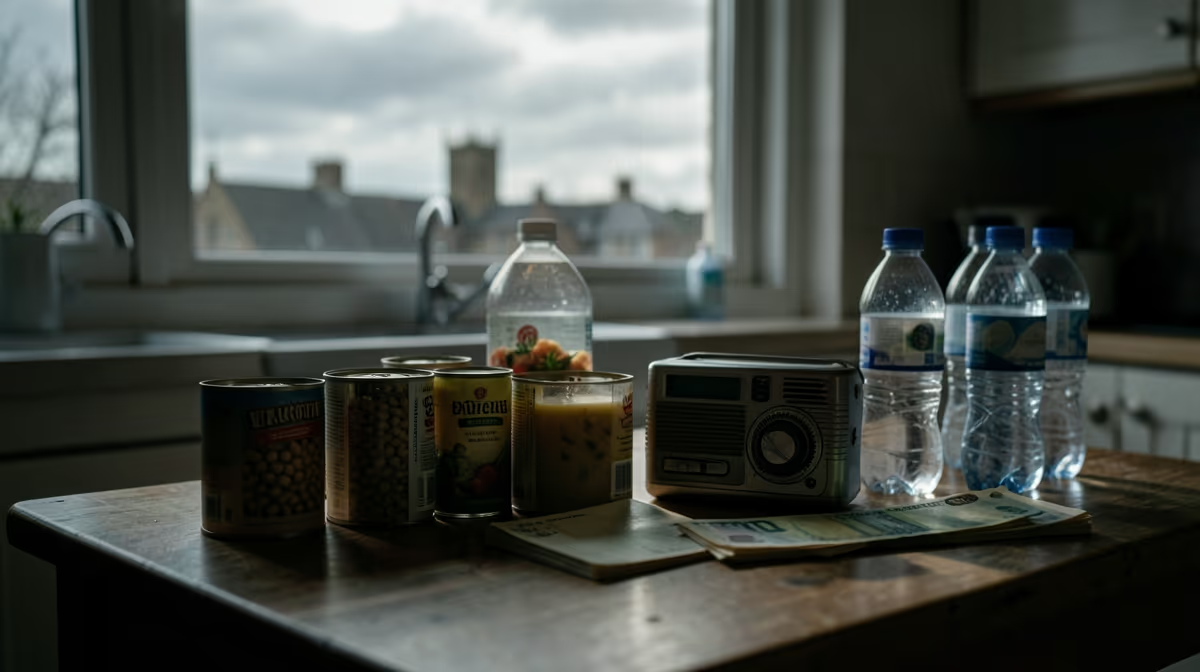
A sudden loss of the electrical grid, disabled electronic payment channels, and severed distribution networks have shifted from theoretical defense scenarios into direct civilian advisories. British citizens are facing urgent official guidance instructing them to secure life-sustaining provisions inside their own homes. Amid rising geopolitical tensions, the Putin threat UK defense analysts and public officials are bracing for has highlighted a terrifying range of hostile options that could target British infrastructure. What was once confined to strategic contingency corridors has now entered everyday public discourse, forcing households to confront the fragile mechanics that underpin modern civilian survival.
The quiet push for household self-reliance signals that security planners may view hybrid disruptions to civilian utilities as an active operational probability rather than a remote emergency.
The Civilian Preparedness Stockpile Directive
Public awareness initiatives and national campaigns have formally instructed households to adapt to potential systemic crises by securing specific survival assets. Under newly communicated civil readiness measures, citizens are advised to establish a household civilian preparedness stockpile containing at least three days' worth of non-perishable food and bottled water. Beyond basic physical sustenance, the emergency checklist urges families to maintain reserves of physical cash and keep functional wind-up radios within reach.
The inclusion of non-electronic resources reflects explicit vulnerability assessments regarding the digital backbone of the United Kingdom. Modern commerce relies entirely on electronic transactions, continuous network uptime, and integrated supply chains. If digital payment networks, automated banking channels, or point-of-sale machines freeze during a major disruption, electronic access to essential goods ceases immediately.
- Non-perishable food supplies sufficient for a minimum of 72 hours
- Bottled drinking water calibrated to sustain household members for three days
- Physical cash reserves to bypass frozen digital banking and card processing networks
- Wind-up radios capable of operating entirely independent of the electrical grid or cellular networks
These recommendations focus directly on individual self-sufficiency. By ensuring households can endure an initial 72-hour shock without external intervention, national response services can prioritize essential emergency management and critical restoration tasks without facing immediate civilian supply collapse.
Hybrid Warfare UK and Strategic Infrastructure Exposure
The operational backdrop driving these civilian warnings centers on the complex theater of unconventional conflict. Analysts observe that hybrid warfare UK assets face from hostile foreign actors extends far beyond conventional military clashes. Instead, the strategic posture associated with Vladimir Putin and Russian state capabilities focuses on sub-threshold disruption, asymmetric pressure, and systemic paralysis across sovereign infrastructure.
Modern state-level adversaries possess an extensive spectrum of disruptive capabilities capable of undermining domestic stability. Strategic assessments emphasize that critical national infrastructure faces severe vulnerabilities across both physical and digital layers. Cyber warfare operations represent a continuous vector, designed to penetrate municipal utility controls, disrupt energy distribution, disable financial clearing houses, and paralyze communication networks.
Simultaneously, the physical conduits sustaining the country remain exposed to targeted disruption. Subsea communication and energy interconnectors carry critical data streams and power between the British Isles and external markets. Maritime and covert capabilities targeting undersea cables could sever financial data lines and cross-border energy supply channels in a coordinated strike. Similarly, the domestic national grid remains a primary target; a synchronized cyber or physical assault against key transmission substations could precipitate cascading regional power blackouts. Coupled with supply chain disruptions and targeted psychological pressure aimed at disorienting civilian populations, these hybrid tools are structured to erode social stability without necessarily triggering standard battlefield retaliation.
Political Dimension and National Readiness Scrutiny
The public roll-out of stockpiling guidance has generated substantial political friction. Critics and opposition figures have challenged the posture of government leadership, alleging that authorities have minimized the acute scale of the geopolitical dangers facing the nation. Observers have publicly criticized executive decision-makers, suggesting that the prime minister has adopted an avoidant stance toward looming hostile actions while national defense vulnerabilities remain unaddressed.
This friction exposes a complex governance dilemma between escalating international security confrontations and domestic readiness. State authorities frequently face public accusations of administrative negligence when emergency preparedness messaging appears sudden or disjointed. When citizens are abruptly told to prepare for infrastructural collapse while official channels simultaneously seek to prevent mass anxiety, voter scrutiny intensifies. Political debates increasingly pivot on whether the administration possesses an adequate national resilience strategy or whether public authorities are attempting to shift the burden of national defense preparedness onto individual households.
The Economic Burden of National Resilience
Upgrading domestic security to withstand hostile foreign actions carries severe financial implications. Building comprehensive state resilience requires extensive capital investment across both public and private sectors. The logistical demand of hardening power distribution stations, insulating undersea cables, securing digital financial networks, and stockpiling government-level emergency resources places a profound strain on public finances.
| Operational Dimension | Cold War Civil Defense | Modern Hybrid Resilience |
|---|---|---|
| Primary Threat Profile | Kinetic assault and strategic nuclear fallout | Cyber warfare, infrastructure sabotage, supply interdiction |
| Core Communication Channel | Broadcast radio and government print notices | Wind-up radio and independent analog broadcast |
| Critical Failure Mode | Physical destruction of residential centers | Systematic collapse of electronic payments and power grids |
| Civilian Readiness Focus | Fallout shelter preparation and basic rationing | 72-hour stockpile of water, food, and physical cash |
Hardening public infrastructure against both physical sabotage and state-sponsored digital attacks requires sustained funding during an era of competing fiscal demands. When commercial sectors operate on lean, real-time inventory systems, transitioning toward institutional stockpiling introduces significant administrative and economic friction. Defense planners and economic analysts emphasize that while the financial investments required to reinforce critical infrastructure are immense, the economic fallout resulting from a widespread power or telecommunications failure would be vastly more destructive.
Cold War Parallels and Psychological Pressure
The contemporary advice directing households to store emergency provisions evokes clear parallels to twentieth-century civil defense campaigns. During the Cold War, governments routinely distributed public instruction pamphlets advising citizens on home survival strategies, physical shelter preparation, and emergency resource preservation under the shadow of state-level confrontation.
Yet, while Cold War civil defense was geared toward surviving kinetic destruction or airborne fallout, modern civilian readiness is structured against functional systemic collapse. Hybrid warfare targets social cohesion and institutional confidence. Adversaries seek to leverage the psychological impact of vulnerability, using the threat of disrupted electricity, compromised water utilities, and paralyzed banking systems to trigger domestic friction. By forcing a sovereign state to confront its domestic fragilities, hostile actors seek to constrain that nation's geopolitical resolve and international posture. The historical parallel highlights a continuous reality: civilian populations inevitably become a strategic theater when international hostilities escalate.
Near-Term Forecast and Strategic Scenarios
Public discussion surrounding emergency preparedness is poised to expand over the next 24 to 72 hours. Media coverage and civic focus will concentrate heavily on campaign advisories detailing the necessity of emergency cash, bottled water, dry goods, and independent wind-up radios. Over the coming days, intense political debate is expected to emerge regarding whether the government's communication strategy is adequate or whether it risks exacerbating household distress.
Heightened state-level threats from foreign adversaries have transformed civilian utilities and domestic payment systems into prime targets of contemporary hybrid operations.
Defense and security analysts anticipate that public awareness campaigns will trigger widespread oversight regarding national preparedness gaps. In a best-case scenario, transparent official communication and structured civilian preparation will strengthen collective resilience, allowing citizens to prepare calmly without destabilizing everyday consumer markets. In a worst-case scenario, escalating alarm surrounding potential foreign aggression could provoke panic-buying, widespread public anxiety, and a sharp erosion of public confidence in the state's capacity to maintain deterrence. Moving forward, public authorities and regional defense planners will face sustained pressure to clarify how household preparedness integrates into broader national defense frameworks.
Frequently Asked Questions
Why are Brits being warned to stockpile food and water?
UK households have been urged to prepare for potential national crises by storing essential supplies like food, water, and cash. Campaigns emphasize readiness for scenarios where electronic systems or infrastructure might temporarily collapse.
What options does Putin reportedly have to attack the UK?
Reports highlight a terrifying range of potential hybrid and direct threats from Russia against the UK. Critics have voiced concerns that current government preparedness may not adequately address these mounting security challenges.
Who is affected by the recent emergency stockpiling advice?
The guidance directly impacts UK residents and households across the country as part of broader national resilience campaigns. Citizens are encouraged to take proactive steps to ensure they can sustain themselves during unexpected disruptions.
What specific supplies should households store in case of a crisis?
Official recommendations suggest keeping a three-day supply of non-perishable food and bottled water. Additionally, households are advised to keep physical cash on hand and a wind-up radio in the event of electronic system failures.
What is the background behind the recent warnings of a national crisis?
The growing concern stems from heightened geopolitical tensions and warnings about the vulnerability of critical national infrastructure. Authorities are increasingly focusing on public preparedness to mitigate the impact of potential emergencies.
What happens next regarding UK crisis preparedness?
As discussions around national security and resilience continue, further public awareness campaigns are expected to promote readiness. Officials will likely keep reviewing defense strategies and emergency response protocols to address evolving threats.
Conclusion
Public advisories instructing British households to maintain emergency reserves of food, water, cash, and analog communication equipment represent a significant shift in national resilience strategy. With hybrid warfare threats encompassing cyber disruption, infrastructure sabotage, and systemic vulnerabilities across the national grid and electronic payment platforms, civil contingency planners are prioritizing grassroots self-reliance. While political debate continues over government messaging and the adequacy of broader defense investments, verified guidance emphasizes that individuals should establish basic three-day emergency provisions to weather potential systemic shocks. As regional authorities and defense analysts assess evolving geopolitical risks, national focus will remain centered on bridging the gap between civilian awareness and institutional defense capabilities.
Sources
- As Brits are warned to stockpile food and water, the terrifying range of options Putin has to attack UK: 'PM has his head in the sand' — Daily Mail
- Prince Harry's long history of asking his family for reconciliation in one breath while criticising them in another: From before Megxit to his latest interview, all the times he gave his family hope - and why they no longer believe him — Daily Mail
- Storm Chloe may be third storm to hit UK in just a week after 80mph winds and torrential downpours hit ferries and trains — Daily Mail
- Doctor who quit the UK after Peggie trans row at centre of ANOTHER gender storm in Australia (and is now known as Lis!) — Daily Mail
- Households warned to 'be ready' for national crisis: Labour campaign urges storing food and water for three days, cash in case electronic system collapses... and a wind-up radio — Daily Mail
- Meghan says she is 'deeply distressed' by allegations her father Thomas possessed child sex abuse images and reveals letter with 'disturbing' claims was passed to Met Police in 2018 — Daily Mail


