
Saudi Arabia Oil Depots Strike Exposes Major Air Defense Gaps
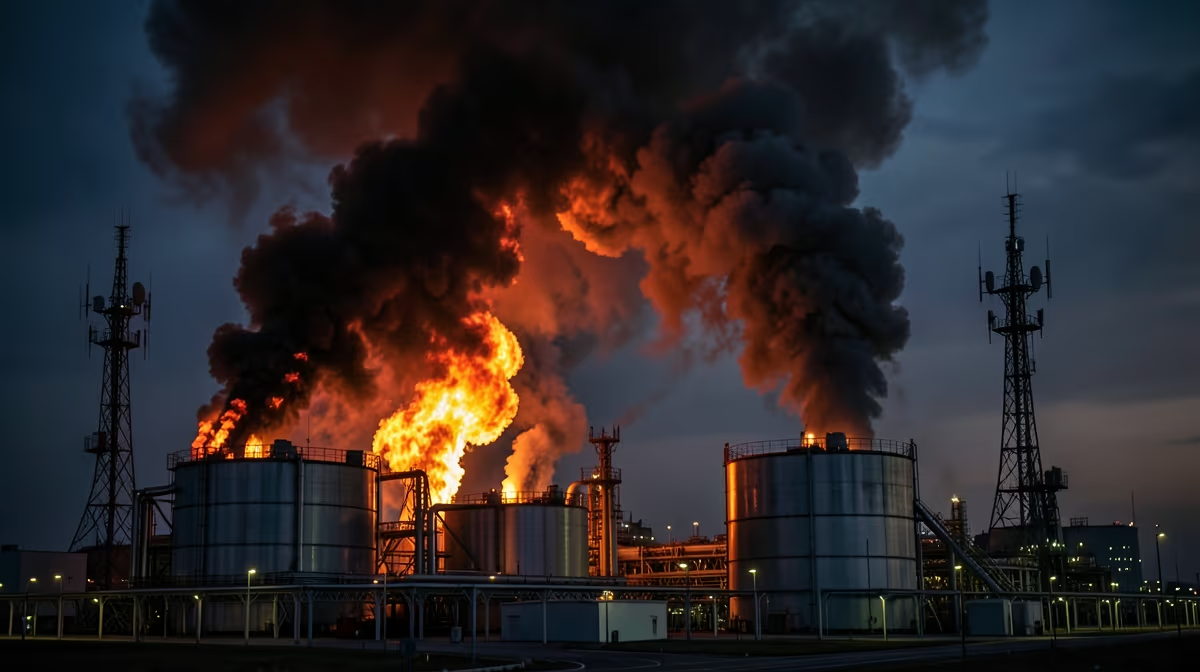
Billions of dollars in high-tech defense architecture have failed to shield the world’s most critical energy infrastructure from a series of sophisticated aerial penetrations. This breach, centered on a major Saudi Arabia oil depots strike, has ignited a forensic investigation into the vulnerabilities of Western-supplied missile shields against asymmetric warfare.
Houthi missile and drone strikes have hit oil depots and an administrative building belonging to Saudi Aramco, raising urgent questions over the effectiveness of advanced U.S.-supplied defense systems in Saudi Arabia. According to reports from major outlets including Reuters, Al Jazeera, and The Guardian, recent attacks have successfully targeted crucial infrastructure within the Kingdom, including oil depots in Yemen and sites near or within Riyadh, such as the Riyadh airport. The sophisticated aerial attacks have bypassed high-end defensive shields, prompting Saudi authorities to launch immediate probes into how their defense systems failed to intercept the incoming projectiles.
The repeated failures of high-end anti-missile shields against lower-cost asymmetrical threats may force a fundamental reevaluation of global air defense procurement strategies and doctrines.
Coordinated Strikes on Critical Infrastructure
The recent escalation in the region saw a major Saudi Arabia oil depots strike that rattled global energy markets. Saudi Arabia reported strikes on oil depots in Yemen alongside missiles launched toward the location of the Saudi Aramco headquarters. Additionally, an administrative building belonging to the Saudi oil giant Aramco was targeted, resulting in a limited fire. These events have drawn intense scrutiny toward regional security and the ongoing challenges faced by missile defense systems.
The incident highlights ongoing regional tensions and the persistent security challenges facing Saudi critical infrastructure. Despite billions spent on defense upgrades over the years, the recent breach at an Aramco administrative building demonstrates the continued threat posed by Houthi projectile capabilities. Officials are currently investigating the vulnerabilities that allowed the deadly strikes to penetrate heavily protected areas. International media and analysts are closely monitoring the unfolding situation as Riyadh evaluates its defensive posture and prepares official responses regarding the security lapses.
Impact on Energy Assets
Attacks on critical energy infrastructure like oil depots and major corporate facilities such as Aramco can disrupt global energy markets, impact oil supplies, and increase geopolitical tensions across the Middle East. The direct strikes on these facilities threaten global energy supply stability and risk driving up oil price volatility. Energy markets, regional residents in Saudi Arabia and Yemen, global consumers sensitive to oil price fluctuations, and security analysts are all closely watching the fallout from these strikes.
- Saudi Aramco administrative building: Limited fire reported after direct hit.
- Yemen Oil Depots: Targeted in simultaneous strikes.
- Riyadh Airport: Investigated for defense failures following a deadly attack.
- Aramco HQ: Location targeted by incoming missile launches.
Systemic Vulnerabilities in Advanced Air Defenses
Questions have been raised regarding why advanced U.S. weapons and billions spent on defense systems have struggled to stop recent Houthi attacks. Authorities are currently probing how defense systems failed to prevent a deadly Houthi attack on the Riyadh airport. This investigation focuses on persistent capability gaps in Saudi Arabia's advanced multi-layered air defense systems when facing asymmetric drone and missile barrages launched by Houthi forces from Yemen.
The repeated failures of these high-end anti-missile shields against lower-cost threats suggest a mismatch between expensive hardware and the reality of modern, asymmetric conflict. Analysts suggest that the limitations of billions of dollars in foreign military hardware are being tested by these escalations, especially amid wider tensions involving Iran.
A History of Defense Challenges
The conflict involving Houthi forces and a Saudi-led coalition in Yemen has spanned several years, frequently involving cross-border missile and drone strikes targeting infrastructure within Saudi Arabia. The current situation draws a clear historical parallel to the 2019 Abqaiq–Khurais drone and missile attacks on Saudi oil infrastructure. Both incidents underline the difficulty of maintaining a perfect defensive perimeter against coordinated, low-cost aerial threats.
Direct strikes on critical energy infrastructure, including oil depots and Saudi Aramco facilities, threaten global energy supply stability and risk driving up oil price volatility.
The Political and Geopolitical Dimension
The attacks place immense domestic pressure on the Saudi leadership to demonstrate absolute security and retaliatory deterrence. At the same time, the failures test the political reliability of Western defense partnerships. As Riyadh evaluates its defensive posture, the performance and reliability of anti-missile defense networks are under intense scrutiny.
The escalation highlights the limitations of expensive foreign military hardware and tests regional diplomatic efforts. Saudi authorities are expected to continue assessing damages from recent strikes while managing the political fallout of successful penetrations into the capital city and vital energy hubs.
| Date (2026) | Event Location | Reported Outcome |
|---|---|---|
| Oct 12 | Riyadh Airport | Deadly attack; probe launched into defense failure. |
| Oct 13 | Yemen Oil Depots | Multiple strikes reported on storage infrastructure. |
| Oct 13 | Aramco Admin Building | Attack confirmed; limited fire reported. |
| Oct 13 | Aramco HQ Area | Missiles launched toward HQ location; interception failed. |
Forensic Investigation and Future Readiness
Saudi officials are investigating the operational gaps in their missile defense systems following the recent breaches. Future responses will likely involve reassessing defense readiness and potentially upgrading interception tactics against Houthi projectiles. Defense officials and Saudi spokespersons are expected to issue formal statements addressing the security lapses and the status of the defense systems.
The full scope of the security failures, exact damage assessments, and official government remediation plans remain under investigation. Regional developments continue to be closely monitored by international news outlets including The Guardian, NBC News, PBS, Al Jazeera, CNN, and Reuters.
Predictor: Short-Term Security Outlook
In the next 24 hours, Saudi authorities are expected to continue assessing damages from recent Houthi missile and drone strikes targeting oil depots and the Aramco administrative building. Investigators will focus on identifying the specific failure points in the air defense system that allowed projectiles to reach Riyadh.
Within the next 72 hours, regional security evaluations and discussions regarding the effectiveness of advanced U.S. defense systems will likely intensify. Analysts expect heightened security alerts across all energy installations.
Potential Scenarios
- Best Case: Damages remain limited with no major casualties or prolonged supply disruptions, allowing defense teams to quickly patch vulnerabilities in interceptor systems.
- Worst Case: Continued successful penetrations by incoming projectiles trigger broader regional escalation, further compromising critical energy facilities and undermining confidence in national defense infrastructure.
Defense officials are looking to determine if the failures were due to technical malfunctions, saturation of the defense network, or inherent capability gaps in the face of newer drone technologies.
Frequently Asked Questions
What happened during the recent attacks in Saudi Arabia and Yemen?
Saudi Arabia conducted strikes on oil depots in Yemen while simultaneously facing incoming Houthi missile attacks targeting Riyadh and the Saudi Aramco headquarters. An Aramco administrative building was specifically hit, resulting in a limited fire.
Why are advanced U.S. defense systems failing to stop Houthi attacks?
Despite billions of dollars spent on defense infrastructure, Saudi Arabia's defense systems have experienced failures in intercepting incoming projectiles. Saudi authorities are actively probing how these defense lapses allowed deadly attacks, such as the one on Riyadh airport, to occur.
Who is affected by the escalating Houthi missile strikes?
The strikes directly impact Saudi infrastructure, including major oil facilities like Saudi Aramco and key transportation hubs such as Riyadh airport. Regional stability and global energy markets are also indirectly affected due to security threats near vital oil depots and corporate headquarters.
What happens next as Saudi Arabia investigates the defense failures?
Saudi officials are investigating the operational gaps in their missile defense systems following the recent breaches. Future responses will likely involve reassessing defense readiness and potentially upgrading interception tactics against Houthi projectiles.
What is the background of the conflict involving Houthi attacks on Saudi targets?
The ongoing hostilities involve cross-border missile and drone attacks launched by Houthi forces toward Saudi Arabian infrastructure, often intersecting with broader regional tensions involving Iran. These persistent strikes challenge the Kingdom's extensive multi-billion-dollar air defense network.
Was there significant damage reported at the Saudi Aramco building?
Reports indicate that a Saudi Aramco administrative building was struck during the attacks, leading to a limited fire. Fortunately, the incident was contained without widespread catastrophic destruction reported at the site.
Conclusion
The recent wave of strikes on Saudi Arabia's oil depots and Aramco facilities marks a critical juncture in the regional conflict. While the fires at the Aramco administrative building were limited, the successful penetration of air defenses in Riyadh and at major energy hubs has exposed significant capability gaps in the Kingdom's multi-billion-dollar security network. Saudi authorities are now tasked with a dual challenge: managing the immediate physical damage and restoring confidence in their national defense architecture. As investigations into the interceptor failures continue, the global energy market remains on high alert for further disruptions. The coming days will be defined by rigorous security evaluations and a potential shift in how Riyadh and its Western partners approach the evolving threat of asymmetric aerial warfare.
Sources
- Saudi Arabia strikes oil depots in Yemen and says missiles launched toward location of Saudi Aramco HQ — The Guardian
- Why advanced U.S. weapons aren’t stopping Houthi attacks in Saudi Arabia — NBC News
- Saudis probe how defense systems failed to stop deadly Houthi attack on Riyadh airport — PBS
- Iran war live: Houthis fire missiles at Saudi Arabia; Aramco building hit — Al Jazeera
- Why billions spent on defense haven’t shielded Saudi Arabia from Houthi attacks — CNN
- Saudi Aramco administrative building attacked, limited fire reported — Reuters


.webp)
