
South Korea Fuel Shipped to Russia Sparks Global Trade Alarm
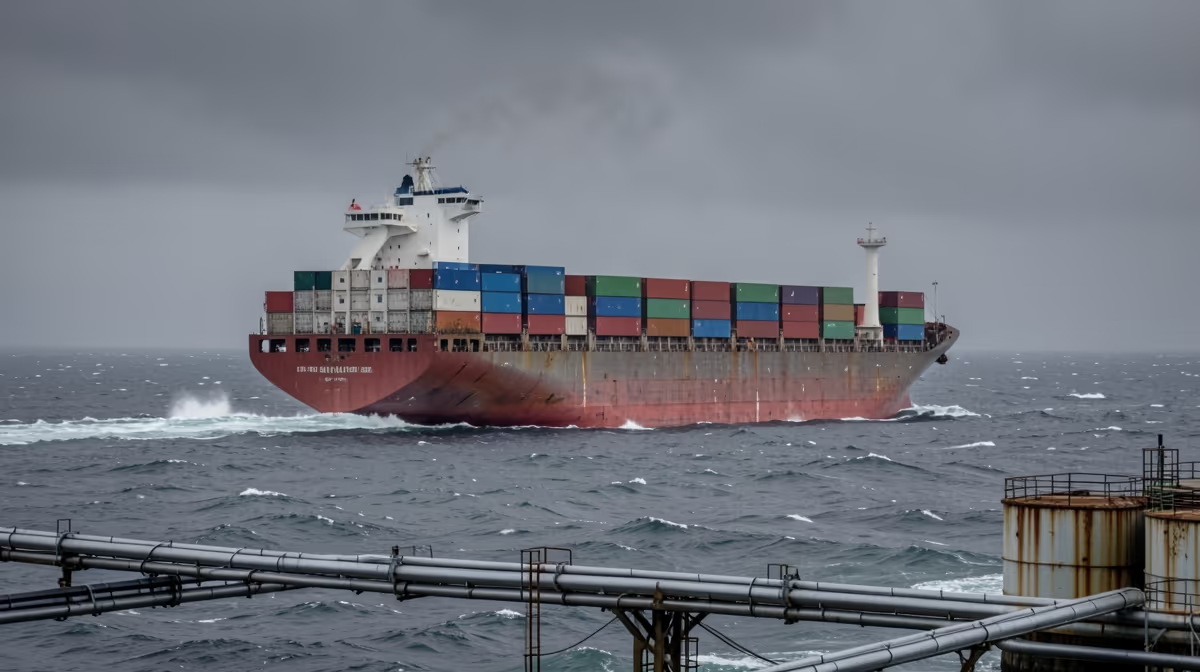
The invisible architecture of global energy trade often defies the rigid lines of international diplomacy. Even as geopolitical alliances solidify against the Kremlin, a subterranean flow of resources continues to bridge supposedly severed markets, revealing the friction between economic necessity and political intent. Recent reports highlight how South Korea fuel shipped to Russia continues to navigate complex international trade routes as the Ukraine war grinds on, presenting a significant challenge to the efficacy of global energy embargoes.
The movement of refined fuel products from South Korea to Russia highlights the complex nature of global energy markets and international trade during wartime, where commercial goods often find indirect pathways to reach restricted destinations despite strict government policies.
Tracing the Petroleum Supply Chain Amid Global Sanctions
The persistence of global energy supply chains remains a primary factor in the ongoing movement of goods between ostensibly adversarial nations. While international sanctions have been designed to isolate the Russian economy, the reality of maritime logistics suggests that refined fuel products are finding their way through a labyrinth of secondary shipping routes. These routes often involve refurbished fuel shipping, a process where refined petroleum products are rerouted or potentially blended to obscure their original provenance.
Reports from international observers and investigative bodies, including detailed coverage from The Guardian, indicate that fuel originating from South Korean territory is successfully reaching Russian destinations. This occurs despite South Korea’s general alignment with Western allies in enforcing sanctions against Russia since the invasion of Ukraine began. The complexity of these supply chains is not merely a matter of geographic distance but of legal and regulatory layering.
- Refined petroleum products are transferred through multiple intermediaries.
- Shipments often utilize third-party jurisdictions to facilitate trade.
- Maritime tracking data suggests potential blind spots where cargo may change ownership mid-voyage.
- These activities take place as the conflict in Ukraine continues to strain global supply compliance.
The Geopolitical Impact of South Korea Russia Trade Routes
The political dimension of these fuel shipments creates a delicate diplomatic balance for the South Korean government. As a key ally to Western nations, South Korea must navigate the pressure to uphold stringent sanctions while simultaneously managing its own domestic industrial and energy export interests. The global energy market is deeply interconnected, and for a nation like South Korea, which maintains a massive refining capacity, the total cessation of trade with a major regional player like Russia presents significant economic challenges.
The geopolitical angle of this situation suggests an erosion of sanction efficacy. When global supply networks remain decentralized, unilateral or allied trade restrictions often face structural limitations. The movement of South Korea fuel shipped to Russia serves as a case study in how energy resources can indirectly support a wartime economy, potentially undermining the strategic goals of the international community.
The flow of energy resources to Russia can indirectly support its wartime economy, undermining the effectiveness of international sanctions designed to pressure Moscow into ending the conflict in Ukraine.
Economic Arbitrage and the Role of Intermediaries
Global fuel markets are currently characterized by significant arbitrage opportunities. These financial incentives encourage intermediaries to reroute refined petroleum products through third-party jurisdictions to reach restricted markets where demand remain high. In the case of South Korea and Russia, the incentives for maintaining trade flows are driven by the lucrative nature of energy commodities during periods of high geopolitical volatility.
Refined fuels, unlike raw crude oil, are often harder to track once they enter the global distribution network. Systemic blind spots within port authorities and maritime tracking systems allow for refined fuels to subtly change destination. This "hidden angle" of the trade involves transshipment, where cargo is moved from one vessel to another or stored in intermediary Asian trading hubs before reaching its final destination in Russia.
The Mechanism of Indirect Supply
The mechanism of indirect supply relies on the fact that once a product leaves its port of origin, the level of oversight decreases. Analysts have noted that while the initial export might be documented toward a neutral port, the eventual landing in Russia is facilitated by a network of private entities that operate outside the immediate reach of national regulators. This decentralized nature of global trade makes it exceedingly difficult to ensure that every gallon of fuel complies with the spirit of international embargoes.
Historical Parallels and Systemic Blind Spots
The current situation bears a striking resemblance to historical patterns of sanction-busting seen in previous decades. The use of covert oil shipments and complex logistics to bypass trade restrictions is a tactic that has been employed during various 20th-century conflicts.
| Period | Logistics Strategy | Impact on Sanctions |
|---|---|---|
| Cold War | Rerouting through neutral intermediaries | Significant erosion of trade barriers |
| Iran-Iraq War | Covert shipments via third-party ports | Continued resource flow despite embargoes |
| Ukraine Conflict | Refurbished fuel shipping and transshipment | Challenges to Western energy isolation strategies |
As seen in the table above, the emergence of complex logistics networks routing refined fuels through Asian intermediary ports is a recurring theme in global conflict. The historical parallel suggests that as long as there is a significant price difference or a critical need for resources, trade will find a way to navigate around political obstacles. In the current context, the escalation of Western sanctions against Russian energy exports has directly led to the development of these alternative pathways.
Future Outlook and Diplomatic Consequences
The next 24 to 72 hours are expected to see increased international scrutiny regarding the specific supply chains linking South Korea to Russia. International trade monitors and diplomatic bodies are likely to issue inquiries or policy statements aimed at tightening enforcement. The predictor for the near future suggests that South Korean authorities may face heightened pressure from international partners to clarify the movement of these goods.
- Next 24 Hours: Expect increased scrutiny of maritime tracking data and secondary shipping routes.
- Next 72 Hours: Potential for official diplomatic inquiries regarding fuel shipments and sanctions enforcement.
- Long-term: Heightened pressure on Asian trading hubs to tighten monitoring on energy exports to prevent indirect flows to Russia.
The expert prediction in this area suggests that analysts expect a push for more transparent supply chain audits. The best-case scenario involves a swift closure of potential sanction loopholes without escalating regional trade tensions. However, the worst-case scenario involves persistent reports of diverted shipments triggering broader trade restrictions and diplomatic friction between South Korea and its Western allies.
The Bigger Picture: Global Energy Trade during Wartime
The movement of fuel supplies from South Korean territory toward Russia highlights the broader challenge of maintaining trade compliance as the Ukraine war grinds on. While international bodies continue to review trade data, the full regulatory implications and exact volumes of these shipments remain a developing situation. The people of Ukraine, governments enforcing sanctions, and international energy markets are all stakeholders in the outcome of these investigations.
Observers are closely monitoring these trade routes as the geopolitical impacts of the war unfold across different continents. The situation serves as a reminder that the global energy market is a vast, interconnected system where policy and practice do not always align. Further investigations into the logistics and regulatory compliance of these shipments are anticipated as international bodies seek to maintain the integrity of the sanctions regime.
Frequently Asked Questions
What is happening with South Korean fuel and Russia?
Reports indicate that fuel originating from South Korea is being shipped to Russia as the ongoing war in Ukraine continues. This trade occurs amidst complex international sanctions and shifting global energy pathways.
Why does the shipment of South Korean fuel to Russia matter?
The movement of energy supplies to Russia during the Ukraine conflict raises significant geopolitical and economic questions regarding the enforcement of global sanctions. It highlights how secondary trade routes can maintain resource flows despite heavy restrictions.
Who is affected by these fuel shipments?
The situation impacts international diplomatic relations, particularly concerning Western allies enforcing sanctions against Russia. Additionally, energy markets and policy makers in South Korea face scrutiny over these trade activities.
What happens next regarding these trade routes?
Monitoring bodies and international partners are likely to investigate the supply chains to determine the extent of these fuel transfers. Increased pressure may be applied to close potential loopholes exploited during the conflict.
What is the background of South Korea's involvement in trade during the Ukraine war?
South Korea has aligned with many international sanctions against Russia while managing its own economic and industrial trade needs. The ongoing conflict has continuously tested global compliance with embargoes on Russian commerce.
Which specific news outlet reported on the South Korean fuel shipments to Russia?
The Guardian published detailed reporting regarding the shipment of fuel from South Korea to Russia as the Ukraine war persists. Their coverage sheds light on the intricacies of wartime global supply chains.
Conclusion
The report of South Korea fuel shipped to Russia underscores the profound difficulty of severing global trade ties in an interconnected energy economy. As the conflict in Ukraine continues, the emergence of secondary shipping routes and the use of intermediaries have created a persistent flow of refined petroleum products into Russia, potentially blunting the impact of international sanctions. Verified facts from The Guardian confirm that these shipments are occurring, raising critical questions for international trade monitors and diplomatic authorities. While South Korea navigates its role as a key player in the global refining market and a partner to Western allies, the international community is expected to tighten oversight of maritime logistics to prevent further circumvention of energy embargoes. The coming days will likely bring increased pressure for transparency as regulators attempt to reconcile commercial realities with geopolitical objectives.
Sources
- Fuel from South Korea being shipped to Russia as Ukraine war grinds on — The Guardian
- The sexual abuse of disabled residents that shocked South Korea — BBC
- AI models used in bank cyber attacks, warns South Korea’s president — Financial Times
- South Korea captain apologises for gloating over military service exemption — BBC
- Asian Games: South Korea footballers apologise after military service remarks — ESPN
- South Korea players, including Tottenham’s Yang, apologise for celebrating military exemption — The New York Times


.webp)
