
Trump Putin Diesel Deal Shakes Up Global Energy Markets Completely
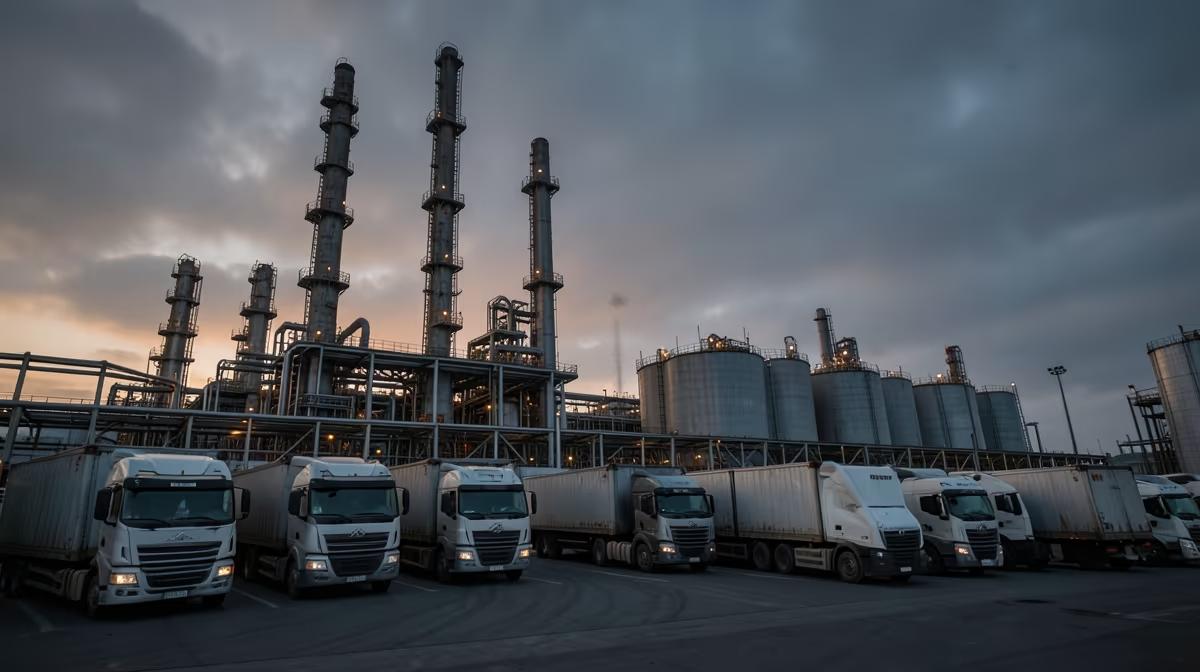
The global energy landscape is currently witnessing a drastic realignment as skyrocketing fuel costs threaten the operational stability of international commerce. The newly announced Trump Putin diesel deal has sent shockwaves through international markets, signaling a major shift in trade policies and energy supplies at a moment of acute economic tension.
The release of 300,000 tons of Russian diesel, facilitated by a strategic easing of U.S. sanctions, represents a pragmatic pivot intended to suppress massive energy price spikes and stabilize the global freight and agricultural sectors.
A Strategic Pivot in Energy Diplomacy
The agreement, announced by President Donald Trump following negotiations with Russian President Vladimir Putin, targets the immediate supply of 300,000 tons of diesel fuel. This move is a direct response to the intense domestic price spikes and tightening fuel supplies that have recently placed immense pressure on both U.S. and international markets. By injecting this specific volume into the energy grid, the administration aims to shock physical supply chains and cool soaring wholesale prices that have been fueled by scarcity and geopolitical friction.
To facilitate this emergency influx, the U.S. administration has moved to ease certain sanctions previously placed on Russia. This adjustment is not merely a logistical necessity but a significant policy shift. By partially relaxing these economic restrictions, the administration is testing the flexibility of Western economic isolation frameworks against the immediate imperatives of global energy security. Analysts view this as an implicit testing ground for carving out pragmatic energy exceptions within broader sanctions regimes to prevent systemic supply shocks that could lead to widespread industrial paralysis.
The Mechanics of the Agreement
The deal is designed for speed, with the 300,000 tons of diesel slated for immediate release. Major international outlets, including Reuters, NBC News, and the BBC, confirmed the development on Friday, October 9, 2026. The suddenness of the policy shift highlights the urgency felt by policymakers to address the inflationary pressures on consumers and businesses.
| Event Stage | Description |
|---|---|
| Trigger | Severe price spikes in U.S. and global fuel markets |
| Negotiation | Breakthrough agreement between Trump and Putin |
| Implementation | Immediate release of 300,000 tons of diesel fuel |
| Facilitation | Targeted easing of specific Russian sanctions |
Quantifying the Market Impact
The injection of 300,000 tons of diesel is intended to provide immediate financial relief to everyday shoppers and struggling industries. This volume, while a fraction of total global consumption, acts as a critical buffer during a period of extreme supply constraints. The goal is to mitigate the inflationary pressures that have been compounding across freight, agriculture, and manufacturing.
Why Diesel Matters to Global Stability
Diesel fuel is often described as the lifeblood of global commerce, and for good reason. It powers the vast majority of the world's delivery trucks, agricultural machinery, heating systems, and cargo ships. When diesel prices spike, the cost of transporting nearly every consumer good rises, driving up inflation across the board.
- Logistics and Trucking: High fuel costs increase the overhead for moving goods from ports to store shelves.
- Agriculture: Farmers rely on diesel-powered heavy machinery for planting and harvesting; expensive fuel translates to higher grocery prices.
- Manufacturing: Factories and production lines often depend on diesel for power generation and material transport.
- Maritime Trade: Cargo ships that move the majority of international trade are sensitive to fluctuations in petroleum markets.
Diesel fuel is the lifeblood of global commerce, powering everything from delivery trucks and agricultural machinery to heating systems and cargo ships.
By easing these prices through an emergency supply injection, the administration hopes to provide a reprieve to industries that are currently operating on thin margins due to energy costs.
Navigating the Political and Geopolitical Landscape
The Trump Putin diesel deal navigates a delicate political environment. President Trump’s move leverages short-term consumer relief to counter the political fallout from high energy costs. However, it also requires navigating significant domestic opposition to any perceived concessions toward Moscow. The decision to ease sanctions, even in a targeted manner, marks a notable intersection of energy market intervention and foreign policy.
Testing the Sanctions Framework
The geopolitical angle of this agreement suggests a shift toward a more transactional approach to energy security. By allowing Russian fuel distribution, the U.S. is prioritizing immediate domestic and global economic stability over the rigid maintenance of total economic isolation for Russia. This arrangement may signal a broader willingness to adapt sanctions when they begin to have a counter-productive effect on the global economy.
Future Outlook and Market Predictions
In the immediate 24 hours following the announcement, markets and analysts are expected to evaluate the specific impact of the supply deal and the easing of related sanctions on regional pricing. The next 72 hours will be critical as the implementation details of the 300,000-ton release unfold, which will directly affect global market sentiment and fuel price trajectories.
Expert Projections
Energy analysts expect a short-term stabilization in fuel prices as the initial volume is prepared for release. The following scenarios represent the spectrum of potential outcomes:
- Best Case: The release successfully alleviates massive price spikes and restores enough fuel supply to stabilize both domestic and international markets, lowering costs for consumers.
- Worst Case: Logistical hurdles and complications in the sanction adjustment process delay the delivery of the fuel, failing to meaningfully lower prices and leaving consumers burdened by high costs.
The full operational logistics of the delivery and the exact impact on global diesel prices remain under close observation by energy sector experts and political commentators alike.
Frequently Asked Questions
What is the diesel supply deal between Trump and Putin?
Donald Trump announced a new agreement with Russian President Vladimir Putin for Russia to immediately supply 300,000 tons of diesel fuel. This deal aims to ease mounting energy pressures amid significant market shifts.
Why did Trump and Putin agree to release Russian diesel now?
The agreement comes in response to massive price spikes and severe supply constraints affecting energy markets. By easing certain Russia sanctions, the arrangement seeks to stabilize fuel availability globally.
Who is affected by the Trump-Putin diesel agreement?
Consumers and industries reliant on diesel across the United States and global markets stand to be directly impacted by the influx of fuel. The deal is designed to relieve economic burdens caused by surging energy costs.
What specific amount of diesel is Russia supplying under the deal?
Under the terms announced by Trump, Russia is set to immediately supply 300,000 tons of diesel fuel to help address current shortages. This initial release is a key component of the broader diplomatic and economic arrangement.
How does this deal relate to existing U.S. sanctions on Russia?
The agreement involves Trump easing specific Russia sanctions that previously restricted energy trade. This temporary or targeted relaxation was necessary to allow the release of Russian diesel into the U.S. and international markets.
What happens next following the announcement of the diesel deal?
Markets are closely monitoring the immediate delivery of the 300,000 tons of diesel to see if it successfully lowers prices. Observers will also be watching for any further adjustments to sanctions or future energy agreements between the nations.
Conclusion
The agreement between President Trump and President Putin to supply 300,000 tons of Russian diesel marks a significant intervention in the global energy market. This move, necessitated by massive price spikes and severe supply constraints, relies on the targeted easing of sanctions to facilitate a rapid influx of fuel. While the immediate goal is to stabilize prices and provide relief to consumers and key industries like agriculture and logistics, the broader implications for international trade and sanctions policy are still unfolding. As the implementation of the fuel release begins, global markets will remain focused on whether this diplomatic maneuver successfully mitigates the ongoing energy crisis or encounters logistical and political hurdles that limit its impact.
Sources
- Trump says Russia to immediately supply 300,000 tons of diesel fuel — Reuters
- Trump eases Russia sanctions, says Putin will release diesel amid massive price spikes — NBC News
- Trump strikes deal with Putin to supply Russian diesel to U.S. and global markets — CNBC
- Trump announces deal with Putin to release Russian diesel — BBC
- Trump says he reached a diesel supply deal with Putin — Axios
- Trump, Putin reach deal to release Russian diesel to world — DW.com


.webp)
