
Trump Tech Summit Awards Honor Elon Musk and Industry Leaders
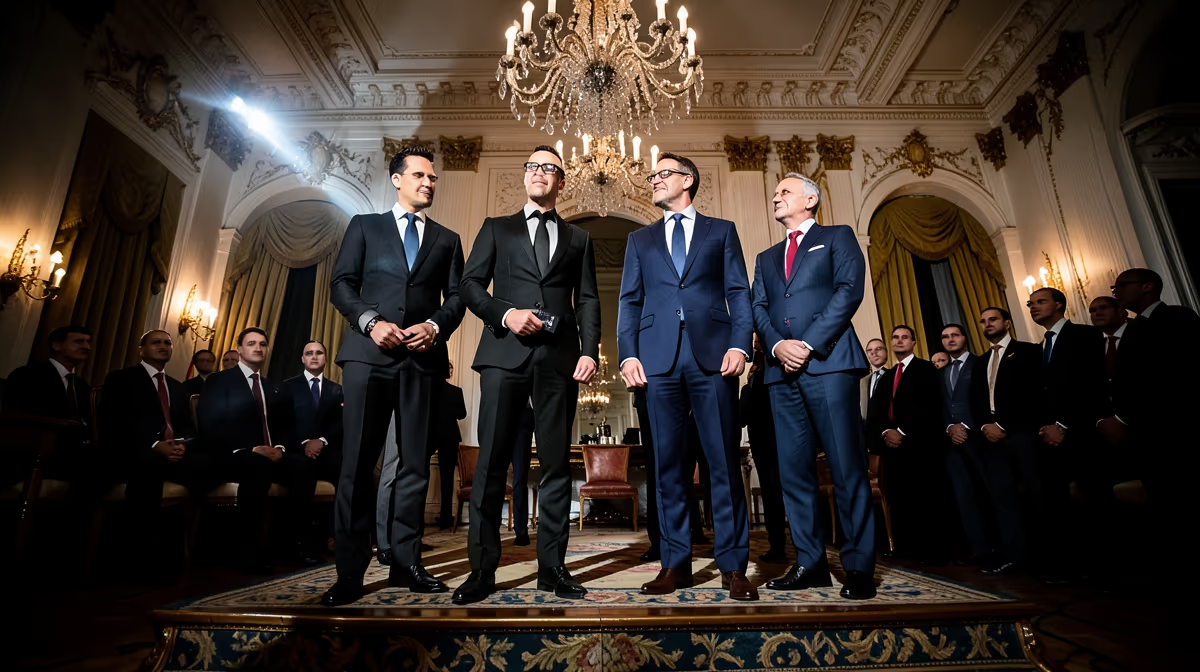
The doors of the White House have opened to the architects of the modern digital age, signaling a profound shift in how the American executive branch aligns with Silicon Valley’s elite. At the center of this gathering is a high-profile ceremony for the Trump tech summit awards, recognizing prominent figures including Elon Musk, Jensen Huang, and Satya Nadella for their contributions to innovation and American technological dominance.
The recognition of figures like Elon Musk and Jensen Huang underscores the immense market capitalization and economic leverage held by a handful of US tech monopolies driving the national innovation agenda.
Honoring the Architects of Innovation
The high-profile event brings major tech leaders, including Tesla and SpaceX CEO Elon Musk, back to the White House to receive prestigious honors. This ceremony, described as a prestigious first of the presidency, focuses on achievements in science, technology, and industry innovation. Reports indicate that Nvidia CEO Jensen Huang is also among those slated to be recognized with science awards during the summit.
The gathering serves as a clear indication of the ongoing relationship between the administration and key figures in the technology sector. By honoring these executives, the government is celebrating the advancements and contributions made by industry giants to the scientific landscape of the United States. Further details regarding the specific categories of the medals and the full list of honorees are expected to emerge as the summit proceeds, though the presence of CEOs from Microsoft and Dell indicates the broad reach of the event.
Key Figures in Attendance
- Elon Musk: CEO of Tesla and SpaceX, returning to the White House for these prestigious honors.
- Satya Nadella: CEO of Microsoft, recognized for his role in leading one of the world's largest computing and AI entities.
- Michael Dell: Founder and CEO of Dell Technologies, representing the hardware and infrastructure backbone of the tech industry.
- Jensen Huang: CEO of Nvidia, a central figure in the current artificial intelligence and semiconductor expansion.
Strategic Implications of the Science Medals
The strategic alignment between the administration and major technology leaders highlights an effort to institutionalize public-private partnerships in critical technology sectors. This is not merely a ceremonial event; it is an attempt to forge deeper ties in fields like AI, aerospace, and computing. When political leaders honor top business and technology figures, it signals the growing influence of the tech sector on national priorities.
These moments often highlight which industries and innovations the government values most, potentially shaping future policies around technology, artificial intelligence, and space exploration. Analysts suggest that the summit may function as a behind-the-scenes negotiation forum regarding upcoming regulatory frameworks, antitrust scrutiny, and federal procurement contracts disguised as a ceremonial honoring of scientific achievement.
Geopolitical Supremacy and the Corporate Front
Consolidating the domestic tech elite behind national awards projects a formidable state-corporate front against global competitors. This is particularly relevant in the escalating race for technological and artificial intelligence supremacy. By bringing these titans under the umbrella of federal recognition, the administration seeks to project a united national front in technological dominance.
The event serves as a high-profile platform for political rehabilitation and alliance-building. It bridges past friction between political leadership and tech titans, aligning their interests with the state’s geopolitical goals. This unified front is intended to demonstrate American strength in the sectors that will define the 21st-century global economy.
A Historical Parallel
This alignment echoes the post-WWII mobilization of corporate industrial leaders and scientists under federal advisory committees. During that era, such partnerships were essential to secure US technological and military hegemony. Today’s ceremony reflects a similar pivot, where the federal government seeks to harness the power of private-sector monopolies to maintain a competitive edge on the world stage.
Economic Leverage and the Innovation Agenda
The recognition of leaders like Satya Nadella and Michael Dell underscores the immense market capitalization represented in the room. These individuals lead companies that serve as the primary drivers of the national innovation agenda. Their influence extends beyond the stock market, affecting technology policy, government relations, and public perception of progress.
| Event Phase | Key Development |
|---|---|
| Phase 1 | Initial policy alignments and high-level advisory engagements between administration and tech executives. |
| Phase 2 | Formal announcement of the science summit and presidential honors for industry leaders. |
| Phase 3 | White House summit featuring the awarding of medals to Musk, Dell, Nadella, and Huang. |
This table illustrates the progression of engagement that culminated in the current summit. The honors are the result of ongoing efforts to bring the technology sector’s leadership into the fold of federal strategic planning.
Future Outlook: Cooperation or Controversy?
Following the summit and medal presentations, industry watchers anticipate continued collaboration and policy discussions between Silicon Valley leaders and the federal government. The high-profile event may pave the way for further public-private initiatives in science and emerging technologies. However, the path forward is not without potential friction.
Expert Predictions and Scenarios
Analysts would likely expect heightened discussion regarding the evolving relationship between the administration and prominent figures in the technology sector. The following scenarios represent the potential outcomes of this summit:
- Best Case: The recognition fosters increased collaboration between tech innovators and federal initiatives to advance national science and technology goals, leading to streamlined innovation pipelines.
- Worst Case: The event draws polarizing public and political reactions regarding the close alignment between government officials and major tech executives, potentially triggering concerns over influence and oversight.
In the next 24 hours, further coverage of the science summit is expected to provide more specifics on the medals awarded. Within the next 72 hours, continued analysis will likely focus on the strategic partnerships and the implications of these honors for future government-industry cooperation.
The summit may function as a behind-the-scenes negotiation forum regarding upcoming regulatory frameworks, antitrust scrutiny, and federal procurement contracts.
The Evolving Relationship
The return of Elon Musk to the White House for this occasion marks a significant moment in the administration’s engagement with industry innovators. As the summit concludes, the focus will shift to how these honors translate into policy. The presence of Nvidia’s Jensen Huang and Microsoft’s Satya Nadella indicates that the administration is prioritizing the leaders of the AI revolution, recognizing that the future of national security and economic growth is inextricably linked to the hardware and software these companies produce.
The Trump tech summit awards are a symbolic and strategic milestone, signaling that the boundary between the federal government and the technology industry is becoming increasingly porous as the nation seeks to maintain its global leadership in innovation.
Frequently Asked Questions
Why did Donald Trump award medals to tech executives like Elon Musk and Satya Nadella?
President Donald Trump awarded prestigious science medals to top technology executives, including Elon Musk, Michael Dell, and Satya Nadella, during a White House science summit. The event marked a significant gathering of prominent industry leaders being honored for their contributions.
Which tech leaders were honored by Trump at the White House science summit?
The honorees at the White House event included high-profile figures such as Elon Musk, Michael Dell, Microsoft CEO Satya Nadella, and Nvidia's Jensen Huang. These executives were recognized as part of a prestigious first of the presidency focused on science and technology achievements.
What is the significance of Elon Musk returning to the White House for these awards?
Elon Musk's return to the White House to receive a science award highlights the strengthening ties between the administration and leading figures in the technology sector. It underscores the administration's recognition of key innovators driving advancements in science and tech.
How does honoring tech execs like Jensen Huang and Satya Nadella impact the industry?
Recognizing leaders from companies like Nvidia and Microsoft brings heightened national attention to the critical role technology and artificial intelligence play in the US economy. It fosters a closer dialogue between top-tier innovators and federal policymakers.
What background details surround Trump's science summit awards?
The ceremony took place at the White House as part of a newly established presidential initiative to honor top minds in science and technology. Media outlets like CNBC, Fox News, and Bloomberg heavily covered the high-profile gathering of industry titans.
What happens next following the tech executives' White House recognition?
Following the summit and medal presentations, industry watchers anticipate continued collaboration and policy discussions between Silicon Valley leaders and the federal government. The high-profile event may pave the way for further public-private initiatives in science and emerging technologies.
Conclusion
The awarding of science medals to Elon Musk, Michael Dell, Satya Nadella, and Jensen Huang marks a turning point in the relationship between the federal government and the technology sector. By honoring these industry titans at a White House summit, the administration has signaled its intent to integrate the nation's most powerful corporate innovators into its broader strategic and geopolitical goals. While the event celebrates scientific and technological achievement, it also sets the stage for future negotiations regarding regulation, antitrust policy, and the direction of the American innovation agenda. As the details of the summit continue to emerge, the focus remains on whether this recognition will lead to a new era of public-private cooperation or spark political debate over the proximity of government leadership to big tech monopolies. Regardless of the outcome, the summit has successfully projected a image of technological unity and national dominance on the global stage.


.webp)
