
Akash Deep Injury Blow Forces India to Rethink Second Test Strategy
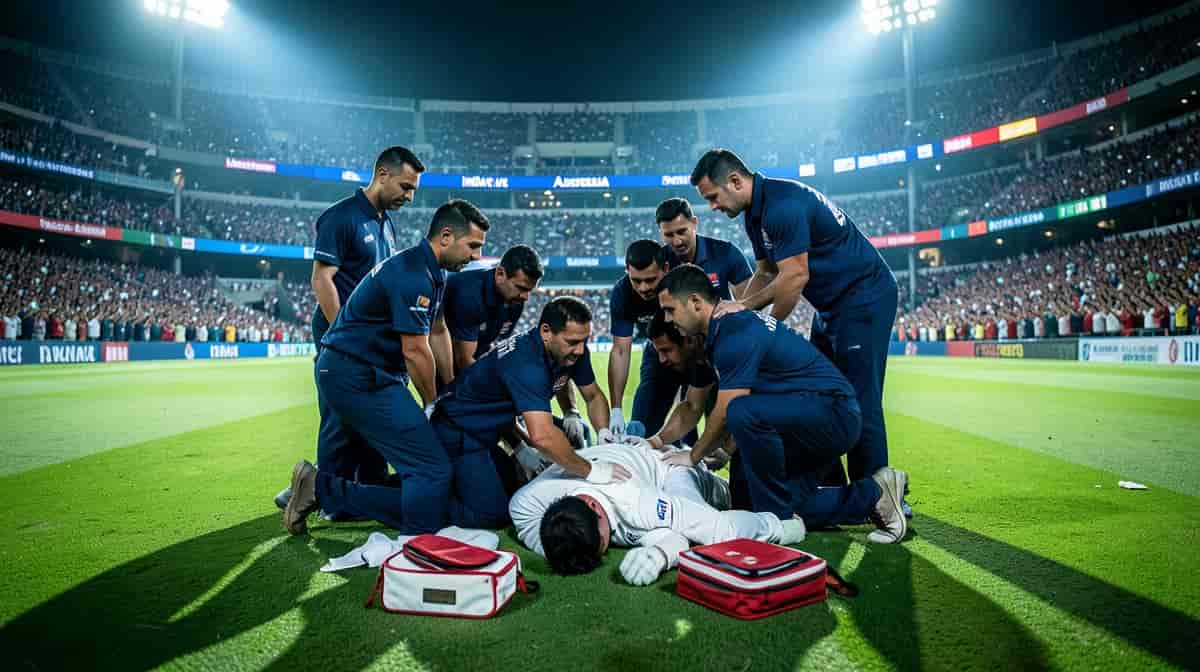
The high-stakes environment of a Test series often turns on physical resilience as much as technical skill, a reality that the Indian camp has faced with sudden intensity. India suffer a major blow ahead of the upcoming match as Akash Deep concussion concerns have forced the team management to rule him out of the crucial fixture.
The incident took place during the second Test against New Zealand in Christchurch, where the pace and bounce of the local tracks pushed the physical limits of the playing XI. While the match was in a state of high tactical flux, the immediate priority shifted from run rates to player welfare as the fast bowler was forced to exit the field. This development has not only altered the immediate bowling composition for the Christchurch Test but has also ignited a broader conversation regarding team selection and the strategic depth of the Indian bench.
Concussion protocols allow teams to replace injured players safely with like-for-like personnel, ensuring that medical safety takes precedence over match conditions.
The Incident in Christchurch
The second Test match in New Zealand has been characterized by its intense physical demands and the seamer-friendly conditions that define the Christchurch venue. During the heat of the competition, Akash Deep sustained a head or neck impact severe enough to trigger the International Cricket Council (ICC) concussion protocols. These protocols are strictly enforced to ensure that any athlete showing symptoms of a concussion receives immediate medical attention and is not pressured to continue playing in a high-intensity environment.
Following the impact, match officials and medical staff conducted a thorough evaluation of the injury. The assessment confirmed that the bowler could not safely continue his participation in the match. This ruling dealt a significant setback to the Indian bowling attack, which relies heavily on the rhythm and control that Akash Deep provides in these specific overseas conditions. The sudden nature of the injury required the team management to act swiftly, engaging the match referee to facilitate a formal substitution.
Tactical Implications of the Concussion Substitute
To maintain a full playing XI, the Indian team management named Prasidh Krishna as the concussion substitute. Under the ICC regulations, a concussion sub must be a "like-for-like" replacement, meaning a fast bowler must be replaced by a player with similar primary skills. This mid-match change allowed India to avoid a numerical disadvantage, but it did not shield the team from tactical scrutiny.
The choice of Prasidh Krishna over other available options, most notably Mohammed Siraj, became a central point of discussion among experts and analysts. The decision to bring in Krishna was observed closely by senior players and commentators who were monitoring the strategic balance of the squad.
The Selection Debate
The substitution sparked an immediate debate regarding match readiness and bowler freshness. While Prasidh Krishna was ready to step in, some analysts questioned if other established bowlers might have offered a different tactical advantage.
- The selection of Prasidh Krishna was intended to provide a direct replacement for Akash Deep’s role.
- Mohammed Siraj was a prominent alternative, but the management opted for Krishna.
- Former players like Ravichandran Ashwin weighed in on the logic, suggesting that factors like bowler freshness played a role in the decision.
- Ashwin specifically noted that "Siraj could be too fresh," implying that match-readiness and the specific workload requirements of the ongoing Test were key factors in the management's thinking.
Understanding the Concussion Protocol
The adoption of concussion substitutes in international cricket is a relatively modern development, designed to address the inherent risks of a sport where the ball can reach speeds exceeding 140 km/h. These protocols ensure that player safety is prioritized, removing the "tough it out" culture that previously dominated professional athletics.
Concussion substitutes were formally introduced into international cricket by the ICC to address player safety concerns, allowing a direct like-for-like replacement when a player suffers head or neck trauma.
This regulation prevents teams from being penalized for doing the right thing medically. In the past, a team losing a player to a head injury would simply have to play one man short, which often led to players staying on the field while compromised. The historical parallel most often cited for this rule is the 2019 Ashes series, where Marnus Labuschagne replaced Steve Smith, marking a turning point in how the sport manages mid-match trauma.
Analyst Perspective: Root Causes and Angles
Analysts looking at the situation in Christchurch point to the high-intensity physical demands of modern Test cricket as a primary driver. When combined with the specific conditions in New Zealand, where the ball moves sharply and the pitches offer significant bounce, the risk of impact injuries increases for both batsmen and bowlers.
The Economic and Geopolitical Dimensions
The impact of such an injury extends beyond the boundary ropes. Player availability and squad depth directly influence India's performance in high-profile ICC World Test Championship (WTC) fixtures.
| Angle | Impact Description |
|---|---|
| Economic | Squad depth impacts broadcast valuations and sponsorship yields for high-stakes fixtures. |
| Geopolitical | Bilateral series serve as high-stakes sporting diplomacy; squad adjustments alter the competitive balance abroad. |
| Strategic | Teams must now rely more heavily on specialized bench strength to maintain performance levels during unexpected injuries. |
From a board-level perspective, selection politics and internal management are often scrutinized when a substitute is called. The decision-making process involving the match referee and the team's medical staff must be transparent to maintain the integrity of the "like-for-like" replacement rule.
A Shifting Landscape for the Bowling Attack
Losing a key bowler like Akash Deep is a blow to the tactical game plan that was likely established days before the toss. Akash Deep’s ability to find a consistent length and maintain pressure was a cornerstone of the Indian strategy for the Christchurch Test. His absence forces the remaining bowlers to adjust their workloads and their approach to the New Zealand batting lineup.
The transition to Prasidh Krishna requires the team to adapt on the fly. While Krishna brings his own set of skills, including significant height and the ability to extract extra bounce, he must integrate into an ongoing match rhythm without the benefit of a standard pre-match buildup. This puts immense pressure on both the individual player and the team leadership to ensure the bowling units remain cohesive.
Future Outlook: The Next 72 Hours
The Indian cricket team faces a challenging road ahead as they navigate the remainder of the second Test. The medical team will be the primary focus as they monitor Akash Deep’s recovery.
- Next 24 Hours: The team will continue the match with Prasidh Krishna acting as the concussion sub, while management addresses tactical implications on the field.
- Next 72 Hours: Post-match analysis and rigorous medical assessments of Akash Deep’s concussion will dominate sports news.
- Medical Protocol: The player will undergo a standard recovery timeline, which typically involves restricted activity followed by a gradual return to training, provided symptoms do not persist.
The expert prediction suggests that while the team will focus on the immediate match, the long-term evaluation of the decision to choose Krishna over Siraj will be a major talking point in the sports media. The best-case scenario for the team is that Prasidh Krishna delivers a strong performance that aids India's competitive standing without further injury concerns. Conversely, the worst-case involves the absence of Akash Deep leading to a breakdown in bowling strategy, which would inevitably lead to further scrutiny of the management's selection calls.
Frequently Asked Questions
Why was Akash Deep ruled out of the 2nd NZ Test?
Akash Deep was ruled out of the second Test against New Zealand due to a concussion sustained during the match. Concussion protocols require players to be immediately substituted to ensure proper medical evaluation and recovery.
Who replaced Akash Deep in the Indian squad?
Fast bowler Prasidh Krishna was named as the concussion substitute to replace Akash Deep in Christchurch. His inclusion allowed India to maintain a full complement of players on the field despite the unexpected injury.
What did analysts say about choosing Prasidh Krishna over Mohammed Siraj?
Discussions arose regarding the selection of Prasidh Krishna over Mohammed Siraj, with experts like Ravichandran Ashwin weighing in on the decision. Some analysts debated whether Siraj might have been a different tactical option, though the team ultimately proceeded with Prasidh as the concussion replacement.
How do concussion substitutes work in Test cricket?
Under ICC regulations, a team is allowed a like-for-like replacement when a player suffers a diagnosed concussion during a match. This ensures player safety is prioritized without penalizing the team with a numerical disadvantage.
What impact does Akash Deep's absence have on India's bowling attack?
Losing Akash Deep is a significant blow to India's bowling plans in New Zealand conditions, where his rhythm and control were valuable. The team had to quickly adjust their bowling combinations to compensate for his sudden departure.
Where is the second Test against New Zealand being played?
The second Test match is taking place in Christchurch, New Zealand. The fixture has faced dramatic momentum shifts, compounded by the unexpected mid-match personnel change due to the concussion.
Conclusion
The forced withdrawal of Akash Deep from the Christchurch Test serves as a stark reminder of the physical risks inherent in elite-level cricket. By following the strict concussion protocols, the Indian team management has prioritized player safety, even at the cost of tactical continuity. The inclusion of Prasidh Krishna as a concussion substitute has ensured that India remains competitive with a full bowling complement, though the strategic debate regarding his selection over Mohammed Siraj will likely continue through the post-match analysis. As the team moves forward, the focus remains on the immediate performance in the second Test and the medical recovery of Akash Deep. Realistic next steps involve a comprehensive medical review for the injured bowler and a tactical debrief to evaluate how the bowling unit adapted to this unexpected mid-match personnel shift.
Sources
- Prasidh comes in as concussion sub for Akash Deep in Christchurch — Cricinfo
- India suffer major blow as Akash Deep ruled out of 2nd NZ Test due to concussion, Prasidh Krishna named s — The Times of India
- Akash Deep injured; Prasidh Krishna comes in as concussion substitute — The Hindu
- Prasidh Krishna replaces Akash Deep as concussion sub for Christchurch Test — Cricbuzz
- Ashwin on Prasidh Krishna replacing Akash Deep: ‘Siraj could be too fresh’ — The Indian Express
- Prasidh over Siraj: Did India blunder concussion sub call in 2nd Test? — India Today


