
Indian Naval Academy Honors Bangladeshi Cadet in Historic Parade Move
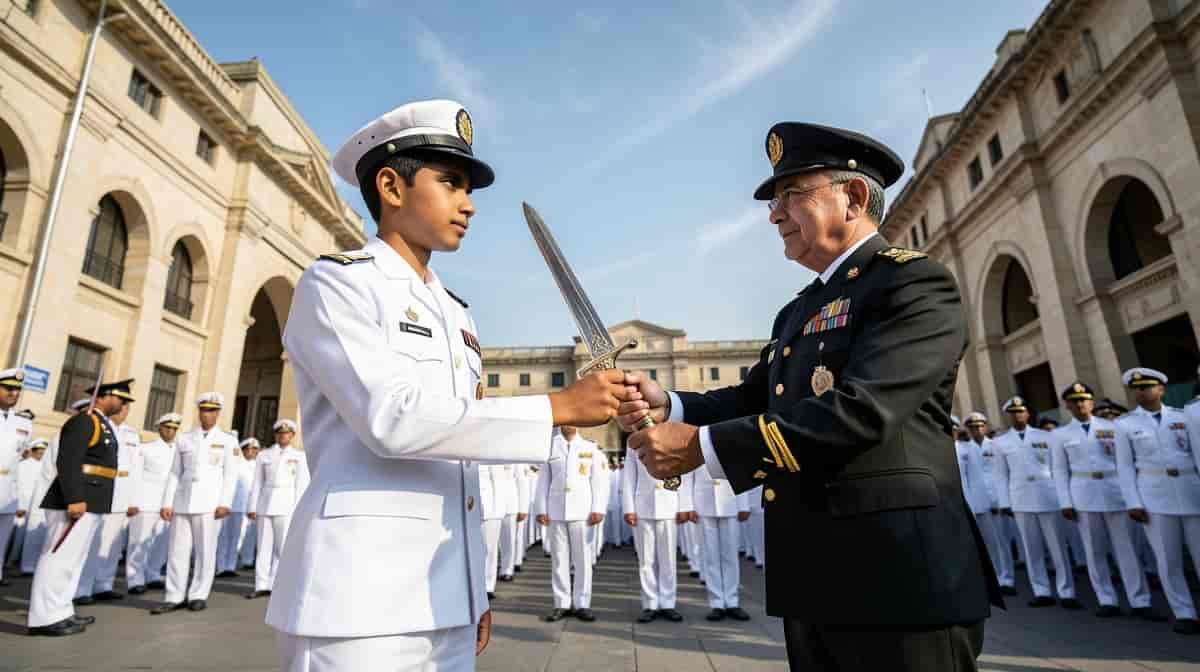
In a momentous event highlighting international military cooperation, a talented Bangladeshi cadet Indian Navy trainee has been honored as the Best International Cadet at the prestigious Indian Naval Academy. This recognition, occurring amidst the high-stakes environment of regional maritime security, underscores the deepening institutional linkages between India and its neighboring maritime partners.
The achievement serves as a testament to the rigorous training standards maintained at the Indian Naval Academy (INA) and the growing proficiency of international officers who undergo instruction alongside their Indian counterparts. As the Autumn Term 2026 concludes, the spotlight on Cadet Raza emphasizes a broader strategy of military diplomacy that transcends simple classroom instruction, fostering lifelong professional bonds that define the geopolitical landscape of South Asia.
The recognition of international cadets fosters stronger defense diplomacy, mutual trust, and enhanced professional military cooperation between India and Bangladesh.
Celebrating Excellence at the Indian Naval Academy Passing Out Parade
The Autumn Term 2026 Passing Out Parade at the Indian Naval Academy (INA) in Ezhimala, Kerala, marked a significant milestone in the careers of 427 graduating trainees. This grand ceremony, held on November 28, 2026, was reviewed by President Droupadi Murmu, who served as the chief guest for the occasion. The parade represents the culmination of years of intense physical, mental, and professional training designed to prepare the next generation of naval leaders.
Among the graduating class, the performance of international trainees was a point of particular focus. The academy continues to serve as a premier global training hub, welcoming cadets from friendly foreign nations to build a foundation of mutual respect and operational interoperability. The presence of the President of India as the reviewing officer added a layer of national significance to the event, highlighting the importance the Indian government places on its naval forces and its international defense partnerships.
The Achievement of Cadet Raza
The highlight of the international recognitions during the parade was the presentation of the Best International Cadet award to a Bangladeshi cadet named Raza. This prestigious title is not merely an academic honor; it is awarded to the trainee who demonstrates exceptional leadership, tactical proficiency, and overall excellence throughout the demanding training cycle.
For Cadet Raza, this achievement reflects a high level of dedication and adaptability, having successfully navigated the rigorous curriculum of the INA. The award serves as a symbol of the high caliber of trainees being sent by the Bangladesh Navy for professional development in India. Such recognitions are pivotal in building the confidence and prestige of international officers, who will eventually return to their home nations to serve in critical operational roles.
Strengthening Bilateral Defense Ties Between India and Bangladesh
The awarding of a Bangladeshi cadet at India’s premier naval institution is more than a graduation highlight; it is a calculated component of bilateral defense engagement. Military education diplomacy serves as a stable conduit for engagement between New Delhi and Dhaka, allowing both nations to maintain professional defense ties even amidst shifting political landscapes.
These institutional linkages provide a sense of continuity. By training together, officers from both navies develop a shared professional language and mutual understanding of maritime protocols. This foundation is essential for coordinated efforts in the Indian Ocean Region, where both nations share interests in maritime safety, disaster response, and the protection of sea lanes.
Geopolitical and Strategic Implications
The training of international cadets at the INA reinforces India's role as a net security provider and a preferred security partner in the Indian Ocean Region. By offering world-class training to neighboring nations, India builds a network of officers across the region who are familiar with Indian naval doctrine and operational procedures.
Such interpersonal and institutional military ties often function as resilient diplomatic backchannels during periods of broader bilateral political friction.
This "hidden angle" of military diplomacy suggests that the relationships formed at the academy provide a safety net for regional stability. Historically, long-standing programs of military training exchanges between allied nations have been used to build strategic interoperability, a trend that the INA is actively continuing into the late 2026 term.
Presidential Mandate: Upholding Public Trust
During her address at the Passing Out Parade, President Droupadi Murmu emphasized the weighty responsibilities that come with a commission in the armed forces. She noted that naval officers must uphold public trust and contribute significantly to the vision of 'Viksit Bharat' (Developed India). The President’s speech connected the personal achievements of the cadets to the broader national and global goals of security and development.
The President’s review of the 427 trainees was a formal acknowledgment of their readiness to take on operational duties. Her emphasis on public trust serves as a reminder that the military remains one of the most respected institutions in the country, and its officers are the guardians of that reputation. For the international cadets, including Raza, these words resonate as a universal call to professional integrity and service to their respective nations.
A Shifting Landscape of Naval Training
The Indian Naval Academy’s reputation as a global center for maritime education has seen a steady rise. The inclusion of diverse nationalities in the Autumn Term 2026 illustrates the academy's commitment to fostering a multinational learning environment. This diversity prepares Indian cadets to work in multi-national task forces and provides foreign cadets with access to advanced naval technology and strategic training.
| Phase of Event | Key Development |
|---|---|
| Training Cycle | Autumn Term 2026 training cycle concludes |
| November 28, 2026 | Passing Out Parade reviewed by President Droupadi Murmu |
| Award Ceremony | Cadet Raza awarded Best International Cadet |
| Commissioning | 427 trainees graduate and enter active service |
This structured approach to officer development ensures that the graduates are not only physically fit but are also strategically minded. The graduation of 427 trainees in a single term indicates the scale of the Indian Navy's expansion and the increasing demand for high-quality officer training.
Future Outlook and Security Assessment
The immediate impact of the Passing Out Parade will be felt in the media landscape and diplomatic circles. In the next 24 hours, coverage is expected to continue highlighting the achievements of international cadets like Raza, while the next 72 hours may see bilateral discussions between India and Bangladesh touching upon the success of their defense training cooperation.
Expert Predictions and Best-Case Scenarios
Defense analysts expect this event to be highlighted as a positive milestone in regional military training exchanges. In the best-case scenario, the recognition of international cadets leads to: - Enhanced mutual trust between the naval leadership of India and Bangladesh. - Increased professional military cooperation and joint exercises. - A stronger framework for regional maritime security.
However, analysts also warn of a "worst-case" scenario where the event receives only minimal follow-up outside of standard military reporting. Without broader strategic momentum, such milestones could remain temporary diplomatic acknowledgments rather than catalysts for deeper security integration.
Impact Areas
Frequently Asked Questions
Who was awarded Best International Cadet at the Indian Naval Academy recently?
A Bangladeshi cadet named Raza was awarded the prestigious title of Best International Cadet at the Indian Naval Academy. This recognition highlights the strong defense cooperation and training ties between India and Bangladesh.
When and where did the Passing Out Parade take place for cadet Raza?
The Passing Out Parade took place on November 28, 2026, at the Indian Naval Academy (INA) in Ezhimala, Kerala. The event marked the culmination of rigorous training for numerous domestic and international trainees.
Who reviewed the Indian Naval Academy Passing Out Parade in November 2026?
President Droupadi Murmu reviewed the Passing Out Parade of the Autumn Term 2026 at the Indian Naval Academy. During her address, she emphasized that naval officers must uphold public trust and contribute to Viksit Bharat.
Why is the recognition of international cadets at the INA significant?
Honoring international trainees like cadet Raza fosters mutual respect, diplomatic goodwill, and professional military collaboration among allied nations. It underscores the Indian Naval Academy's growing reputation as a premier global training hub.
How many trainees participated in the Autumn Term 2026 Passing Out Parade at the INA?
President Droupadi Murmu reviewed a total of 427 trainees during the Passing Out Parade of the Autumn Term 2026. These newly commissioned officers are set to take on critical operational responsibilities in maritime security.
What happens next for the cadets who graduated from the Indian Naval Academy?
Following their graduation and commissioning, the newly minted officers will join their respective fleets or service branches to begin their active naval careers. International cadets like Raza will return to serve their home navies equipped with advanced maritime training.
Conclusion
The Autumn Term 2026 Passing Out Parade at the Indian Naval Academy has once again demonstrated the power of military diplomacy in South Asia. By honoring **Bangladeshi cadet Indian Navy** trainee Raza as the Best International Cadet, the academy has sent a clear message of regional inclusivity and professional excellence. President Droupadi Murmu's presence and her emphasis on the role of naval officers in national growth further solidified the importance of this ceremony. As the 427 graduates enter their respective services, the bonds formed during this rigorous training term are expected to serve as the foundation for future maritime cooperation and regional stability. Moving forward, the continued success of such international exchanges will be vital in maintaining India's position as a central pillar of security in the Indian Ocean Region.
Sources
- Bangladeshi cadet Raza awarded Best International Cadet at Indian Naval Academy — Daily Sun
- Indian Naval Academy Passing Out Parade 28 November 2026 — SSBCrack
- Naval officers must uphold public trust and contribute to Viksit Bharat: President Droupadi Murmu — The Hindu
- President Murmu Reviews Passing Out Parade of 427 Trainees at Indian Naval Academy — Bharatshakti
- Indian Naval Academy: President Droupadi Murmu reviews Passing Out Parade of Autumn Term 2026 — Bureaucrats India
- President Murmu Reviews Passing Out Parade at Indian Naval Academy 2026 — NDTV


