
Anandabazar Patrika Office Attack In West Bengal Sparks Regional Alarm
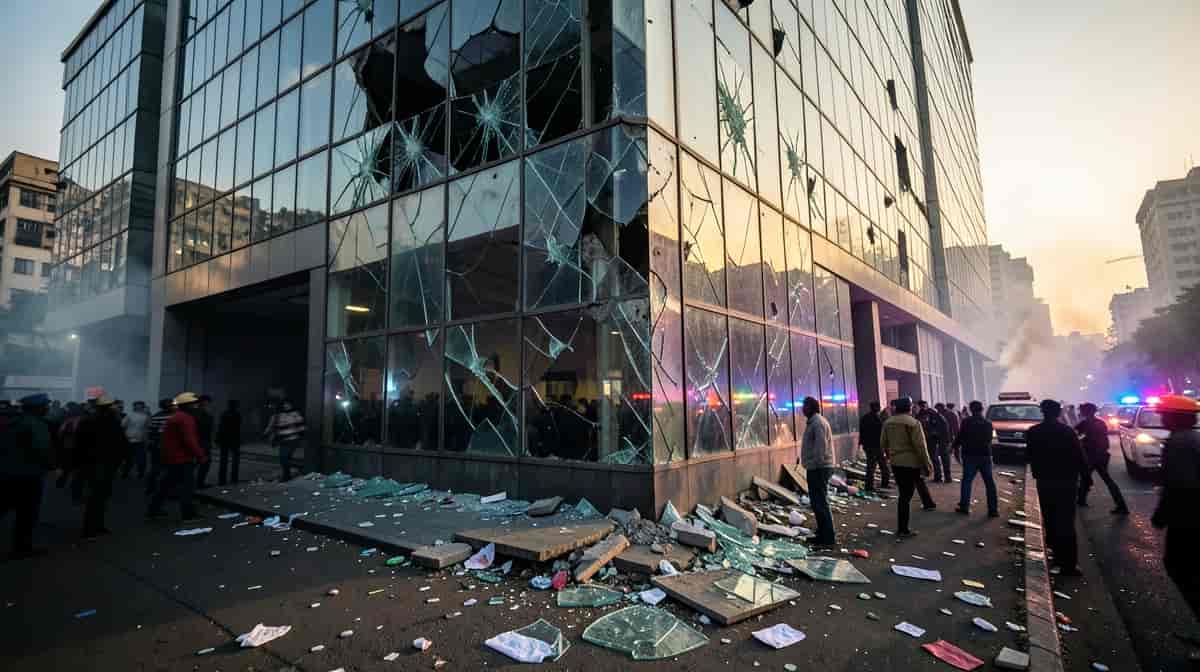
The silhouette of one of India’s most established media institutions took on a jarring new appearance this week as ideological friction spilled from the headlines onto the physical facade of the newsroom. The recent incident where the Anandabazar Patrika office vandalized in West Bengal has sparked widespread concern regarding press freedom and the safety of journalists in the region.
The event marks a significant escalation in the ongoing friction between political activist groups and regional media outlets. When physical infrastructure becomes the target of political messaging, the boundaries of democratic protest are often called into question. Observers note that such demonstrations highlight a growing intolerance for editorial stances that challenge specific ideological narratives, creating a precarious environment for those tasked with reporting the news.
The targeting of a prominent media office with saffron paint signals a deepening polarization where editorial headlines are met with direct, physical intimidation rather than civil discourse.
The Anatomy of the Protest in Kolkata
The demonstration outside the Anandabazar Patrika office in Kolkata was not a spontaneous gathering but a targeted reaction to recent editorial choices. Saffron-clad men, identified as Hindutva activists, converged on the premises to register their protest against the publication’s coverage. The situation escalated when members of the group began defacing the building, applying saffron paint to various parts of the office exterior.
Reports confirmed that the crowd’s primary grievance centered on a controversial newspaper headline published by the outlet. The headline, which referenced "saffron hooliganism," acted as a catalyst for the mobilization. As the activists gathered, they utilized the physical space of the media house to visually project their ideological stance, transforming the building itself into a canvas for their protest.
Timeline of the Incident and Immediate Fallout
The progression from editorial publication to physical vandalism followed a rapid trajectory:
| Stage | Development |
|---|---|
| Phase 1 | Anandabazar Patrika publishes news coverage featuring the "saffron hooliganism" headline. |
| Phase 2 | Hindutva activists and saffron-clad men organize a protest outside the Kolkata office. |
| Phase 3 | Portions of the office building are painted saffron; police monitor the situation. |
| Phase 4 | West Bengal Chief Minister addresses the tension as legal FIRs are lodged against journalists. |
This timeline illustrates how quickly editorial content can transition into a law-and-order challenge in the current political climate of West Bengal. While the physical damage to the building was specific to the paint application, the psychological impact on the staff and the broader media community remains a focal point of the ongoing discussion.
Political Dynamics and the State Response
The response from the West Bengal state administration has been multifaceted, attempting to balance the enforcement of law with the complex political reality of the region. West Bengal Chief Minister addressed the escalating media-related tensions, explicitly stating that the government’s actions were not intended as a threat to the media. However, this statement was issued against a backdrop of increasing legal pressure on the publication's staff.
Concurrent with the protests, local law enforcement lodged First Information Reports (FIRs) against Anandabazar journalists. This dual pressure—physical vandalism from activist groups and legal scrutiny from the state—has created what analysts describe as a pincer movement affecting the publication's operational freedom. The Chief Minister’s assertion that the state was simply handling related complaints through the police has not fully quelled concerns among press freedom advocates.
The Role of Local Law Enforcement
Local police and law enforcement have been tasked with managing the immediate fallout of the vandalism while navigating the political sensitivities involved. While the protesters were able to paint parts of the building, authorities have been monitoring the situation to prevent further escalation into broader street violence. The best-case scenario for the next 72 hours involves a dialogue between press representatives and local authorities to ensure media personnel safety without further property damage.
Root Causes of Ideological Polarization
The root cause of this incident lies in the escalating tensions between regional media outlets and activist groups over ideological reporting. In West Bengal, the media landscape is often a battleground for competing political narratives. When a prominent outlet like Anandabazar Patrika uses provocative language such as "saffron hooliganism," it frequently triggers a defensive and sometimes aggressive response from groups who feel targeted by the terminology.
When media offices face targeted protests and vandalism, it sends a chilling message about press freedom and the safety of journalists.
This friction is not merely about a single headline but reflects a fierce polarization in the state. The ruling administration must navigate these dynamics carefully, as any perceived bias in how the law is applied to protesters versus journalists can further inflame the situation. The vandalism may also represent an organized strategy by local political fringe groups to test the boundaries of state enforcement and intimidate editorial boards before wider electoral cycles.
Impact on Media Freedom and Institutional Security
The long-term implications of the Anandabazar Patrika office being targeted extend beyond the cost of a fresh coat of paint. There are significant economic and security assessments to be made:
- Security Overheads: Media institutions in the region are likely to face rising security costs as they must now fortify physical locations against potential flashpoint violence.
- Advertiser Hesitancy: Physical infrastructure becoming a site of political conflict can lead to hesitancy among commercial partners who wish to avoid association with localized violence.
- Journalistic Safety: The targeting of journalists through FIRs combined with physical protests creates a "chilling effect," where editorial boards may self-censor to avoid becoming targets.
This situation draws the attention of international press freedom watchdogs, as the safety of media institutions is a fundamental pillar of a democratic society. While the issue is primarily a domestic law-and-order matter, the method of protest—targeting a major media house—signals a shift in how political grievances are aired in the region.
Future Outlook and Potential Escalations
The next 24 to 72 hours are critical for the stabilization of the environment around the Anandabazar Patrika office. Tensions are expected to remain elevated, and an increased police presence is likely at the location to prevent a recurrence of the vandalism.
Experts suggest that the worst-case scenario involves the situation escalating into broader street protests, further targeting of media offices, and a deeper deterioration of relations between political activists and the press. Conversely, if legal and political authorities can manage the fallout effectively, it may lead to a necessary debate on the boundaries of protest and the protection of the press.
Discussions regarding media freedom and the protests over the "saffron hooliganism" headline will likely persist between journalists' bodies, political parties, and regional authorities. The ongoing friction between media houses and political groups remains a volatile element in West Bengal’s socio-political landscape.
Frequently Asked Questions
What happened at the Anandabazar Patrika office in West Bengal?
Saffron-clad men and Hindutva activists protested outside and vandalized the Anandabazar Patrika office building in Kolkata by painting parts of it with saffron paint. The incident followed tensions surrounding the media outlet's coverage and headlines.
Why was the Anandabazar Patrika office targeted by protesters?
The office was targeted and painted saffron following a controversial headline published by the media outlet concerning 'saffron hooliganism'. Activists gathered outside the premises to register their strong protest against the publication's coverage.
Who is affected by the tensions between media outlets and authorities in West Bengal?
Journalists, media organizations, and press freedom advocates are directly impacted by these escalating tensions. Notably, police have also lodged FIRs against Anandabazar journalists, drawing sharp reactions regarding media intimidation.
What is the official stance of the West Bengal government on these media tensions?
West Bengal Chief Minister addressed the situation by stating that the government is not threatening the media. However, police actions such as lodging FIRs against journalists have kept concerns surrounding press freedom alive.
What specific vandalism occurred at the newspaper's building?
Groups of saffron-clad men gathered outside the prominent newspaper office and painted portions of the building's exterior with saffron paint. This direct action was carried out to protest against the publication's editorial stance and headlines.
What happens next following the protests and FIRs against journalists?
Press bodies and legal experts continue to monitor the fallout between the state administration, journalists, and political activists. Investigations and discussions surrounding media safety and freedom of expression in West Bengal are expected to persist.
Conclusion
The vandalism at the Anandabazar Patrika office represents a critical juncture for media freedom in West Bengal. What began as a dispute over editorial terminology has evolved into a physical confrontation and a legal struggle involving the state government. While the Chief Minister maintains that the administration is not a threat to the press, the combination of activist-led vandalism and police-led FIRs against journalists paints a complex picture of the challenges facing modern journalism. As the 72-hour window of heightened tension unfolds, the priority for all stakeholders remains the restoration of order and the protection of media personnel. The resolution of this conflict will likely set a precedent for how ideological differences and press freedom are balanced in the region's increasingly polarized political climate.
Sources
- Anandabazar.com’s Bochhorer Best 2026 shines a light on changemakers across fields — Telegraph India
- Saffron-clad men paint saffron paint on parts of Anandabazar Patrika office building — New Age BD
- ‘Not Threatening the Media’, Says Bengal CM As Police Lodge FIR Against Anandabazar Journalists — TheWire.in
- Saffron-clad men protest outside Anandabazar Patrika office in Kolkata — The Hindu
- Hindutva Activists Attack Anandabazar Patrika Office in West Bengal, India — RTV News
- Anandbazar Patrika's Office Painted Saffron Over 'Saffron Hooliganism' Headline — The Quint


