
China Threat Over Taiwan Local Elections Reaches A Critical Turning Point
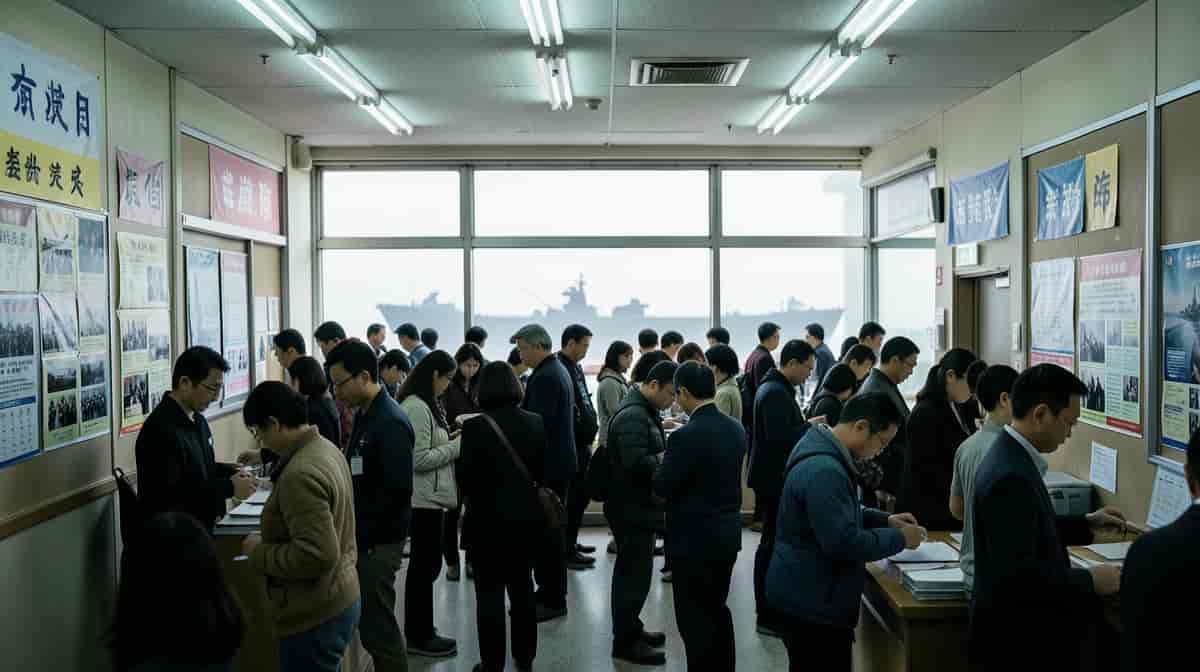
The rhythmic sound of stamps hitting paper across thousands of polling stations in Taiwan usually signals a focus on municipal governance, from urban transit to local healthcare. However, the current atmosphere surrounding these ballots suggests a much larger weight, as the shadow of Beijing looms large over the Taiwan local elections, raising immediate concerns about external interference.
While the primary function of these elections is to select mayors and county magistrates, the geopolitical subtext has transformed a domestic administrative exercise into a high-stakes signal for international observers. As citizens cast their ballots, the eyes of global intelligence agencies and policy researchers are fixed on the island, attempting to decipher how voters are balancing community needs against the mounting pressure from across the strait.
The local elections serve as a crucial barometer for Taiwan's domestic political landscape, reflecting public sentiment toward handling external pressures while determining leadership at the municipal level.
A High-Stakes Domestic Exercise Under Global Scrutiny
Taiwan is currently holding its local elections to choose key leaders who will manage municipal governance, public services, and local administration for the coming years. These positions, which include mayors and county magistrates, are the backbone of the island's domestic management. Yet, despite the local nature of these races, the context is anything but isolated. Major news organizations, including The Guardian, Reuters, AP News, and Al Jazeera, have deployed resources to cover the results live, highlighting the international significance of the vote.
The electoral process is taking place under a heavy shadow of pressure and close monitoring from Beijing authorities. This external scrutiny has turned the selection of local administrators into a critical indicator of public sentiment. International observers are watching closely to see how voters react to ongoing political tensions and whether the threat from China influences the outcome of races traditionally decided by livelihood issues like the economy and infrastructure.
The structural cross-strait tensions between Beijing and Taipei are currently intersecting with domestic governance issues, creating a complex environment for both candidates and the electorate. Early reports from agencies like Reuters suggest that the ruling party is making notable gains in various closely watched races, though several pivotal contests have remained tight until the final count.
Shifts in the Electoral Map: The Changhua Setback
As the ballots were tallied across the island, one of the most significant developments emerged from a pivotal battleground. The opposition Kuomintang (KMT) suffered a high-profile setback when candidate Wei Ping-cheng lost the pivotal Changhua county magistrate seat. This specific loss is being viewed by analysts as a major blow to the KMT’s momentum, as Changhua is often seen as a bellwether for broader political trends.
The loss of such a significant seat highlights a shifting political landscape where traditional allegiances are being tested by modern geopolitical realities. While the KMT has historically navigated these local races by focusing on stability and cross-strait engagement, the results in areas like Changhua suggest that the electorate may be recalibrating its priorities.
In contrast to the KMT's challenges, the ruling party appears set to make gains in several local elections that were being monitored by China. This shift suggests a possible consolidation of support for the current leadership's approach to handling external pressures. However, the victory is not uniform; across the island, the election has been characterized by tight contests and surprising shifts that reflect a deeply engaged and potentially divided voter base.
Local Livelihoods in the Shadow of National Security
A recurring theme in the analysis of these elections is the tension between local livelihood issues and national security rhetoric. While mayors are responsible for city planning and public works, the pervasive backdrop of heightened tensions with China often overshadows these municipal responsibilities.
The Hidden Angle of Voter Priorities
There is a subtle concern among analysts that municipal governance and local economic management may be masked by the louder discourse surrounding cross-strait positioning. Voters are forced to balance their immediate needs—such as local infrastructure and social services—against the strategic calculations of how their vote might be interpreted by Beijing and the international community.
Historical Parallels and Political Momentum
The current electoral dynamics draw direct historical parallels to the 2018 and 2022 local elections. In those cycles, mid-term results similarly reflected shifting domestic political tides and served as precursors to broader national electoral strategies. The outcome of these local races often dictates the political momentum and strategic calculations for both the Democratic Progressive Party (DPP) and the KMT heading into future national contexts.
| Phase | Key Activity |
|---|---|
| Pre-Election | Intensified warnings of external interference and campaign development |
| Election Day | Citizens cast ballots for mayors, county magistrates, and local leaders |
| Post-Election | Results finalized; political parties assess gains/losses for national strategy |
Economic and Geopolitical Consequences
Beyond the immediate political tally, the results of the Taiwan local elections carry profound implications for regional security and economic stability. Because Taiwan is a vital hub in the global semiconductor and technology supply chains, any perception of internal instability or a shift in cross-strait relations can influence investor confidence and market dynamics.
Beijing's close observation of the electoral process highlights how local democratic exercises in Taiwan are no longer just internal matters. They are integral to regional security, deterrence, and international diplomatic posturing. The geopolitical angle is clear: the way voters respond to external pressure provides a data point for Beijing to assess the efficacy of its influence strategies and for the international community to gauge the democratic resilience of the region.
Beijing’s close observation of the electoral process highlights how local democratic exercises in Taiwan carry profound implications for regional security and international diplomatic posturing.
For international stakeholders, the stability of the East Asian region is at stake. The local leadership changes occurring now will determine how municipalities interact with central authorities on matters of civil defense, economic development, and international cooperation.
Predicting the Next Steps
As the election results are finalized, the immediate future will be defined by a period of intense assessment and reaction.
- Next 24 Hours: Election results will continue to be tallied and finalized across all districts. International analysis will focus on the immediate implications for cross-strait relations and any official reactions from Beijing authorities.
- Next 72 Hours: Major political parties, including the ruling party and the KMT, will begin assessing the outcome of mayoral and magistrate races. Particular attention will be paid to the loss of key seats like Changhua as parties begin to adjust their rhetoric and strategies for upcoming national cycles.
The expert prediction suggests that this election outcome will shape the strategic calculations for both domestic parties and Beijing for months to come. If the transition of local power proceeds smoothly and results remain transparent, it could provide a period of stabilization for local governance. However, the worst-case scenario involves heightened tensions and increased rhetoric between Taipei and Beijing following the electoral outcome, potentially leading to regional friction.
Frequently Asked Questions
What is the context of Taiwan's local elections regarding China?
Taiwan's local elections to choose mayors and other leaders have been heavily watched by Beijing amid rising geopolitical tensions. The looming threat from China has added significant weight to these local democratic processes, reflecting broader cross-strait struggles.
Who is affected by the outcome of Taiwan's local elections?
The outcomes directly impact Taiwan's domestic political landscape, including major parties like the ruling party and the KMT. Citizens, local leaders, and international observers monitoring cross-strait stability are also profoundly affected by these results.
What happened during the Taiwan local elections?
Voters across Taiwan went to the polls to choose mayors, magistrates, and local leaders. Notable developments included pivotal races, such as the KMT losing the Changhua county magistrate seat, while the ruling party sought to make strategic gains.
Why do Taiwan's local elections matter internationally?
Although these are local races rather than presidential ones, they serve as a crucial barometer of public sentiment toward Taiwan's political parties and their handling of relations with Beijing. International watchers closely analyze the results to gauge the stability and democratic resilience of the region.
What specific races were closely monitored by observers?
Observers closely watched key regional contests, including county magistrate races like the pivotal battle in Changhua county. These specific local leadership changes highlight shifting voter preferences amid external pressures.
What happens next following the election results?
As final results are tallied and live updates conclude, political parties will analyze their gains and losses to prepare for future national implications. The incoming local leaders will take office to address municipal issues while navigating the shadow of cross-strait tensions.
Conclusion
The local elections in Taiwan have concluded with results that highlight a shifting political landscape under the constant pressure of cross-strait tensions. With the ruling party making notable gains and the KMT facing a significant setback in Changhua, the domestic political map is being redrawn even as international eyes remain fixed on Beijing's response. These elections, though local in administrative scope, have proven to be a vital barometer for public sentiment and regional stability. As the new local leaders prepare to take office, the focus now shifts to how these results will influence the broader strategic maneuvers between Taipei and Beijing in the months to come.
Sources
- Threat from China looms large over Taiwan’s local elections — The Guardian
- Ruling party set to make gains in Taiwan local elections watched by China — Reuters
- Taiwan awaits local election results as China watches — AP News
- KMT’s Wei Ping-cheng loses pivotal Changhua county magistrate seat in Taiwan local elections — South China Morning Post
- LIVE UPDATE Taiwan local elections live results — Focus Taiwan
- Taiwan votes in local elections to choose mayors, other leaders — Al Jazeera


