
Iowa Army Ammunition Plant Detonation Prompts Serious Safety Concerns
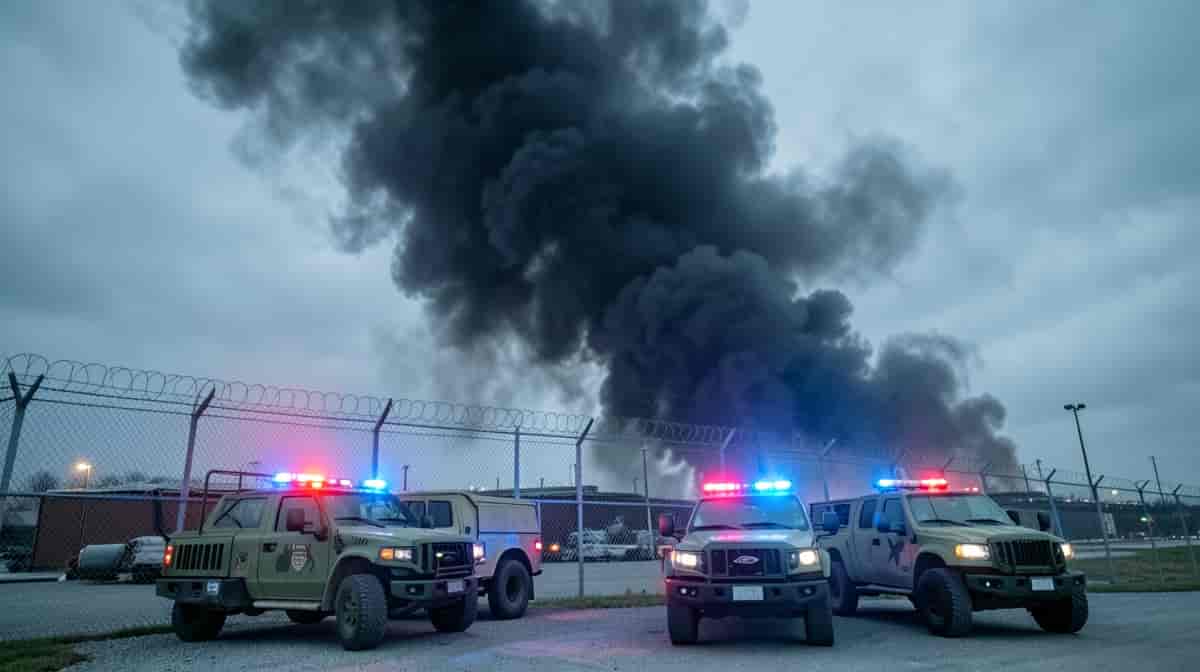
The horizon near Burlington, Iowa, serves as the stage for a high-stakes calibration of military necessity and environmental safety. For residents across three states, the silence of a Wednesday morning was never intended to last, replaced instead by the controlled thunder of a scheduled Iowa Army Ammunition Plant explosion.
This operation is not a sudden accident but a meticulously choreographed detonation of lead azide, a highly sensitive explosive compound that has reached the end of its stable lifecycle. While the U.S. Army maintains that such disposals are a routine part of maintaining military-industrial readiness, the potential for a toxic cloud of lead dust to drift across state lines into Illinois and Missouri has turned a local ordnance disposal into a regional environmental flashpoint.
The primary risk involves the dispersal of a lead dust cloud which, depending on shifting weather patterns, could bypass Illinois entirely or trigger significant air quality concerns in neighboring states.
The Mechanics of Controlled Detonation
The Iowa Army Ammunition Plant (IAAP) is a cornerstone of the American defense infrastructure, but its role in manufacturing and stockpiling comes with a significant logistical burden: the management of hazardous waste. Lead azide, the focus of the Wednesday morning operation, is a primary explosive used in various military munitions. Its extreme sensitivity to friction, heat, and impact makes it notoriously difficult to handle, particularly as it ages.
To mitigate the risks associated with unstable stockpiles, the Army utilizes controlled detonations. These events are designed to destroy the chemical integrity of the material in a confined environment, yet the byproduct—specifically lead-heavy particulate matter—remains a concern for atmospheric scientists and public health officials. The scheduled event was timed specifically for a Wednesday morning to take advantage of projected meteorological windows, though the margin for error remains narrow.
The Chemistry of Risk
Interagency Oversight and Public Transparency
The scale of the planned detonation has necessitated an unprecedented level of coordination between traditionally disparate federal bodies. The U.S. Environmental Protection Agency (EPA) has stepped into a primary oversight role, working alongside the Army and other federal partners to provide public updates and ensure that safety protocols are not just followed, but verified.
This interagency effort is designed to address the historical friction that often exists between defense operations and environmental regulation. By detailing the robust measures taken to protect the surrounding communities, the EPA aims to provide a layer of accountability to a process that has historically been shielded by military opacity.
- Federal partners are monitoring air quality sensors in real-time around the IAAP facility.
- Public warnings were issued through regional newsrooms and official government channels well in advance of the Wednesday morning detonation.
- Specific protocols have been established to halt operations if wind speeds or directions deviate from safety models.
The primary goal is a robust interagency effort to keep communities safe and protect the environment while managing the disposal of unstable military compounds.
A Multi-State Environmental Concern
The geography of the Iowa Army Ammunition Plant places it in a sensitive corridor where the borders of Iowa, Illinois, and Missouri converge. This proximity means that a single meteorological shift can turn a local Iowa operation into an interstate environmental incident.
Regional residents and environmental scientists have expressed particular concern regarding the "lead dust cloud." Officials from the EPA and the Army have indicated that if weather conditions hold, the plume should miss Illinois entirely. However, the IPM Newsroom and Iowa Public Radio have reported that residents in Missouri and Illinois remain on high alert, questioning whether the airborne lead will settle into the soil or water systems of the tri-state area.
| Stakeholder Region | Primary Concern | Mitigation Strategy |
|---|---|---|
| Iowa (Local) | Noise and immediate air quality | Controlled blast radius and local sensors |
| Illinois | Drift of lead-heavy particulate | Meteorological monitoring and wind-contingent scheduling |
| Missouri | Downwind atmospheric accumulation | Regional air quality tracking and EPA oversight |
The Analyst’s View: Root Causes and Political Friction
The necessity of the Iowa Army Ammunition Plant explosion stems from a deeper root cause: the ongoing challenge of managing the Cold War-era legacy of military manufacturing. Across the United States, aging munitions plants are grappling with stockpiles of hazardous materials that are becoming increasingly unstable.
Political and Economic Dimensions
The Hidden Angle
Future Outlook: The 72-Hour Assessment
The next 24 to 72 hours are critical for determining the success of the IAAP operation. While the detonation itself is a moment in time, the environmental impact is a process.
- Next 24 Hours: The planned detonation proceeds as scheduled, with constant monitoring of weather patterns to prevent the spread of dust into Illinois and Missouri.
- Next 72 Hours: Federal agencies will conduct a post-detonation assessment. This includes interagency evaluations by the EPA and the Army to analyze air quality data and provide community updates.
- Expert Prediction: Analysts expect that with favorable weather, the detonation will occur with minimal environmental drift. However, any deviation in wind patterns could lead to a "worst-case" scenario where toxic lead dust triggers a public health backlash and interstate disputes.
The best-case scenario remains a "clean" detonation where containment protocols work as intended, and the lead dust cloud remains localized. Conversely, the worst-case scenario would see unfavorable wind patterns carrying the plume across state lines, potentially contaminating agricultural land and leading to a crisis of confidence in federal safety protocols.
Frequently Asked Questions
What is happening at the Army's Iowa Ammunition Plant?
The Army scheduled a planned detonation of lead azide at the Iowa Ammunition Plant. This operation involved safely disposing of hazardous explosive materials through controlled explosions.
Why is the Army detonating lead azide in Iowa?
The controlled detonation is part of an interagency effort involving the EPA, the Army, and other federal partners to safely manage hazardous materials. The primary goal is to keep surrounding communities safe and protect the environment from unstable compounds.
Will the lead azide explosion reach Missouri and Illinois?
Residents in neighboring states like Illinois and Missouri raised concerns about potential impacts. However, officials noted that a cloud of lead dust could miss Illinois entirely if weather conditions hold favorably during the detonation.
Who is affected by the Iowa Army Ammunition Plant detonation?
Communities surrounding the plant in Iowa, as well as nearby areas across state lines in Illinois and Missouri, are monitoring the situation. Federal and local agencies have coordinated interagency efforts to ensure public safety and provide regular updates.
What happens next following the scheduled Wednesday detonation?
Following the detonation, federal and environmental partners continue to monitor air quality and environmental conditions. Officials provide public updates to ensure transparency and confirm that safety protocols were successfully maintained.
What specific hazardous material is being destroyed?
The specific material being targeted for destruction is lead azide, a notoriously sensitive and primary explosive compound. Because of its instability, specialized controlled detonation procedures are required for its safe disposal.
Conclusion
The scheduled detonation at the Iowa Army Ammunition Plant represents a complex intersection of national security logistics and public health safety. By moving forward with the disposal of lead azide, the U.S. Army is addressing the immediate danger of unstable explosives, yet the reliance on favorable weather conditions to protect neighboring Illinois and Missouri highlights the inherent risks of open-air military operations. As the EPA and federal partners continue their monitoring in the coming days, the success of this event will be measured not just by the destruction of the material, but by the containment of its toxic legacy. For now, the focus remains on the 72-hour assessment window, which will provide the final verdict on whether the robust safety protocols were sufficient to shield the tri-state area from the atmospheric consequences of defense readiness.
Sources
- Army’s Iowa Ammunition Plant Explosion on Schedule for Wednesday Morning — The New York Times
- Army releases plans to restart helicopter flights near DCA — NBC4 Washington
- The Army says it will explode lead azide in Iowa. Will it reach Missouri and Illinois? — IPM Newsroom
- The latest on Wednesday's planned detonation of lead azide — Iowa Public Radio
- EPA, Army and Other Federal Partners Provide Public Update on Iowa Army Ammunition Plant, Detailing Robust Interagency Effort to Keep Communities Safe and Protect the Environment — U.S. Environmental Protection Agency (.gov)
- Cloud of Lead Dust From Army’s Detonation of Explosives in Iowa Could Miss Illinois if Weather Holds, Officials Say — WTTW News


