
Ken Griffin Museum Gift Includes Rare Dinosaurs That Change History
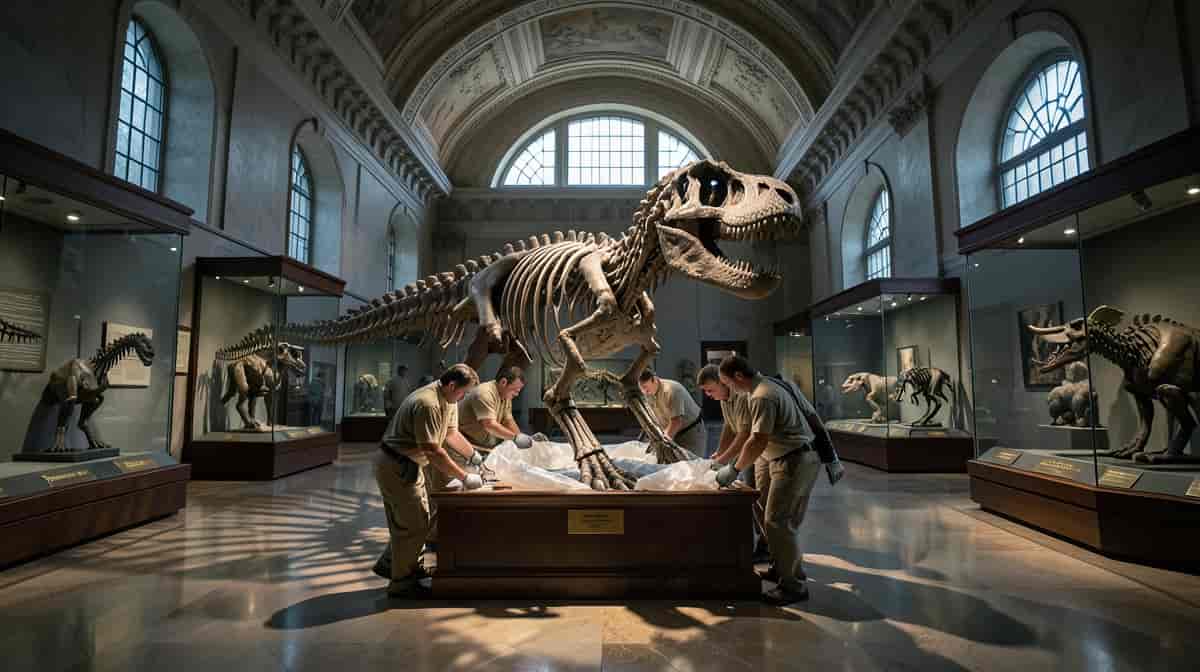
Prehistoric fossils and high-frequency trading rarely occupy the same headlines, yet the acquisition of ancient apex predators is becoming the latest hallmark of elite private wealth. The billionaire financier Ken Griffin Carnegie museum gift brings incredible rare dinosaur fossils to the public, marking a major milestone in modern philanthropy while signaling a significant shift in how private capital curates public science.
The contribution of $5 million and three rare dinosaur specimens to the Carnegie Museum of Natural History represents a strategic intersection of high-net-worth asset allocation and the preservation of global natural heritage.
The Anatomy of the Carnegie Contribution
The Carnegie Museum of Natural History in Pittsburgh has officially become the beneficiary of a multi-faceted contribution from Ken Griffin, the founder and CEO of Citadel. This contribution is structured in two distinct parts: a direct $5 million financial gift and the provision of three exceptionally rare dinosaur fossils. While initial reports highlighted the donation, further clarifications from the Financial Times indicate that Griffin is loaning the three rare fossils to the Pittsburgh institution, ensuring their public display while maintaining a nuanced ownership structure typical of high-value private collections.
This acquisition is expected to bolster the museum’s existing prehistoric collections, which are already regarded as world-class. The financial component of the gift is slated to support the museum’s operations, specifically targeting the maintenance of world-class displays and the expansion of educational outreach programs. For an institution that relies heavily on a mix of public funding and private endowment, a $5 million injection provides the liquidity necessary to upgrade aging exhibit infrastructure and fund ongoing research initiatives.
The Scientific Value of the Rare Specimens
The three fossils provided by Griffin are not merely ornamental; they represent significant scientific assets. In the field of paleontology, the arrival of such rare specimens in a public museum is a major event. - The fossils provide a rare opportunity for researchers to study specimens that are often locked away in private vaults. - Museum officials have noted that these additions will allow visitors to get an up-close look at prehistoric life that is rarely accessible to the general public. - The specimens are expected to draw record crowds, potentially increasing the museum's self-generated revenue through ticket sales and memberships.
Philanthropy as the New Cultural Currency
The movement of these fossils from private hands to a public-facing institution serves as a modern echo of the Gilded Age. During that era, industrial titans like Andrew Carnegie—the museum’s namesake—endowed scientific and cultural institutions to cement their legacies and shape public education. Analysts suggest that Ken Griffin’s latest move follows this historical parallel, using high-profile cultural assets to secure civic prominence and shape institutional priorities.
High-net-worth philanthropy increasingly leverages high-profile cultural and scientific assets, such as rare dinosaur fossils and multi-million dollar endowments, to shape institutional legacies and secure civic prominence.
This type of strategic capital allocation involves more than just a check; it is about the curation of public wonder. By placing rare scientific specimens in a regional hub like Pittsburgh, the donor influences the cultural landscape of a key American city, navigating local political landscapes and fostering community relations. This brand of philanthropy helps ensure that elite American capital remains central to the maintenance of public infrastructure and scientific inquiry.
A Portfolio in Motion: From Real Estate to Paleontology
The Carnegie gift does not exist in a vacuum. It is part of a broader, rapid movement of capital by Griffin, which includes record-breaking real estate transactions and significant shifts in his investment portfolio. To understand the scale of the Ken Griffin Carnegie museum gift, one must look at the concurrent financial activities that define his current capital strategy.
| Transaction Type | Asset / Institution | Value / Detail |
|---|---|---|
| Philanthropy | Carnegie Museum of Natural History | $5 Million + 3 Rare Fossils |
| Philanthropy | Baptist Health (MSK Ties) | $12 Million |
| Real Estate Sale | Park Avenue Duplex (NY) | $58 Million (Sold to Woody Johnson) |
| Real Estate Record | New York Apartment | $238 Million (Current Record Holder) |
| Investment Shift | Tech & Innovation | Sold SpaceX and Amazon |
| Investment Shift | Growth Assets | Bought ARKK and Marvell |
As Griffin facilitates the arrival of rare dinosaurs in Pittsburgh, he is simultaneously liquidating high-end real estate. He recently sold a Park Avenue duplex to New York Jets owner Woody Johnson for $58 million. Furthermore, his personal real estate holdings continue to set benchmarks, including a $238 million New York apartment that currently holds the record for the most expensive home sale in the United States. This suggests that the $5 million gift to the Carnegie museum, while significant for the institution, represents a calculated sliver of a much larger wealth management strategy.
Institutional Impact and Public Accessibility
For the Carnegie Museum of Natural History, the primary value of this partnership lies in accessibility. Major natural history museums frequently rely on private collectors to acquire specimens that the institutions could not afford on the open market. By loaning these three rare dinosaurs, Griffin allows the museum to bypass the prohibitive costs of acquisition and insurance that typically prevent regional museums from expanding their prehistoric galleries.
The impact of this gift is expected to be felt most by: - Museum Visitors: Who will gain access to new, world-class prehistoric exhibits. - Students and Families: Who benefit from the museum's enhanced educational outreach funded by the $5 million gift. - Researchers in Pittsburgh: Who may now have local access to rare specimens for study. - The Broader Community: Through the potential for increased tourism and cultural prestige for the city.
This partnership fosters a greater interest in science and education by making rare historical artifacts accessible. It bridges the gap between private ownership and public benefit, ensuring that these rare specimens serve a pedagogical purpose rather than remaining hidden in a private residence.
Strategic Capital and Shifting Portfolios
The economic angle of this philanthropy is equally compelling. Strategic capital allocation by major financiers often involves balancing massive tax-deductible contributions alongside high-value real estate transactions. While the donation to the Carnegie museum targets science, Griffin has also directed $12 million to Baptist Health to deepen its ties with Memorial Sloan Kettering. This diversification of philanthropic giving—spanning healthcare, education, and paleontology—solidifies a broad cultural and social footprint.
On the investment front, Griffin’s recent activity shows a pivot away from established tech giants like SpaceX and Amazon in favor of bets on Marvell and the ARKK Innovation ETF. This movement of capital, much like the movement of rare fossils, suggests a hedge against market volatility and an effort to solidify cultural capital. Private wealth is increasingly being used to curate public museum collections, which can be seen as a way to diversify a legacy beyond purely financial metrics.
The Future of the Carnegie Exhibits
The immediate future for the Carnegie Museum involves a heavy push toward publicizing the gift and the arrival of the specimens. Within the next 24 to 72 hours, the museum is expected to see increased media coverage and public interest as the details of the $5 million endowment and the fossil loans become more widely known.
Expert Predictions and Long-term Outlook
Analysts expect that high-profile philanthropic contributions of rare specimens will continue to bolster the public engagement and endowment growth of major scientific institutions. The best-case scenario for this gift involves the new dinosaur fossils drawing record-breaking crowds to the Carnegie Museum, inspiring a new generation of interest in paleontology. This, in turn, could encourage further high-value philanthropic partnerships between the museum and other high-net-worth individuals.
However, institutional resources could be strained if logistical disputes arise over the maintenance or transport of such rare and fragile specimens. Maintaining three rare dinosaurs requires specialized climate control, security, and curation expertise, which the $5 million gift is likely intended to cover. The successful integration of these assets will be a test of the museum’s ability to manage high-value private-public partnerships.
Frequently Asked Questions
How much money did Ken Griffin give to the Carnegie Museum?
Ken Griffin provided a $5 million financial gift to the institution.
Are the dinosaur fossils a permanent gift?
Reports from the Financial Times indicate that the three rare dinosaur fossils are being loaned to the Pittsburgh museum.
What else has Ken Griffin recently funded?
Griffin recently gave $12 million to Baptist Health to strengthen its ties with Memorial Sloan Kettering and has made significant contributions to various cultural and medical institutions.
Where did the funding for this gift come from?
The funding comes from Ken Griffin, the billionaire founder and CEO of Citadel, who is known for high-value real estate transactions and significant philanthropic activity.
Conclusion
The **Ken Griffin Carnegie museum gift** marks a pivotal moment for the Carnegie Museum of Natural History, combining a $5 million financial endowment with the loan of three rare dinosaur fossils. This contribution highlights the growing trend of high-net-worth individuals shaping public science and education through the strategic placement of rare assets. While the gift enhances the museum's scientific and educational capacity, it also reflects a broader strategy of cultural legacy-building by one of the world's most prominent financiers. As the museum prepares to display these rare prehistoric specimens, the focus remains on how public-private partnerships will continue to sustain and modernize the world’s leading scientific institutions. In the coming days, increased visitor attendance and local media coverage are expected to confirm the public’s appetite for these rare glimpses into the prehistoric past.
Sources
- Carnegie museum receives $5M gift and 3 rare dinosaurs from Ken Griffin — Pittsburgh Post-Gazette
- Ken Griffin Dumps SpaceX, Amazon; Buys ARKK and Bets Big on Marvell — Yahoo Finance
- Ken Griffin Sold a Park Avenue Duplex to Jets Owner Woody Johnson for $58 Million — Robb Report
- Ken Griffin's $238 million home holds New York apartment record, Mark Zuckerberg set for Florida with the — The Times of India
- Baptist Health receives $12M from Griffin to deepen Memorial Sloan Kettering ties — The Business Journals
- Ken Griffin loans three rare dinosaur fossils to Pittsburgh museum — Financial Times


