
Kilauea Eruption Lava Fountains Alert Hawaii To A Situation Still Evolving
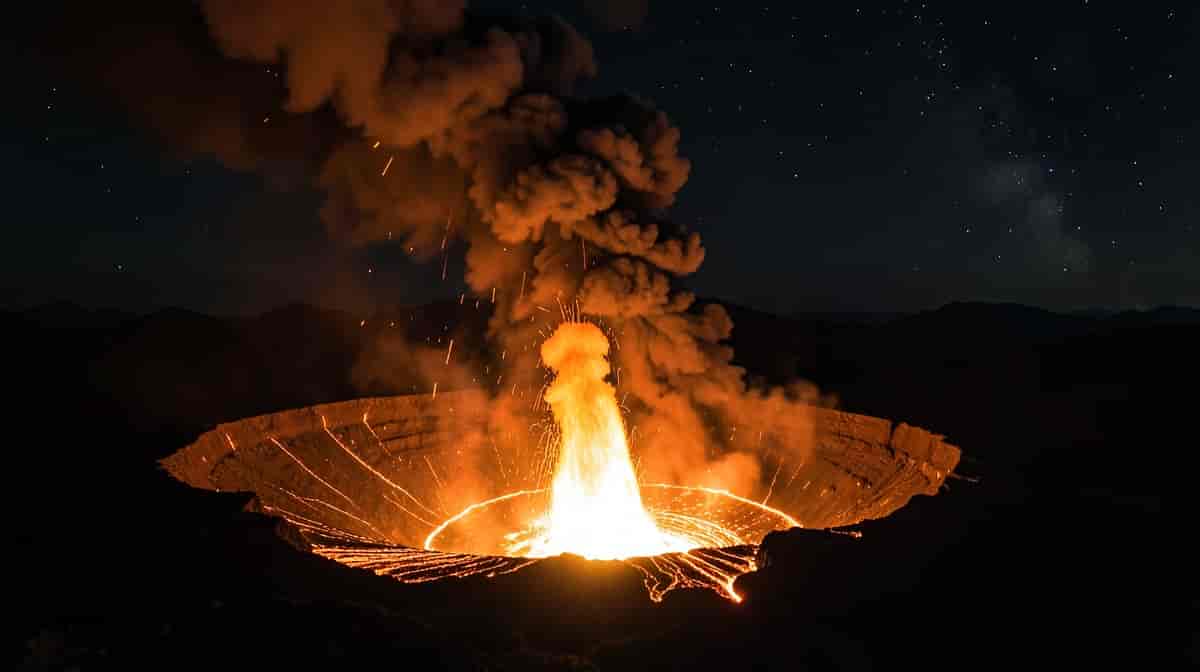
The night sky over Hawaii’s Big Island was momentarily transformed into a canvas of liquid fire as Kīlauea surged into its newest active phase. The latest Kilauea eruption lava fountains have captivated onlookers and scientists alike, bringing renewed attention to Hawaii's most active volcano. This dramatic display, marking the 57th eruption episode in the current summit sequence, highlights the volatile and ever-changing nature of one of the world's most monitored geological features.
While the event provided a staggering visual spectacle, its defining characteristic was its incredible brevity. Reports from the U.S. Geological Survey (USGS) and local media outlets including FOX Weather and The Weather Channel indicate that while the fountains reached heights equivalent to a 60-story building, the peak activity was measured in hours rather than days. This rapid cycle of accumulation and release offers a unique window into the subterranean mechanics that drive the Pacific’s volcanic activity.
Kīlauea's 57th episode saw continuous lava fountaining reach heights of 650 feet, yet the entire explosive event concluded in just 5.8 hours.
A Brief Surge of Fire: Breaking Down Episode 57
The 57th episode of Kīlauea's ongoing summit eruption sequence began with a rapid accumulation of magma that quickly breached the surface at the volcano's summit. This was not a slow, effusive flow but a high-energy discharge that sent molten rock soaring into the atmosphere. Observers and scientific monitoring feeds documented lava fountains reaching up to 650 feet high, creating a glowing curtain of fire visible against the dark Hawaii sky.
Despite the intensity of this fountaining phase, the episode was remarkably short-lived. Geological monitoring data confirmed that the period of continuous lava fountaining lasted for only approximately 5.8 hours. This transient nature is a focal point for researchers, as it suggests a high-pressure discharge that exhausted its immediate supply quickly. Media outlets like KITV and Big Island Now reported that the activity drew widespread attention from volcanologists and nature enthusiasts who monitored live feeds to witness the rapid evolution of the summit's landscape.
Beneath the Surface: The Mechanics of Magma
The root cause of such episodic activity lies deep within the subterranean magma chamber dynamics situated beneath Kīlauea's summit. These chambers act as pressurized reservoirs; when the internal pressure exceeds the strength of the overlying rock, an eruption episode is triggered. The rapid 5.8-hour duration of episode 57 is particularly significant for scientific analysis, as it may signal shifting magma supply rates that could dictate the volcano's long-term behavior.
Dynamics of the Summit Reservoir
- Magma accumulation leads to increased seismic activity and ground deformation.
- Pressure release manifests as spectacular fountaining rather than explosive blasts.
- The brief duration indicates a finite volume of magma ready for immediate discharge.
- Post-eruption stability assessments are required to determine if the plumbing system is recharging.
Understanding these cycles is essential for volcanic hazard monitoring. Each episode, no matter how brief, provides vital data on the "plumbing" of the volcano. By analyzing the height of the fountains and the duration of the flow, scientists can better model how magma moves from the deep mantle into the shallow reservoirs of the Big Island.
The 5.8-Hour Window: A Timeline of Intensity
To understand the scale and speed of this event, it is helpful to look at the timeline of the 57th episode. The transition from dormancy to high-intensity fountaining and back to a state of monitoring occurred in less than a quarter of a day.
| Phase of Activity | Height/Duration | Primary Observation |
|---|---|---|
| Inception | N/A | Seismic activity and summit inflation |
| Peak Fountaining | 650 Feet | Continuous vertical lava discharge |
| Duration of Fountaining | 5.8 Hours | Rapid exhaustion of immediate magma supply |
| Conclusion | N/A | Episode 57 ends; transition to aftermath review |
| Monitoring | Ongoing | USGS photo and video chronology updates |
The rapid duration of episode 57 highlights potential shifts in magma supply rates that could signal evolving long-term eruption behaviors for Kīlauea.
Monitoring, Tourism, and Public Safety
The management of a Kilauea eruption involves a complex coordination between local and state emergency services. In Hawaii, authorities must balance the preservation of public safety with the significant economic interests driven by tourism. Spectacular events like these lava fountains often lead to short-term spikes in tourism as visitors flock to the Big Island to witness the activity from safe vantage points within Hawaii Volcanoes National Park.
However, these events also necessitate immediate adjustments to aviation logistics and local travel. Volcanic hazards such as volcanic smog (VOG) and fine ash particles can impact air quality and flight paths. The USGS and local emergency networks remain in constant communication to issue technical evaluations and safety reminders. While the fountaining phase of episode 57 has concluded, the threat of volcanic gases and potential subsequent ground instability remains a priority for regional safety monitors.
Historical and Geopolitical Context
Kīlauea’s recent behavior is often compared to the 2018 lower Puna eruption and summit collapse, an event that fundamentally reshaped local infrastructure and volcanic monitoring protocols. While the current summit episodes are generally less destructive than the 2018 event, they are part of the same evolving geological story.
On a broader scale, the monitoring of Kīlauea is an exercise in international scientific cooperation. Data gathered at the summit is shared globally to improve predictive modeling for the Pacific Ring of Fire. This cooperation is vital for understanding how shield volcanoes like Kīlauea differ from the more explosive stratovolcanoes found in other parts of the world. The shift from effusive flows to rapid, high-pressure fountaining episodes like the one recently witnessed provides a data set that helps scientists worldwide refine their understanding of basaltic volcanism.
Predictive Assessment: The Next 72 Hours
As the dust settles on the 57th episode, the focus shifts to what the next 24 to 72 hours hold for the Big Island. Monitoring agencies like the USGS are currently reviewing photo and video chronology data to assess the stability of the summit region.
Immediate and Short-Term Outlook
- Next 24 Hours: Documentation of the aftermath and continued monitoring of the summit's seismic activity to detect any signs of magma recharging.
- Next 72 Hours: Scientific assessment regarding the potential for subsequent eruption episodes or a period of prolonged dormancy.
- Long-Term: Analysts expect ongoing monitoring as the volcano cycles through its latest series of episodic eruptions.
In the best-case scenario, the 57th episode remains safely concluded without damage to infrastructure or threats to populated areas, leaving behind valuable data for researchers. However, the worst-case scenario involves an unexpected continuation or intensification of seismic activity that could trigger additional hazardous lava fountaining or air quality concerns for the region. The unpredictability of the summit plumbing system means that even though the current fountains have ceased, the volcano remains in a state of heightened interest for both scientists and residents.
Frequently Asked Questions
How high did the lava fountains reach during the 57th episode of Kīlauea?
The lava fountains reached heights of approximately 650 feet into the sky.
How long did the continuous lava fountaining phase last?
The continuous fountaining lasted for approximately 5.8 hours before the episode concluded.
Where exactly did this eruption take place?
The activity was centered at the Kīlauea summit within Hawaii Volcanoes National Park.
Is the eruption currently active?
According to the latest USGS updates and news reports, episode 57 has ended, though monitoring of the aftermath continues.
Who is most affected by these eruption episodes?
Local residents near the park, tour operators, and travelers visiting the Big Island are the primary groups impacted by volcanic activity and associated safety measures.
Conclusion
Kīlauea's 57th eruption episode served as a powerful reminder of the volcano's dynamic nature, blending a spectacular visual display with a rapid conclusion. While the 650-foot lava fountains were short-lived, lasting just 5.8 hours, the data captured during this window is invaluable for scientists tracking the volcano's shifting behavior. The transition from active fountaining back to a state of monitoring marks the end of a specific chapter in Kīlauea's ongoing story, but the underlying magma dynamics suggest that the summit remains a region of high interest. As the USGS and local authorities continue to evaluate the stability of the region, the focus remains on balancing the island's tourism-driven economy with the necessary safety protocols to protect those living in the shadow of Hawaii's most active geological giant.
Sources
- Kīlauea eruption: lava fountains 650 feet high in Hawaii — The Weather Channel
- Kilauea's 57th eruption episode ends after fountains reach 650 feet — KITV
- Kilauea volcano LIVE: Eruption in Hawaii — Daily Gate City
- Hawaii's Kīlauea volcano erupts for 57th time, sending spectacular fountains of lava into the sky — FOX Weather
- UPDATE: Kīlauea’s episode 57 ends after just 5.8 hours of continuous lava fountaining — Big Island Now
- Photo & Video Chronology — Kīlauea summit eruption episode 57 — USGS (.gov)


