
Pulse Polio Drive Targets 18 Lakh Children in Telangana Health Safety Push
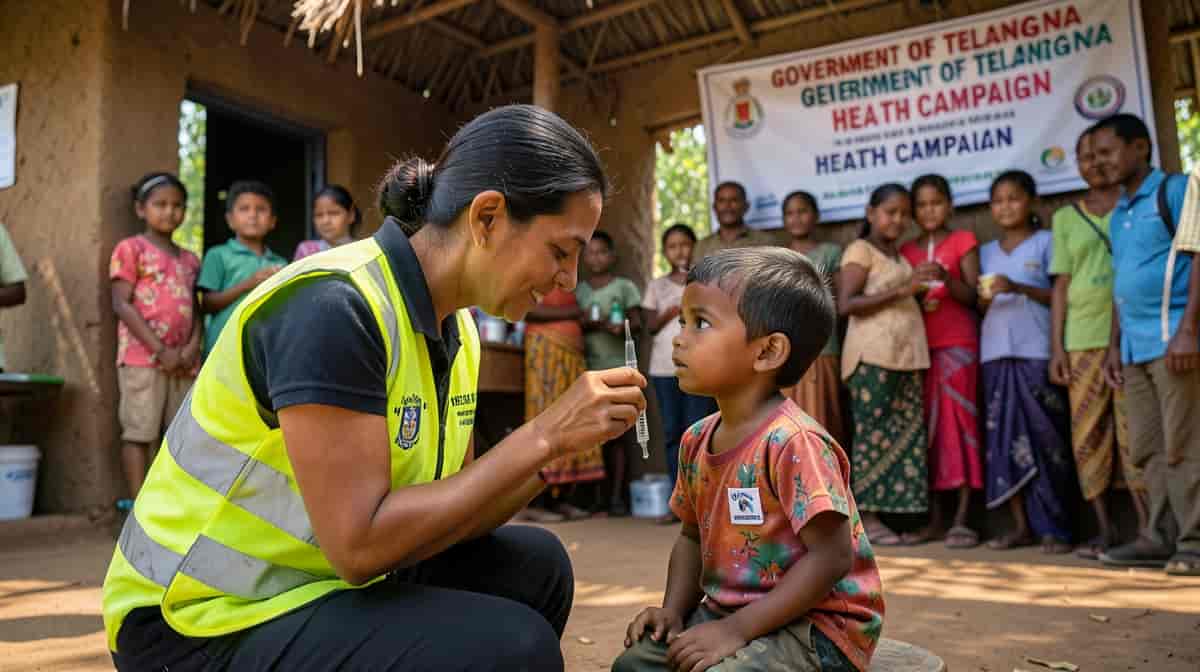
The silence of a once-paralyzing virus is not a signal of its disappearance, but a testament to a vigilance that must never waver. In five critical districts of Telangana, the machinery of public health is pivoting once again to protect a new generation through the latest Pulse Polio Drive Telangana.
The latest Pulse Polio Drive aims to protect millions of children across the state, ensuring that the hard-won immunity of the nation remains impenetrable against any potential resurgence. This initiative is not merely a routine medical procedure but a massive logistical operation designed to reach approximately 18 lakh children, reinforcing the barriers between the population and a disease that once claimed the mobility of thousands. Despite India’s official status as a polio-free nation, the mobilization of healthcare workers and the distribution of oral vaccines continue with an intensity that reflects the high stakes of global health security.
Maintaining high vaccination coverage is essential to prevent the resurgence of a disease that can cause lifelong paralysis and to safeguard the historic public health milestone of a polio-free India.
The Scope of the Telangana Immunisation Campaign
The current Pulse Polio Drive is an intensive immunization effort targeting 18 lakh children across five specific districts in Telangana. This targeted rollout is a cornerstone of regional health planning, designed to ensure that no child under the age of five is left vulnerable. According to reports, the campaign involves a multi-tiered approach that combines stationary vaccination booths with proactive community outreach.
The administration of the oral polio vaccine (OPV) is the primary tool in this drive. These drops, while simple to administer, represent a complex network of administrative logistics. Health authorities have identified five critical districts where the concentration of the target population requires a heightened level of coordination. While the specific names of all five districts are subject to local administrative updates, the overarching goal remains uniform: achieving 100% coverage among the 1.8 million children identified in the census.
Administrative Logistics and Deployment
To achieve such a high target, the rollout requires the synchronized effort of various key players: - Regional health authorities overseeing the state-level strategy. - District medical officers managing local distribution and staffing. - Healthcare workers and volunteers operating vaccination booths. - Parents and guardians who are the essential final link in the chain.
The logistics involve more than just the delivery of vaccines. It includes the maintenance of a cold-chain system to ensure the efficacy of the vaccine remains intact from the laboratory to the child’s mouth. Deployment teams are tasked with setting up booths at prominent locations, such as bus stations, railway hubs, and community centers, to capture the movement of families during the drive.
Safeguarding a Polio-Free Legacy
India was officially certified as polio-free by the World Health Organization’s (WHO) South-East Asia Region in 2014. This was a monumental achievement for the country’s Universal Immunization Programme, which saw its last reported polio case in January 2011. However, the designation "polio-free" does not mean the end of vaccination.
The ongoing Pulse Polio Drive Telangana serves as a preventive measure against the reintroduction of the virus. In a globalized world, the risk of "imported" cases remains a persistent threat. As long as the wild poliovirus exists in any part of the world, children everywhere remain at risk. The virus can easily cross borders through migration and travel, making it necessary for certified countries to maintain high population immunity through regular "mop-up" rounds and national immunization days.
Historical Context of the Drive
The history of this movement provides a window into its current necessity. The Pulse Polio campaign was launched in India in 1995, following the WHO’s Global Polio Eradication Initiative. At that time, India was one of the most affected nations in the world.
| Period | Milestone |
|---|---|
| 1995 | India launches the Pulse Polio campaign following the WHO initiative. |
| January 2011 | The last reported case of wild poliovirus in India is recorded. |
| 2014 | India is officially certified polio-free by the World Health Organization. |
| October 2026 | World Polio Day observations highlight India's sustained status. |
| November 2026 | Pulse Polio drive launched targeting 18 lakh children in Telangana. |
The transition from a high-burden country to a polio-free state was achieved through consistent nationwide immunization drives. The current efforts in Telangana are an extension of this multi-decade commitment to public health.
Analysis of Regional and Global Impact
From an analytical perspective, the root cause of these continued drives is the need for continuous vigilance in high-risk zones. While the virus may not be circulating locally, the vulnerability of regional immunity gaps is a concern for health experts. Sub-national campaigns, such as the one in Telangana, are designed to reinforce herd immunity in areas that may have higher population density or significant cross-border migration.
Political and Economic Dimensions
The execution of a campaign targeting 1.8 million children involves significant political and economic coordination. State-level administrations in Telangana must work in tandem with central health ministries to execute large-scale logistical rollouts. This coordination is essential for resource allocation, particularly concerning the funding for cold-chain logistics, personnel deployment, and extensive community outreach.
Geopolitically, India’s success in maintaining its polio-free status is a critical component of South Asian health security. By sustaining the eradication of polio, India aligns with global WHO targets and serves as a model for other post-endemic regions. The hidden angle here is the persistent need for these campaigns even after certification, highlighting how globalization makes public health a shared regional responsibility rather than a purely national one.
The persistent need for sub-national campaigns in certified polio-free nations highlights the vulnerability of cross-border migration and regional immunity gaps.
Projected Outcomes and the 72-Hour Outlook
The next 24 to 72 hours are critical for the success of the Telangana drive. Health authorities are expected to mobilize deployment teams and initiate intense outreach communications to ensure parents are aware of the booth locations. The focus will shift from planning to execution, with an emphasis on reaching remote and densely populated areas alike.
Expert Predictions and Scenarios
Analysts expect that these sub-national immunization campaigns will remain crucial for the foreseeable future. By preventing imported cases and reinforcing population immunity, India can protect its historic achievement.
Best-Case Scenario In the best-case scenario, smooth coordination between departments and high community participation will lead to the seamless administration of polio drops to all 18 lakh children. Logistical bottlenecks will be avoided, and the target will be met within the designated timeframe.
Worst-Case Scenario Conversely, the worst-case scenario would involve logistical delays, such as vaccine distribution hurdles or lower-than-expected parental turnout in specific pockets. This would leave segments of the target population unimmunized, necessitated immediate and resource-heavy "mop-up" or catch-up campaigns to close the immunity gaps.
The Human Element of the Campaign
While the numbers—18 lakh children, five districts, three decades of effort—are impressive, the real impact is measured at the doorstep of each household. The drive involves a massive mobilization of human capital. Healthcare workers often conduct door-to-door visits following the initial booth-based drive to ensure that no child was missed due to travel or illness.
This door-to-door strategy has historically been the "secret weapon" of India's polio success. It allows health officials to identify missed cases in real-time and provide the necessary oral polio vaccine on the spot. For the parents in Telangana, this drive represents a continued commitment from the state to safeguard the future of their children against a vaccine-preventable disease.
Frequently Asked Questions
What is the Pulse Polio Drive in Telangana?
The Pulse Polio Drive is an intensive immunization campaign targeting 18 lakh children across five specific districts in Telangana. This targeted rollout aims to reinforce preventative health measures for young children in the region.
How many children are targeted in the Telangana Pulse Polio Drive?
The ongoing health campaign is specifically designed to reach approximately 18 lakh children across the designated districts. Health officials and workers are deployed extensively to ensure maximum coverage in these areas.
Which districts in Telangana are covered under the polio drive?
While exact district breakdowns vary by local announcements, the current initiative focuses on five critical districts in Telangana. These regions were selected based on administrative health planning to optimize child immunization.
Why does India conduct Pulse Polio drives despite being polio-free?
India continues conducting sub-national and national immunization days to maintain population immunity and guard against imported wild polio virus strains. Persistent vaccination campaigns ensure the virus cannot re-establish itself in the country.
What is the significance of India's polio-free status?
India was officially certified as polio-free by the World Health Organization's South-East Asia Region in 2014, following years of rigorous vaccination campaigns. Maintaining this hard-won status requires ongoing vigilance through routine immunization and periodic pulse polio drives.
What happens next after the Pulse Polio campaign concludes?
Following the completion of the drive, health authorities evaluate vaccination coverage reports to identify and reach any missed children through mop-up rounds. Continuous surveillance for acute flaccid paralysis is also maintained nationwide to detect any potential risks early.
Conclusion
The Pulse Polio drive targeting 1.8 million children in Telangana is a vital reminder that public health success is not a static state, but a continuous effort. By focusing on five key districts, health authorities are working to shore up regional defenses against a virus that the world is striving to eradicate completely. As the campaign progresses over the coming days, the focus will remain on logistical precision and community engagement. India’s journey from being a high-risk zone to a polio-free nation is a landmark achievement, and these ongoing sub-national drives are the insurance policy that protects that legacy for future generations. Final turnout figures and coverage reports will eventually dictate the need for further mop-up rounds, but the current mobilization underscores a clear message: the fight for a polio-free world continues one drop at a time.


