
Strait of Hormuz Attacks Threaten Iran War As Global Energy Fears Mount
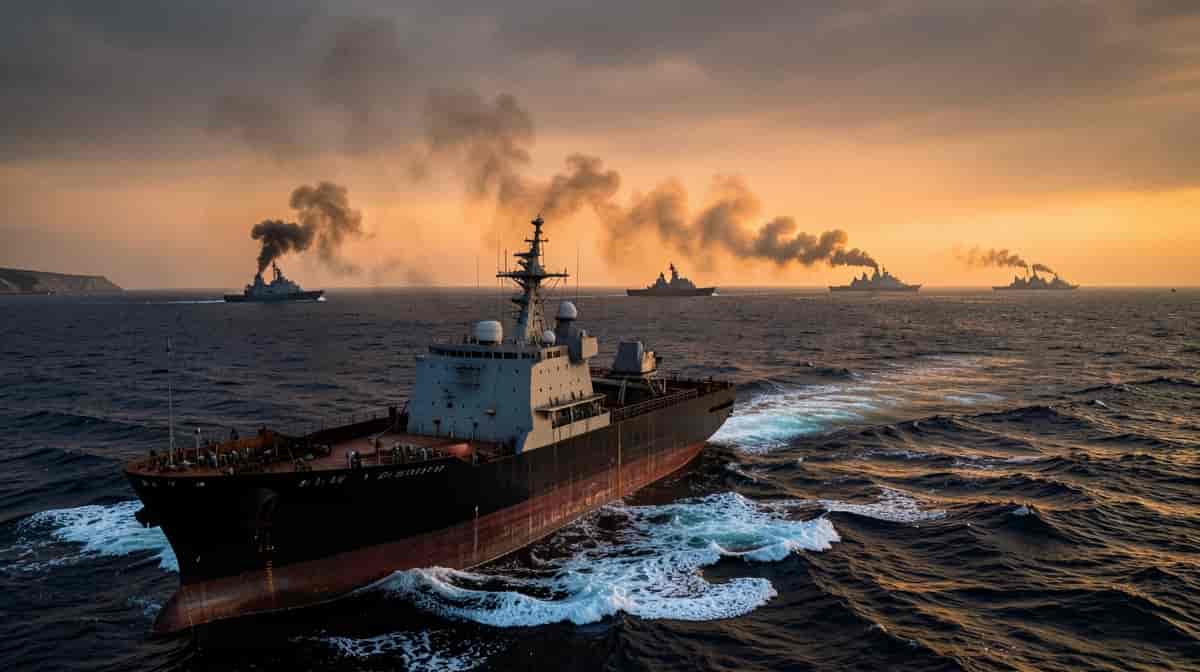
The narrow transit corridor of the Strait of Hormuz has entered a phase of unprecedented volatility, challenging the resilience of global maritime security. This escalation has forced energy markets and world powers to confront a reality where the free flow of oil is no longer a guaranteed constant. The ongoing Strait of Hormuz attacks Iran war situation has sent shockwaves through international markets, raising urgent concerns about global energy security. As the world’s most critical maritime chokepoint faces intensified danger, the infrastructure of global commerce is being pushed to its limits.
With attacks reaching their highest frequency since the inception of the current conflict, the Persian Gulf has become a theatre of both military confrontation and high-stakes economic survival. Military claims and counterclaims are now a daily occurrence, while commercial operators are forced to navigate a landscape where insurance premiums and physical risks are skyrocketing. The situation is further complicated by a lack of diplomatic consensus, as major powers remain entrenched in hardline positions while regional neighbors attempt to bridge the gap through backchannel discussions.
The Strait of Hormuz is currently experiencing the highest level of maritime attacks recorded since the Iran war began, threatening the primary artery of global petroleum transit.
Escalation at the Chokepoint
The intensity of the conflict has manifested in frequent naval skirmishes and contested military reports. Recently, the Iranian army asserted that it had successfully struck an American F-16 fighter aircraft over the Gulf. This claim was immediately met with a firm denial from the United States military, which dismissed the report as the latest in a series of escalatory narratives. Such incidents underscore the fragile security environment where even a single misunderstood maneuver could lead to broader kinetic engagement.
Maritime security experts note that the nature of these attacks has shifted, targeting the very stability of international shipping. This surge in hostility has created a maritime security crisis, forcing a re-evaluation of safety protocols for all vessels traversing the Strait. The waterway, which connects the Persian Gulf with the Gulf of Oman and the Arabian Sea, remains the only sea passage from the Gulf to the open ocean, making it a natural target for those seeking to exert pressure on global energy markets.
Risky Logistics and the UAE Maneuver
As the traditional shipping lanes become increasingly hazardous, regional players are adopting desperate measures to maintain the flow of crude oil. The United Arab Emirates has initiated high-risk operations to shuttle oil past Iran, attempting to bypass the most dangerous zones of the Strait. This operation involves navigating vessel movements under the constant threat of interdiction or attack, a move that highlights the severity of the current supply chain disruption.
Maritime Security and Oil Shipping Risks
The logistics of moving energy through the Persian Gulf have changed fundamentally. Shipping companies are no longer just calculating fuel costs and transit times; they are now factoring in the potential for military strikes.
- Commercial shipping through the Persian Gulf is now subject to unprecedented military escalation.
- Insurance markets are quietly absorbing catastrophic risk premiums that could trigger broader economic distress.
- Secondary Gulf supply chains are struggling to manage the increased costs associated with high-risk transit.
| Regional Activity | Status of Operation |
|---|---|
| Strait of Hormuz Transit | Highest level of attacks since war began |
| UAE Oil Shuttling | Active, high-risk operation to bypass Iran |
| US Naval Presence | Maintaining denial of Iranian strike claims |
| Qatari Diplomacy | Active delegation talks in Tehran |
Political Deadlock and the American Stance
The political landscape in Washington reflects a deepening commitment to a hardline strategy regarding the conflict. President Trump has publicly insisted that Iran will not make an acceptable deal, signaling that a diplomatic breakthrough may not be on the immediate horizon. This stance is echoed throughout the administration, where officials are navigating growing concerns about the next steps in the war.
During recent inquiries, high-ranking officials like J.D. Vance have sidestepped direct questions regarding the long-term management of the Iran war, instead emphasizing a unified front behind the President’s decisions. This political cohesion suggests that the current military and economic pressure campaign will continue, even as international partners express anxiety over the potential for further escalation in the Middle East.
My job is to support the president — J.D. Vance on the administration's Iran war strategy.
Regional Mediation and the Qatari Mission
While the United States maintains its hardline position, regional actors are engaging in frantic backchannel diplomacy to prevent a total collapse of regional stability. A Qatari delegation recently visited Tehran for high-level talks with Iranian officials. These discussions are viewed as a critical attempt to establish a de-escalation framework, even as military tensions on the water remain at their peak.
Qatar has historically played the role of a mediator in the region, and its recent intervention highlights the fractured nature of current political channels. These talks represent one of the few active diplomatic efforts to manage the crisis and maintain some semblance of communication between Tehran and the international community. However, the success of these negotiations remains uncertain given the intensity of the ongoing maritime attacks.
Global Economic and Energy Fallout
The economic angle of the Strait of Hormuz attacks Iran war is becoming impossible to ignore. As a vital chokepoint through which a massive portion of the world's petroleum passes, any disruption in the Strait has an immediate impact on crude oil futures. The current level of instability is driving up costs across the board, from shipping insurance to the price of fuel at the pump for global consumers.
The risk is not limited to energy alone. Emerging markets are particularly vulnerable to the catastrophic risk premiums now being applied to Gulf trade. If the conflict continues to escalate, the resulting economic anxiety could trigger a broader financial crisis, affecting countries far removed from the Middle East that remain dependent on imported oil and stable maritime trade routes.
Geopolitical Analysis and Historical Parallels
The structural stalemate of the Iran war has created a situation where the Strait of Hormuz is the primary lever of influence for regional actors. Analysts suggest that the root cause of the current escalation is the inability of major powers to reach a diplomatic settlement, leading to a military confrontation at critical chokepoints.
The 1980s Tanker War Parallel
History provides a grim parallel to the current situation. During the Iran-Iraq conflict in the 1980s, the "Tanker War" saw commercial shipping become the primary target of military escalation.
- Military forces targeted commercial vessels to disrupt the economic lifeblood of their adversaries.
- International naval forces were eventually drawn into the conflict to protect shipping lanes.
- The conflict resulted in significant disruptions to global energy supplies and high insurance costs.
The current crisis mirrors many of these elements, as commercial tankers once again find themselves in the crosshairs of a regional war. The primary difference today is the increased sensitivity of the modern global economy to even minor supply chain shocks.
Future Trajectory and Predictor
The outlook for the next 24 to 72 hours suggests a continuation of the current volatility. Analysts expect reports of heightened maritime attacks in the Strait of Hormuz to persist, alongside further diplomatic maneuvers by regional mediators.
Expert Predictions and Scenarios
Expert analysis indicates that ongoing pressure on alternative shipping routes will likely intensify. The best-case scenario involves the Qatari delegation’s talks in Tehran leading to a functional de-escalation framework, allowing regional energy transit to resume without fear of further attacks.
However, the worst-case scenario is significantly more dire. If attacks in the Strait of Hormuz escalate further, it could lead to a severe disruption of global oil flows, drawing a harsher military or economic response from the international community. The next 72 hours will be critical in determining whether the region moves toward a managed de-escalation or a broader, more destructive conflict.
Frequently Asked Questions
Why are the attacks in the Strait of Hormuz increasing?
Attacks have reached their highest level since the Iran war began due to the intensifying military confrontation and the strategic importance of the Strait as a global energy chokepoint.
How is the U.A.E. transporting oil during this crisis?
The U.A.E. is conducting risky oil-shuttling operations to move petroleum past Iran and avoid the most dangerous areas of the Strait.
What was the U.S. response to the Iranian claim of striking an F-16?
The United States military has denied the Iranian army’s claim that it successfully struck an F-16 fighter jet over the Gulf.
What is the goal of the Qatari delegation in Tehran?
The Qatari delegation is engaging in talks with Iranian officials as part of a diplomatic effort to manage the crisis and potentially seek a de-escalation framework.
How does this conflict affect the global economy?
Disruptions in the Strait of Hormuz threaten global energy supplies, causing spikes in oil prices, increasing shipping insurance premiums, and creating economic instability for nations dependent on imported oil.
Conclusion
The escalation of attacks in the Strait of Hormuz represents a critical juncture in the Iran war, with implications that extend far beyond the borders of the Middle East. As the U.A.E. resorts to risky oil-shuttling operations and the U.S. maintains its hardline political stance, the stability of global energy markets remains in jeopardy. While the recent diplomatic intervention by Qatar offers a slim hope for de-escalation, the verified peak in maritime hostilities suggests that the path to a peaceful resolution is fraught with significant obstacles. The coming days will determine if the international community can secure this vital maritime artery or if the global economy must brace for a prolonged period of energy insecurity and rising costs.
Sources
- Iran war live: US denies Iranian army’s claim it struck an F-16 over Gulf — Al Jazeera
- Strait of Hormuz attacks have increased to highest level since Iran war began — ABC News - Breaking News, Latest News and Videos
- The U.A.E. Is Shuttling Oil Past Iran in Risky Hormuz Operation — WSJ
- Qatari delegation visits Tehran for talks, Iranian official says — Arab News
- Vance sidesteps question on the Iran war, saying, ‘My job is to support the president’ — NBC News
- Trump insists Iran won’t make an ‘acceptable’ deal as concerns grow about next steps — AP News


