
Drone Warfare Innovations Are Forcing a Rapid British Military Pivot
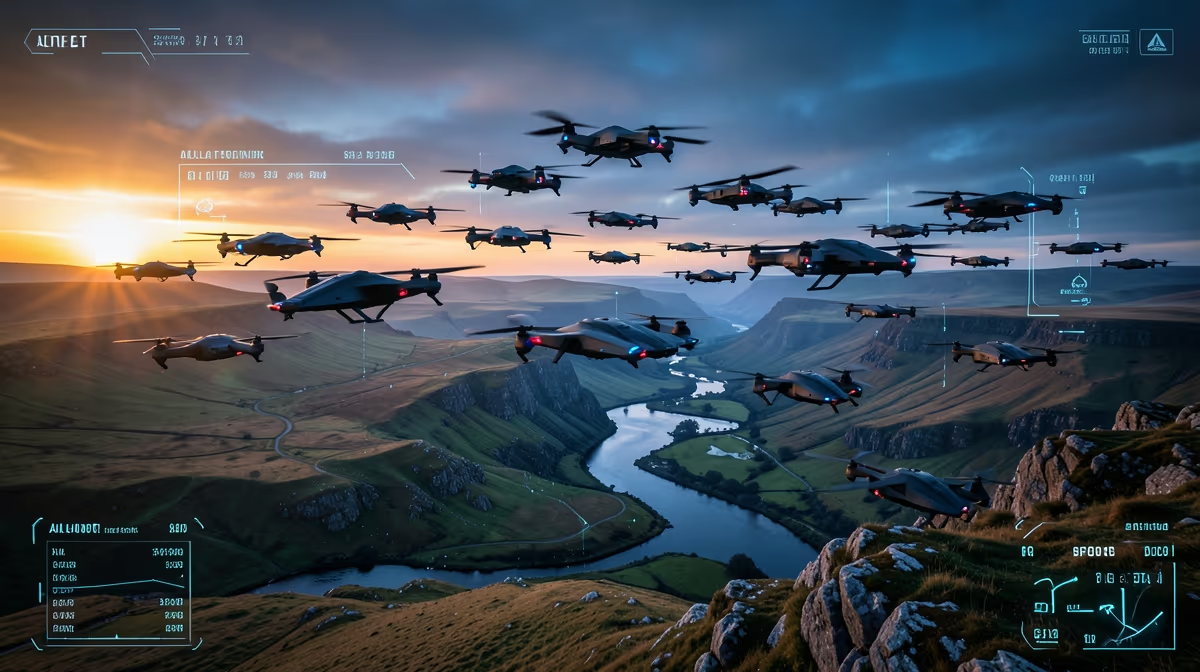
The rapid integration of drone warfare into global military strategies is fundamentally altering the modern battlefield, raising critical questions about the future of autonomous weapons. As traditional defense systems struggle to adapt to the agility of low-cost, expendable aerial assets, the United Kingdom finds itself at the forefront of a technological pivot that promises to redefine the nature of sovereign security and combat doctrine.
The Evolution of Tactical Doctrine
The UK Ministry of Defence has accelerated the integration of autonomous drone technology into British military operations throughout 2024, citing a strategic necessity to counter evolving threats from state-level adversaries and non-state actors. This movement marks a departure from the traditional reliance on high-cost, piloted air platforms. In response to the rapid proliferation of low-cost aerial threats witnessed in recent international conflicts, the British Armed Forces are shifting toward a hybrid doctrine that prioritizes swarming drone capabilities and enhanced counter-UAS infrastructure.
This strategic shift is rooted in an effort to maintain military parity without the political capital costs associated with human casualty repatriations. By deploying smaller, expendable unmanned aerial vehicles alongside traditional assets, the military aims to maintain superiority in contested electromagnetic environments. The government has already successfully tested swarm-capable drone technology at the Salisbury Plain Training Area, signaling that the move from theory to implementation is well underway.
Technological Advancements and Strategic Procurement
The push toward modernization is reflected in recent procurement activities. The government has awarded several high-value contracts to domestic tech firms, focusing on the development of AI-enhanced target identification and resilient communication links capable of withstanding sophisticated jamming attempts. This transition represents a broader shift from legacy defense industrial base models to agile, software-defined hardware production.
There is an inherent tension in this process, as established aerospace primes compete with innovative SME drone startups to define the future of British defense. The Ministry of Defence currently emphasizes that its operational protocols remain strictly bound by international humanitarian law, maintaining a human-in-the-loop requirement for all lethal drone strikes. Despite the emphasis on technology, the UK military continues to prioritize the integration of intelligence-gathering platforms, such as the Reaper and the newer Protector model, to ensure commanders retain high-resolution situational awareness.
Ethical Implications and Regulatory Challenges
The rapid pace of innovation is currently outstripping the existing regulatory and ethical frameworks, creating a precarious landscape for modern combat. While the Ministry of Defence insists that existing laws remain the bedrock of their protocols, the rise of autonomous systems has sparked an intense parliamentary debate. Critics and human rights groups have raised significant concerns regarding the accountability of decision-making algorithms, arguing that the shift toward autonomy threatens to erode the standards of civilian protection.
This debate touches upon the core of modern conflict, where the ability to engage in operations with minimal risk to one’s own soldiers can theoretically lower the threshold for military intervention. The normalization of persistent surveillance through commercial-off-the-shelf drone integration has created significant legal grey zones regarding domestic data privacy and international sovereignty. Analysts warn that these systems, if not properly regulated, could fundamentally alter the perceived cost of war for policy makers.
A Look Toward the Immediate Future
The next 24 hours are expected to see the UK Ministry of Defence issue formal guidance on counter-UAS infrastructure deployment, specifically following recent airspace incursions near strategic sites. Looking toward the 72-hour horizon, the defense sector anticipates increased procurement activity for mobile electronic warfare systems and an expansion of air defense detection ranges around key Royal Air Force installations.
Expert predictions point toward a mass adoption of AI-enabled detection networks and rapid regulatory tightening regarding commercial drone flight corridors. The best-case scenario involves the successful integration of non-kinetic jamming technology, resulting in zero service disruption and enhanced private-sector cooperation on site security. Conversely, the worst-case scenario involves a high-profile drone incursion that could lead to the temporary grounding of commercial flights or a security breach at a critical defense facility.
The Geopolitical Context
Maintaining Global Britain's status as a Tier-1 technological power is a primary driver behind these investments. By demonstrating high-end capability in contested environments, the UK often acts as a testbed for NATO interoperability. The 2022 decision to transfer tactical drone technology to Ukraine served as a strategic proof-of-concept, demonstrating how such assets can degrade adversary supply chains. As the focus shifts in 2024 toward integrating AI-piloted swarms into the Royal Navy and British Army, the UK is attempting to balance traditional platform loyalty with the disruptive efficiency of unmanned aerial systems. This balancing act remains a central focus of the ongoing Integrated Review Refresh.
Frequently Asked Questions
What is drone warfare?
Drone warfare involves the use of unmanned aerial vehicles (UAVs) to conduct military operations, such as surveillance, reconnaissance, and targeted strikes. These aircraft are typically piloted remotely from ground control stations or operate autonomously using pre-programmed flight plans and onboard systems.
How are drones used in modern military conflicts?
In modern conflict, drones are utilized for intelligence gathering, battlefield monitoring, and precision airstrikes. They provide military forces with persistent surveillance capabilities without risking the lives of human pilots, allowing for real-time situational awareness in high-risk zones.
Are drones legal under international law?
The legality of drone warfare is a subject of significant debate among international legal scholars and human rights organizations. While the use of drones in armed conflict is permitted under the laws of war, their deployment must adhere to principles of distinction, proportionality, and military necessity to avoid violations of international humanitarian law.
What are the ethical concerns surrounding drone warfare?
Ethical concerns primarily center on the potential for civilian casualties and the psychological toll on local populations living under constant surveillance. Critics also argue that the remote nature of drone warfare lowers the threshold for entering armed conflicts, as it reduces the perceived risk to a nation's own military personnel.
Do drones have the ability to fire weapons autonomously?
While many drones used in warfare are currently controlled by human operators who make the final decision to engage, technology is advancing toward lethal autonomous weapons systems. These systems have the potential to select and attack targets without direct human intervention, raising significant ethical and legal questions regarding accountability.
How has drone technology changed the nature of war?
Drone technology has shifted the landscape of warfare by enabling persistent, long-range aerial operations that were previously impossible or too costly to sustain. This shift has democratized access to precision strike capabilities, allowing smaller military forces or non-state actors to challenge traditional power structures.
Conclusion
The proliferation of autonomous drone technology represents a historic inflection point for the British Armed Forces. While the strategic utility of unmanned systems in contested environments is clear, the transition necessitates a rigorous synchronization between technological advancement, regulatory oversight, and ethical compliance. As the Ministry of Defence continues to integrate AI-driven capabilities into frontline operations, the focus will remain on securing critical national infrastructure and navigating the complexities of modern, remote-led warfare. The coming months will likely define the long-term governance of these systems, as the government works to ensure that tactical superiority does not come at the cost of operational accountability.


.webp)


.webp)
